Dental emergency? Seen today8175 Custer Rd, Suite A110 · Frisco, TX 75035Frisco, TXOpen today 9–6(469) 262-2111Book an appointmentBook now
White Lotus DentalWhite Lotus DentalFrisco · Texas
Dental emergency? You can be seen today
Services
About Us
For Patients
Areas
More
The equipment, and the rules it is used by

Our dental technology in Frisco, TX, and how we always use it

Every practice has a page like this, and most of them are a row of logos beside a radiation statistic borrowed from a brochure. This one says what each thing actually changes for you, publishes the real doses with their sources, and sets out the standing rules — who gets scanned, what gets read, and what has to be confirmed before treatment starts.

Dental technology starts with time, not equipment

Any dental office can buy a scanner. Ours are good, and none of them are rare. What decides whether a scanner is worth anything is whether there is time to use it properly. That comes down to scheduling: finding time to use it well.

Hygiene here runs one patient per hour. Every recall patient, periodontal maintenance included. Inside that hour: the cleaning, polishing, fluoride varnish, the digital wellness scan, the smile analysis, and time for the hygienist to explain what she found. We sometimes pay the hygienist and the assistant more for that hour than the insurance pays us for it. We do it anyway, because the alternative is owning the equipment and not using it.

That is the honest frame for everything below. The tools are real and they help. The hour is what makes them count.

What is in the building

Nine dental technologies, and what each one is for

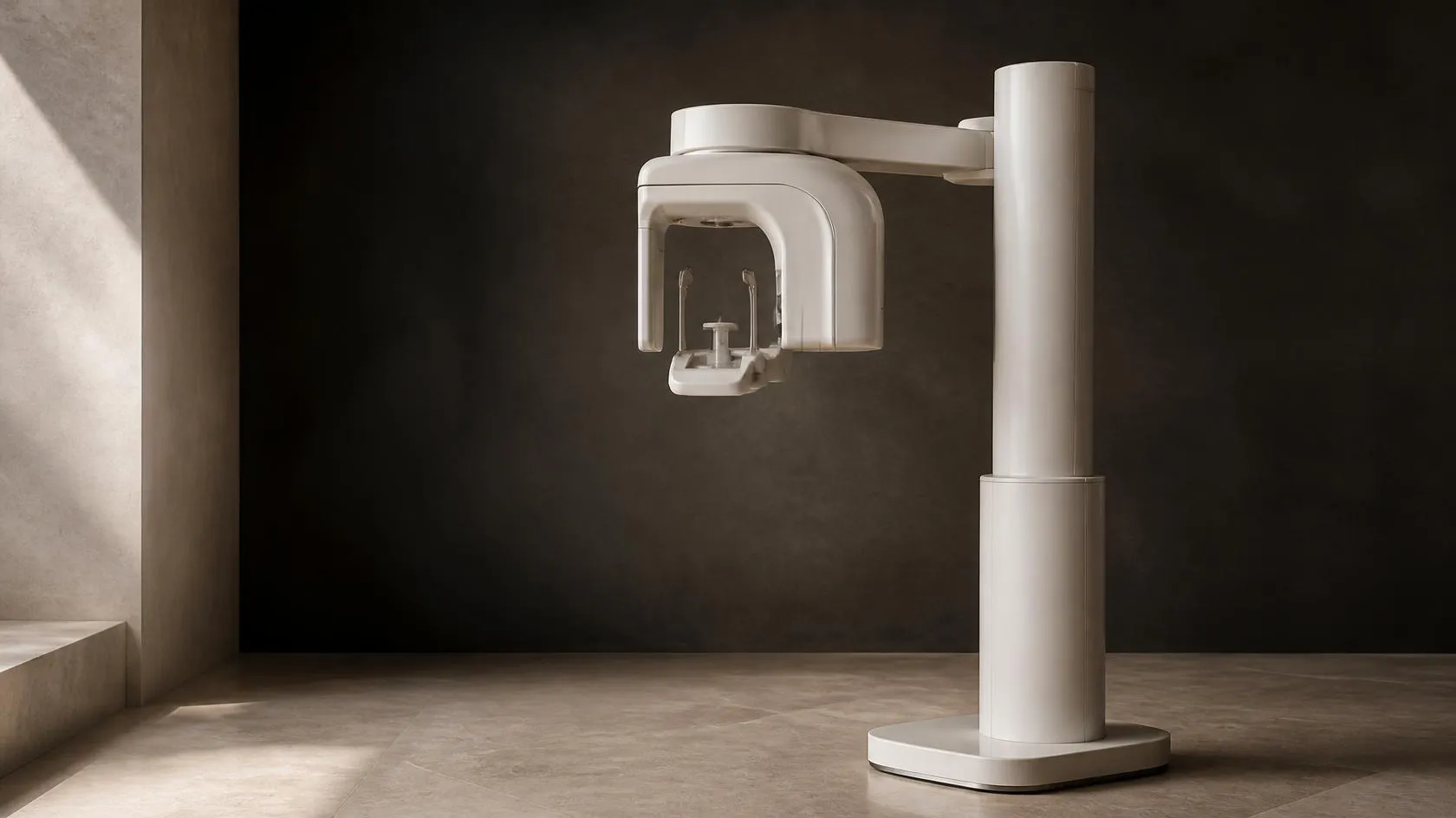
RayScan Alpha Plus 3D (CBCT) scan

A white 3-D dental X-ray unit on its column in an empty, softly lit room.

One machine, four different kinds of image.

Panoramic
The wide single view of both jaws, in one pass.
CBCT
Rotates once around your head and builds a three-dimensional volume of bone, roots, sinuses and nerve canals. An ordinary X-ray is a flat shadow of all of that overlapping; this separates it.
Cephalometric
The standardized side-on view used for growth and orthodontics — described on its own below.
Object scan
Digitizes a plaster model or an impression, so older records move into the digital workflow and out of a drawer.
What it changes for you

For a first visit, the panoramic is what shows the things a small X-ray cannot — wisdom teeth, cysts, retained roots, the jaw joints. For treatment, the 3-D volume is what lets an implant be planned before anything is done: the exact position, angle and depth, decided against your actual bone, with the surgical guide made from that plan. It is also how we see precisely where the nerve runs beneath a lower wisdom tooth before removing it, which is the difference between a considered extraction and an optimistic one. Four modes in one unit also means the whole image happens in one room, in one visit.

Its limit

The 3-D scan carries a meaningfully higher dose than the others — see the table below — so it is taken only when treatment is actually being planned, and it is always quoted separately, on its own, apart from any package. The panoramic answers most questions; the 3-D scan is for the ones it cannot.

Cephalometric analysis

A standardized side-on image of the whole skull, taken on the same RayScan unit. Because it is taken to a fixed geometry every time, the distances and angles on it can be measured and — more usefully — measured again later and compared.

What it changes for you

This is how orthodontic treatment on a growing child is planned around the growth as well as the teeth. It shows how the upper and lower jaws sit relative to each other and to the skull, which is what separates crowded teeth in a normal jaw from teeth that are crowded because a jaw is small or set back — the same-looking problem with two completely different treatments. Repeated later, it shows whether a child is still growing, which decides whether to treat now or wait.

Its limit

It is one of the lowest-dose images we take, lower than a panoramic. It is taken where growth or jaw position is part of the question, which in practice means orthodontic assessment — not as part of a routine check-up.

iTero Lumina digital scanner

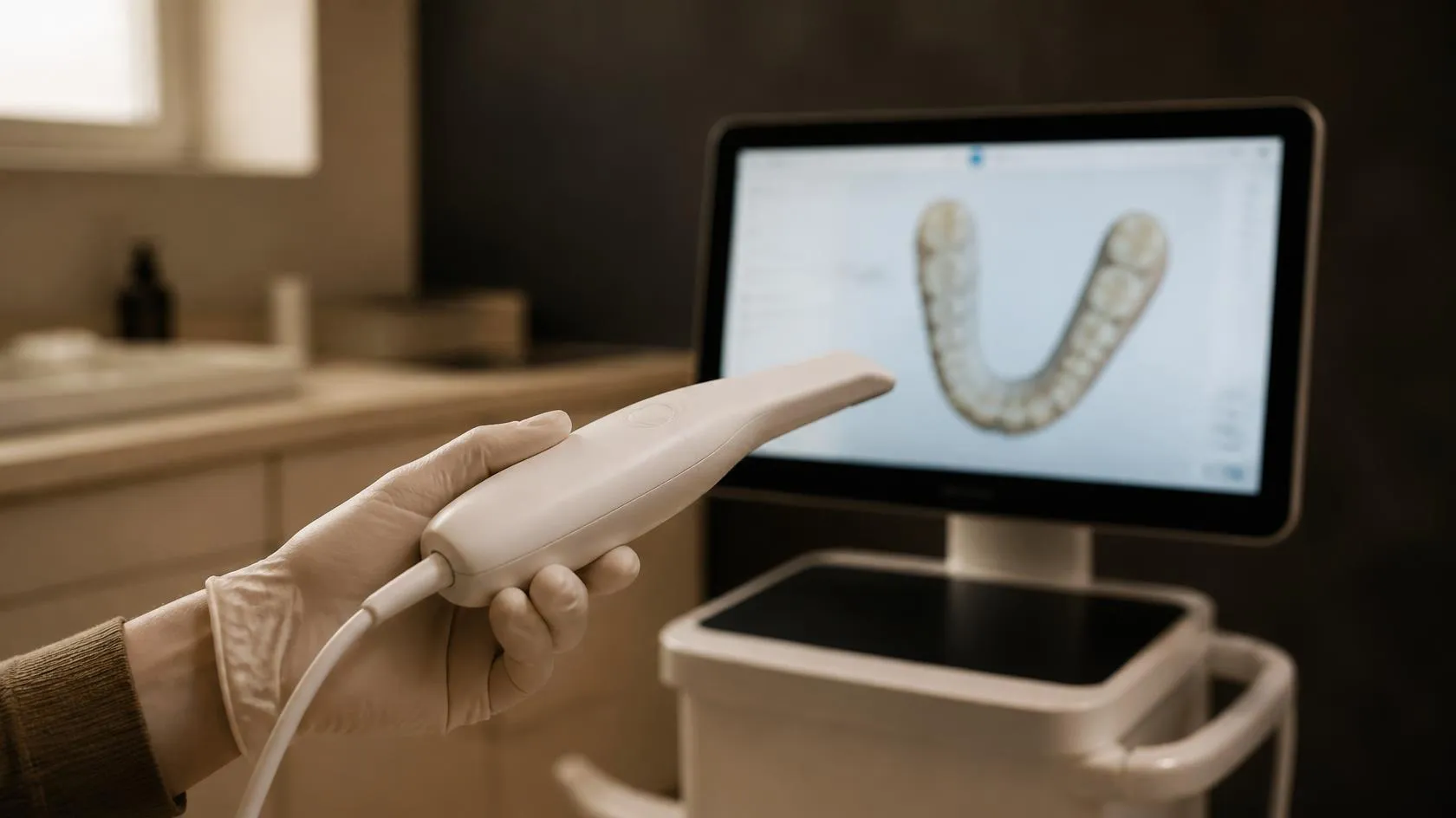
A gloved hand holding an intraoral scanner wand in front of a monitor showing a 3-D scan of the lower teeth.

A wand passed around your mouth that builds a full 3-D model of your teeth on the screen in front of you. It replaces the tray of setting material patients dread.

What it changes for you

No tray, no putty, nothing to gag on, and the scan is finished in minutes. It is also kept: we compare this year against last year, and the same file is re-used for a night guard, a retainer or aligners, with no new scan needed. And you see it — the model is on the monitor beside you while we talk about it, which is a different conversation from one held over a paper chart.

NIRI imaging

Near-infrared imaging, built into the same iTero scanner. It passes infrared light through the tooth: sound enamel is translucent to it and decay is not, so a lesion between two teeth shows as a shadow.

What it changes for you

A way to look between teeth with no radiation at all, which means it can be used as often as it is useful. That matters most for small children, for anyone pregnant, and for anyone who would simply rather not have another X-ray.

Its limit

It looks between and through teeth. It works alongside X-rays, which remain how we see bone levels, roots, and anything beneath the gum.

Overjet.ai, AI that marks up your X-rays

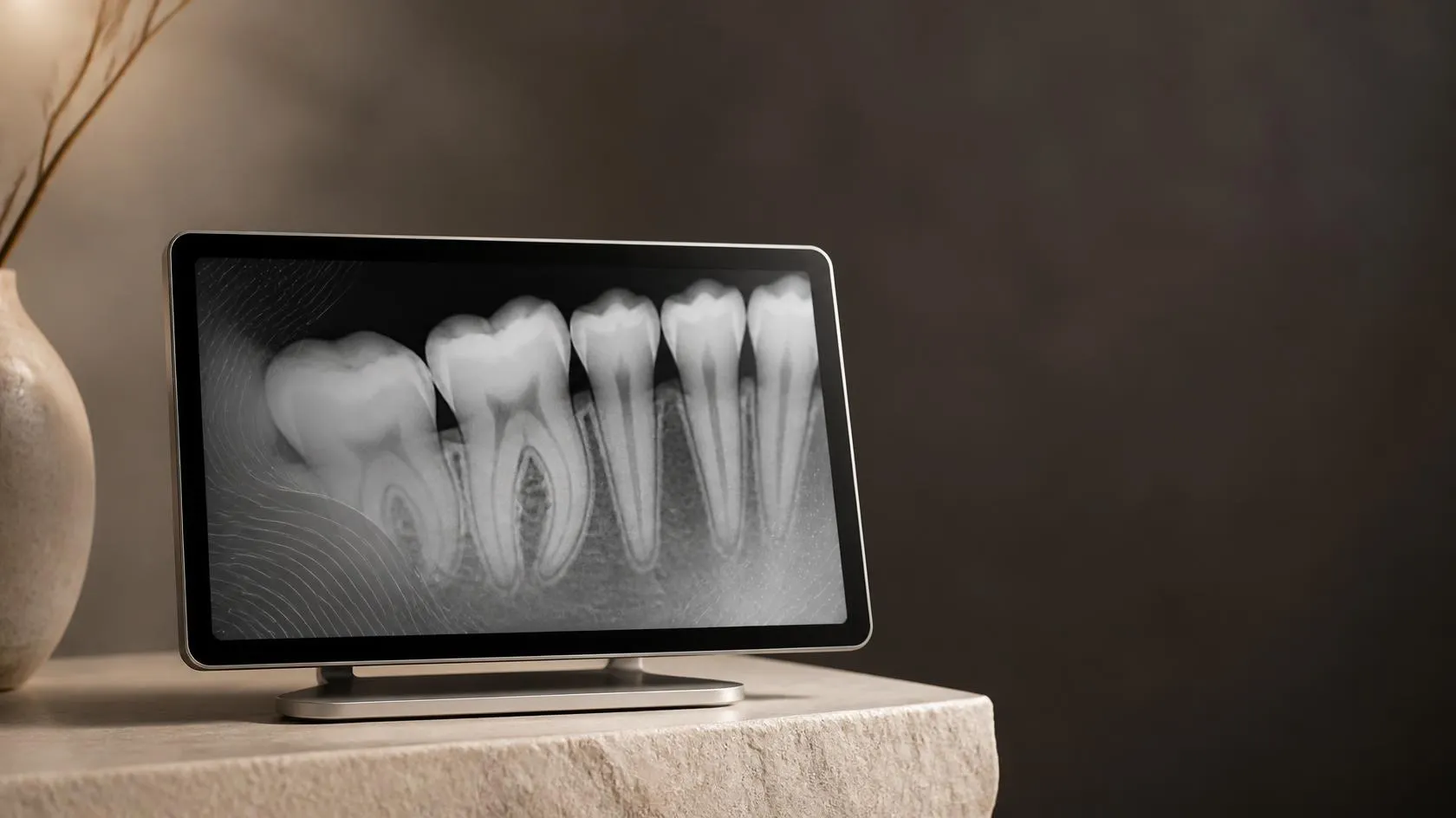
A chairside monitor showing a dental X-ray of lower back teeth with their roots, with no patient name or date on screen.

An FDA-cleared system that analyzes every X-ray at the moment it is taken, marking up decay and measuring bone levels alongside the dentist reading it.

What it changes for you

Consistency. A human eye is excellent and it is also human — attention on the ninth X-ray of the morning is not attention on the first. This runs on every single image, the same way, every time. It also makes the reasoning visible: when we are explaining why we are recommending something, the measurement is right there on the screen for you to see and check for yourself.

Its limit

It does not diagnose and it does not decide anything. It is a second pair of eyes on an image a person has already read, and where it and the dentist disagree, the dentist is the one treating you.

Nomad Pro 2

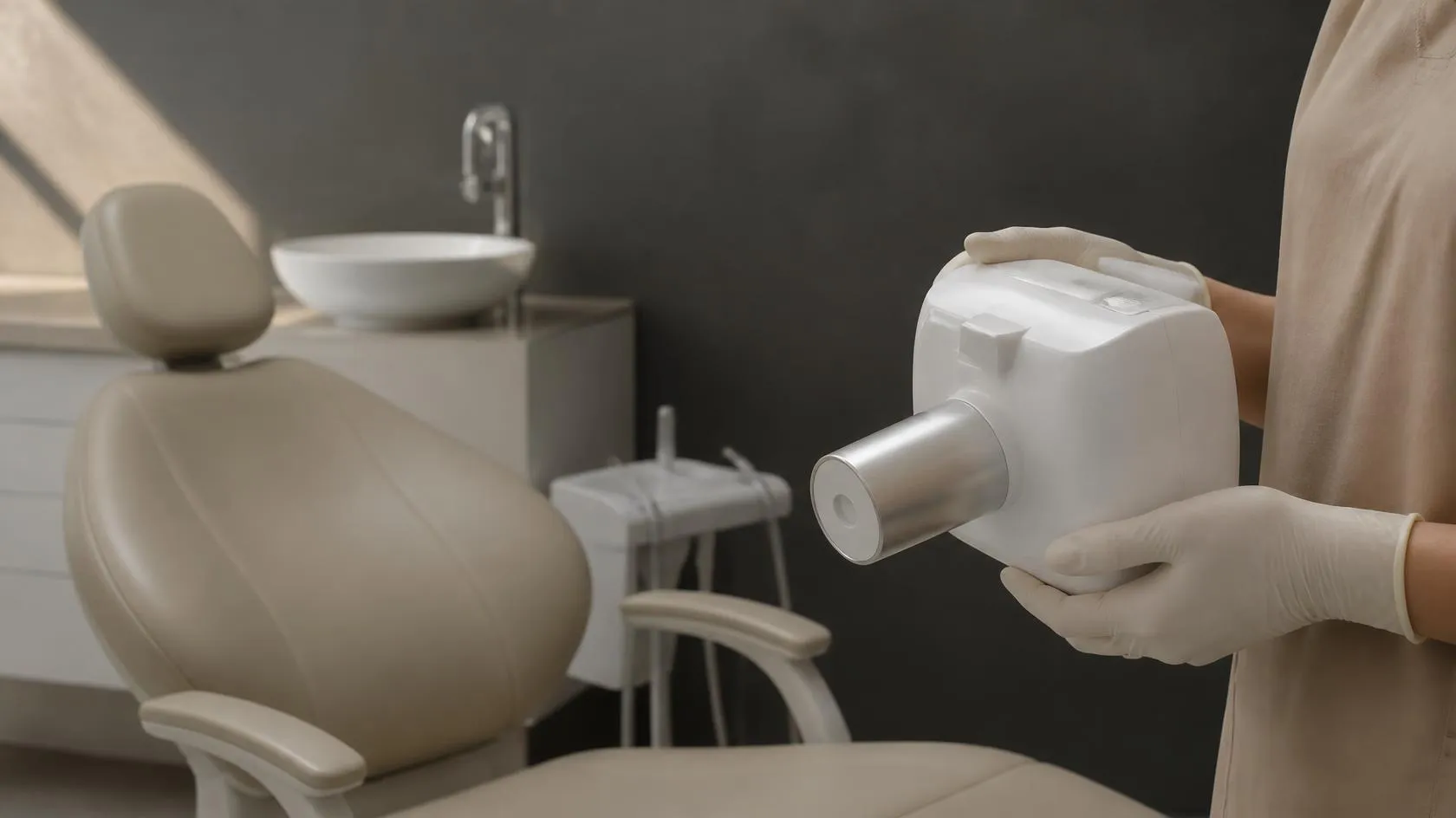
Gloved hands holding a handheld dental X-ray device in a treatment room, a dental chair behind.

A handheld, internally shielded X-ray unit, brought to you so you needn't move to a wall-mounted arm. Very low dose.

What it changes for you

Whoever is taking your X-rays stays in the room with you. That sounds minor and it is not, for two people in particular: an anxious adult who does not want to be left alone mid-appointment, and a child who will hold still for somebody standing beside them and will not hold still for a room that has just emptied. Fewer retakes because a child moved is, incidentally, less radiation — the comfort argument and the dose argument point the same way here.

Invisalign outcome simulation

Align Technology takes a photograph of your face and combines it with your teeth scan. Their system generates the projected result on your own face, in three forms: a 3-D model of before and after, a still of the new smile in your face, and a short video of the change.

What it changes for you

It answers the question people actually have before starting orthodontics, which is not "how do aligners work" but "what would I look like". And it is emailed to you, so you can make the decision at home, in your own time.

Its limit

A simulation is a projection and not a promise. It will make almost anybody's teeth look better, which is exactly why it should answer "what would this look like" and not "should I do this". The second question is a clinical one.

MouthWatch camera

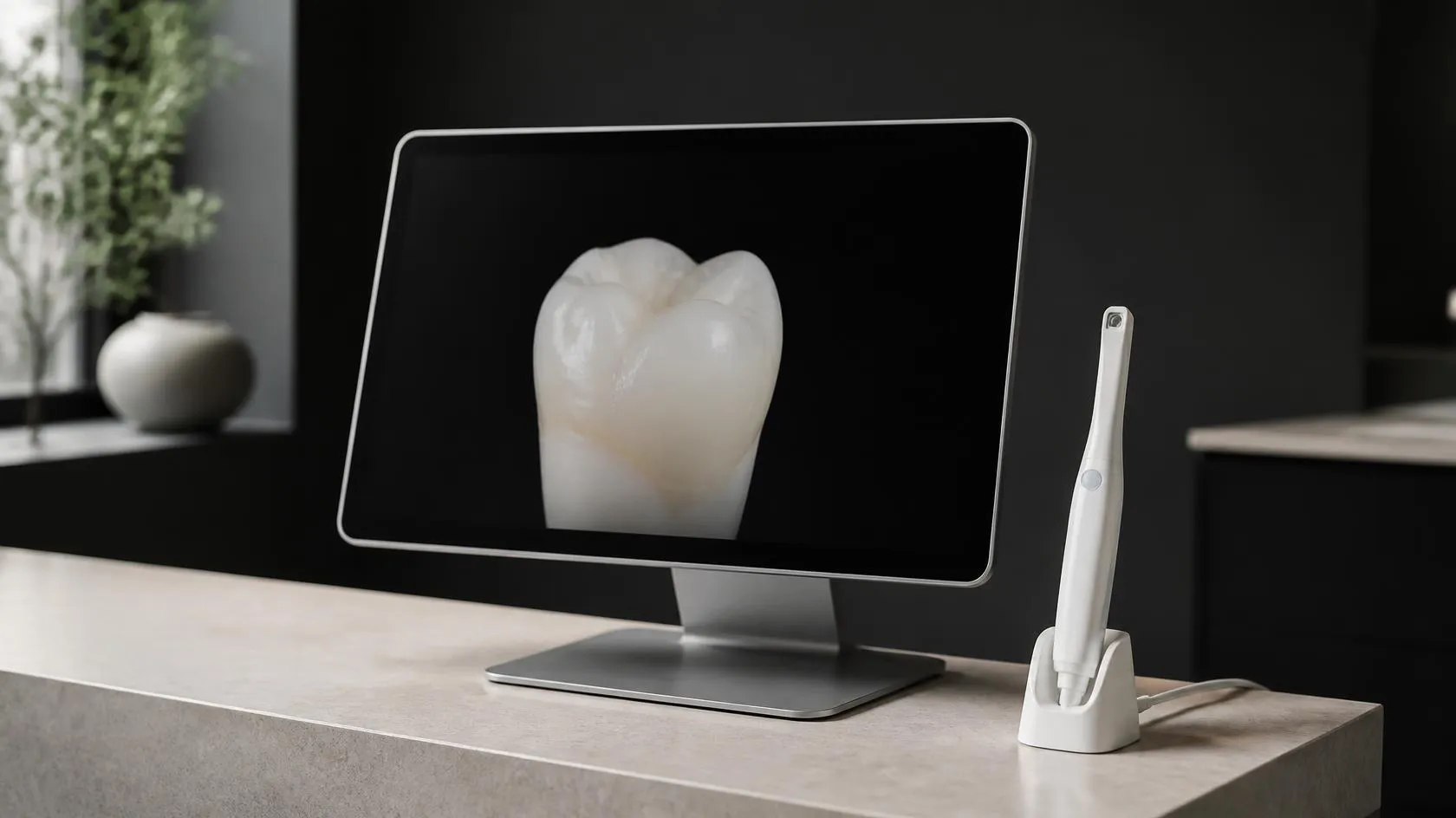
A monitor showing a close-up of a single tooth, the intraoral camera wand resting in its stand beside it.

An intraoral camera that puts a magnified photograph of the tooth being discussed on the monitor beside you.

What it changes for you

It moves the conversation from being told to being shown. A cracked cusp or a failing margin is obvious on a screen and invisible in a description, and a photograph is also a record — the same tooth photographed six months apart is how "watch it and see" becomes an actual decision, backed by evidence.

Acteon piezo scaling

Ultrasonic scalers used for deep cleaning and periodontal maintenance. Ours run an irrigation reservoir of distilled water only, with chlorhexidine mixed to proportion, and it is warmed before it goes anywhere near you.

What it changes for you

Cold water on an exposed root surface is most of what people remember as the pain of a deep clean. Warming it removes that. The chlorhexidine is an antiseptic working in the pocket while the instrument is in it, and choosing distilled water over tap water is a small infection-control decision that costs us something and is invisible to you, which is roughly the definition of a thing worth publishing.

Sol diode laser

A soft-tissue diode laser. We publish the complete list of what we use it for on the laser gum therapy page, so it's clear exactly what it does.

What it changes for you

Less bleeding and usually no sutures, so a frenectomy or a gum recontouring heals more straightforwardly. It also treats ulcers and cold sores, which surprises people: a brief treatment on an aphthous ulcer often takes the pain away almost immediately.

Its limit

A laser is a tool for particular jobs and not an upgrade to everything. There is no separate laser charge here, so there is no reason to reach for it where it is not the right instrument.

DEXIS digital X-ray sensors

Digital X-ray sensors, with one in every treatment room and not one shared between them.

What it changes for you

The image is on the screen a second after it is taken, so there is nothing to develop and nothing to wait for. And because there is a sensor in the room you are already in, you stay right there for the X-ray too. Together with the handheld unit, the imaging comes to you — which matters more than it sounds if you are anxious, in pain, or five years old.

Root canal instrumentation

Three things that work together.

Apex locator
Measures the exact length of the root electronically.
WaveOne reciprocating motor
Shapes the canal with a single file moving back and forth, and not a sequence of files spinning.
EndoActivator
Uses sonic energy to drive the disinfecting solution into the parts of the canal no file reaches.
What it changes for you

This is why molar root canals are done in this building and not referred out. The apex locator means the length is measured directly and not estimated from a flat image — more accurate, and fewer X-rays getting there. The reciprocating file is faster and less likely to separate inside a canal. And the irrigation is the part that actually decides whether a root canal lasts: the file shapes the canal, the solution disinfects it, and sonic activation is what gets the solution where the shaping could not go.

Its limit

We do primary root canals here, molars included. Re-treatments — a root canal done somewhere else that has failed — go to an endodontist, because that is genuinely a specialist's job.

Isolite isolation

A soft mouthpiece that holds your mouth open, keeps the tongue and cheek out of the working area, suctions continuously and lights the tooth from inside. Single-use — it is opened in front of you and thrown away afterwards.

What it changes for you

Three of the things people dislike most about dental treatment are having to hold their mouth open, the feeling of water pooling at the back of the throat, and somebody's fingers and a mirror competing for space. This removes all three. It is the single most underrated comfort item in the building, and it is why a long appointment is less tiring than it used to be — for anyone with a strong gag reflex in particular.

Centralized nitrous oxide

Nitrous oxide piped to every treatment room from a central supply, with a scavenging system that captures what you exhale and keeps it out of the room.

What it changes for you

It is available in whichever room you are already in, so an anxious patient is not moved to a designated sedation room to have it. Nitrous is available with any of our doctors — oral and IV sedation are Dr. Louie's, on his scheduled days, planned in advance.

Same-day retainers, when it is urgent

For a lost retainer we can take an impression, pour the model and vacuum-form an Essix retainer here, the same day.

What it changes for you

A lost retainer is the one orthodontic emergency that actually is one — teeth start to move back within days, and a two-week wait for a lab can cost you part of the result you paid for. So this one is done in-house, because speed is the whole point.

Its limit

Where the outcome matters more than the speed, we use a laboratory instead — planned retainers, night guards, crowns and dentures. In-office fabrication technology exists, and in our judgment it is not yet at the standard a good technician reaches by hand. So the choice is made per case: the lab where the result is what counts, in-house where the clock is.

Radiation, with the actual numbers

Dental X-ray radiation: how much, compared with what

Every practice page in this market says something like “90% less radiation than traditional film.” Film is a comparison hardly anyone has used for fifteen years. The figure comes from equipment marketing, and it does not answer the question a parent is actually asking. So here are the real doses, in microsieverts, next to something you can measure them against.

One thing to be clear about first. You are absorbing a small amount of radiation constantly, from the ground under your feet, the air, your own food and space itself. Everyone absorbs some of it, whether they choose to or not. In the United States it comes to roughly 8.5 microsieverts a day. That is the yardstick used below — so when a scan is described as adding about as much radiation as a day of normal life, it means theamount of radiation is similar to what you would have absorbed anyway in a day. It does not mean anything is taken off your life. Nothing on this page shortens anyone's life by a day.

What it isEffective doseHow much radiation that is
A single intraoral X-ray — the small one held against your teeth1–8 µSvAdds less radiation than you absorb on an ordinary day
A cephalometric X-ray — the side-on view used for orthodontics2–3 µSvAlso less than an ordinary day's worth
A panoramic X-ray — the one that goes around your head4–30 µSvAdds about as much as half a day to three and a half days of normal life
A dental CBCT — a small volume, one area of the jawtypically about 84 µSvAdds about as much radiation as ten ordinary days
A dental CBCT — a medium volumetypically about 177 µSvAdds about as much radiation as three ordinary weeks
A dental CBCT — a large volume, the whole jaw and facetypically about 212 µSvAdds about as much as three and a half ordinary weeks — or two chest X-rays
Simply living in the United States, per dayabout 8.5 µSvFrom the ground, the air and space. It is background radiation everyone already receives
A chest X-ray at the doctorabout 100 µSvAdds about as much radiation as twelve ordinary days, for scale

The rows worth noticing are the 3-D scans. They are the highest doses on this page by a wide margin, and we are not going to bury that under a percentage. It is why a 3-D scan is taken only when it changes the plan — an implant position, the nerve beneath a wisdom tooth. It is always quoted separately, on its own, apart from any package.

The three-dimensional figures are averages across the published research, and the spread between machines is wide — the same kind of scan can differ several times over between one unit and another. We publish the averages because a real number you can check is worth more than a percentage you cannot, and we quote the 3-D scan separately, on its own, apart from any package, for the same reason: it is the one exposure here worth a decision.

Intraoral, panoramic and cephalometric figures: International Atomic Energy Agency, Radiation doses in dental radiology. Cone-beam CT figures: Ludlow JB and colleagues, Effective dose of dental CBCT — a meta analysis of published data and additional data for nine CBCT units, Dentomaxillofacial Radiology, 2015 — adult averages at each machine's standard protocol. Background and chest X-ray: US Nuclear Regulatory Commission, Doses in Our Daily Lives — 620 mrem a year from all sources, half of it natural background, so roughly 8.5 µSv a day. Checked September 16, 2026. None of these sources are ours and all of them can be looked up.
What we always do with it

The equipment is the easy part. This is the rest of it.

Anyone can buy a scanner. What decides whether it is worth anything is whether it gets used, on whom, and how often — so here are the standing rules we hold ourselves to. Every one of them is checkable, and you are welcome to hold us to any of it.

  1. A panoramic X-ray for every new patient who does not bring a recent one.

    A single tooth tells you about a single tooth. Wisdom teeth, cysts, retained roots, bone loss and jaw joints do not show on the small X-rays taken between teeth, and a first visit is exactly when none of that is known yet. If you have had one recently, send it so we can use it and skip repeating the X-ray.

  2. A CBCT only when treatment is actually being planned.

    An implant, a wisdom tooth that needs to come out, a root that needs seeing in three dimensions. It is the highest-dose image we take, so it is taken only when it will change what we do — for planning purposes, and always quoted on its own, apart from any package.

  3. Overjet reads every X-ray, at the time it is taken.

    Not the interesting ones. Not the ones somebody flagged. Every image, the same way, while the dentist is reading it too.

  4. A digital scan for every patient, on almost every visit, at no cost.

    Compared against your previous scans as part of the exam, which is how "your gums have receded slightly here" becomes something you can see for yourself, on screen. It is also the file a night guard or a retainer is made from later, so the scan only has to happen once.

  5. Distilled water only — every bottle on every chair, and the piezo reservoir.

    The lines that carry water into your mouth are filled from a bottle we fill ourselves, with distilled water. The ultrasonic reservoir is distilled water warmed, with chlorhexidine mixed to proportion. This is invisible to you, costs us money, and is the sort of thing worth stating precisely, since there's no way to tell just by looking.

  6. We test the waterlines.

    Dental unit waterlines are narrow, warm and wet, which is a good description of somewhere bacteria will grow when nothing is checking it. We test ours, and we do the backflow testing the city does require, on the city's schedule.

  7. Two autoclaves, a chemiclave, and spore tests read in our own incubator.

    Every load is monitored mechanically and every package carries a chemical indicator — that is the standard. The parts worth knowing: a biological spore test at least weekly is the check that actually confirms sterilization happened, beyond the mechanical read-out, and we incubate ours here, cutting the turnaround from about a week to about a day. Two autoclaves means a machine out of service is not a reason to hurry an instrument set, and the chemiclave handles the instruments that steam would corrode.

  8. Vitals at every visit. No exceptions, post-operative visits included.

    Blood pressure is the commonest thing a dental office is in a position to notice and the patient is not. It takes a minute and it has changed the plan more than once.

  9. One patient per hour in hygiene.

    Every recall patient, periodontal maintenance included. It is what makes the rest of this page mean anything: we sometimes pay the hygienist and the assistant more for that hour than the insurance pays us for it, and we do it anyway, because the alternative is owning the equipment and not using it.

Where it shows up

Which dental technology you would meet, and when

A check-up and cleaning

  • iTero Lumina
  • NIRI imaging
  • Overjet.ai
  • Nomad Pro 2
  • MouthWatch camera

The wellness scan and the smile analysis happen inside the hour, at no charge, and the scan is compared against your previous ones.

An implant

  • RayScan Alpha Plus
  • iTero Lumina
  • MouthWatch camera

Planned on the 3-D scan, with the surgical guide made from that plan.

Invisalign or Six Month Smiles

  • iTero Lumina
  • Cephalometric analysis
  • Invisalign outcome simulation

For a growing child the cephalometric comes first, so treatment is planned around the growth as well as the teeth. The simulation is emailed to you, so the decision is made at home.

Gum treatment

  • Acteon piezo scaling
  • Overjet.ai
  • Sol diode laser
  • MouthWatch camera

Warmed chlorhexidine irrigation, and bone levels measured on every X-ray.

A wisdom tooth

  • RayScan Alpha Plus
  • Nomad Pro 2

The 3-D scan shows exactly where the nerve runs before anything is decided.

An emergency

  • Nomad Pro 2
  • MouthWatch camera
  • Overjet.ai

The handheld unit means someone stays in the room with you.

Getting here

Come and look at any of it

If you want to see the scanner or the 3-D imaging before committing to anything, say so when you call — a look around is not an appointment, and we treat it that way.

Hours
Weekdays 9–6
Saturdays 9–3
Languages
English, Telugu, Hindi, Urdu
Arabic with Saba, our hygienist, Tuesdays, Thursdays and Fridays
Vietnamese with Anh, our hygienist, Saturdays
Cantonese and Mandarin with Dr. Louie, our periodontist, on his scheduled days, by internal referral
Also serving
McKinneyPlanoProsperLittle ElmAllenCelina
Before you call

Questions about our dental technology

Grouped so you can go straight to the one you came for.

What patients ask about our technology

Do you do same-day crowns?
No. It is deliberate, and it is not a gap. A dental technician layers and shades your crown by hand to match the teeth beside it. That takes about two weeks, with a temporary crown in between. A milling machine can cut a crown from a block in fifteen minutes, and on a front tooth, that difference shows. If one visit matters more to you than getting the closest match, we will tell you honestly: we are not the right office for that crown.
How much radiation is in a dental X-ray?
A single intraoral X-ray is 1 to 8 microsieverts. That is less than one ordinary day of the background radiation everybody gets from the ground and the air. A panoramic is 4 to 30. A 3-D CBCT scan is higher: up to about 50 for a small or medium volume, and around 100 for a large one. That is roughly a week to twelve days of background, or about one chest X-ray. Those are published figures from the IAEA and the US Nuclear Regulatory Commission, independent of us, and the whole table with sources is on this page. We would rather give you the number than a percentage.
Can you find cavities without X-rays?
Between teeth, often yes. The iTero Lumina uses near-infrared imaging, which passes infrared light through the tooth. Sound enamel is translucent to it, and decay is not, so a lesion shows as a shadow with no radiation at all. It is genuinely useful for young children, in pregnancy, and for anyone who would rather minimize X-rays. It does not replace an X-ray for bone levels, roots or anything under the gum. It adds to that picture.
I gag on impression trays. Is there another way?
Yes, and it is what we use as standard. A wand is passed around your mouth and builds a 3-D model on the screen beside you in a few minutes — no tray, no setting material, nothing to gag on. It is also kept and re-used, so a night guard or a retainer later does not mean scanning you again.
Does the person taking my X-rays leave the room?
No. Our X-ray unit is a handheld Nomad Pro 2 with internal shielding, so whoever is taking your X-rays stays beside you. It matters most for two people. An anxious adult does not want to be left alone mid-appointment. And a child will hold still for someone standing next to them, but not for a room that has just emptied.
Does AI decide my treatment?
No. Overjet analyzes every X-ray at the moment it is taken and marks up decay and bone levels alongside the dentist reading it. It does not diagnose, and it does not decide anything. It is a second pair of eyes on an image a person has already read. Where it and the dentist disagree, the dentist is the one treating you. What it is genuinely good for is consistency. It also puts the measurement on the screen when we are explaining why we are recommending something.
Do I get a copy of my scan?
The Invisalign outcome simulation, yes. It is emailed to you, so you can look it over at home, in your own time. The iTero wellness scans are used in the exam and compared against your previous ones. We show them to you on screen, but they are not sent out as files. Ask and we will walk you through what we are seeing on the monitor for as long as you want.
I have lost my retainer. How fast can you replace it?
Same day, when it is urgent. And a lost retainer usually is: teeth begin drifting back within days, and two weeks of waiting can cost you part of a result you already paid for. We take an impression, pour the model and vacuum-form an Essix retainer here. For planned retainers, night guards, crowns and dentures, we use a laboratory instead. A technician working by hand still gets a better result than in-office fabrication does. That technology exists, but in our judgment it is not yet at the same standard. So the decision is made per case: the lab where the result is what counts, in-house where the clock is.
Is any of this an extra charge?
The wellness scan and the smile analysis are at no cost, on almost every visit. There is no separate laser charge, so a laser only comes out when it is the right instrument for the job. A CBCT is quoted separately, because it is a genuine additional procedure with a genuine additional dose. It is taken only when it changes the plan. It is not something we order as a routine check.
Is the equipment newer than the dentistry?
That is the right question to ask any practice with a page like this one. The honest answer is that equipment is the easy part. Any office can buy a scanner. What decides whether it is used properly is time. Hygiene here runs one patient per hour, and the scan, the comparison against last year, and the explanation all happen inside that hour. A practice seeing several people in the same hour owns the same scanner and cannot do that with it.
What dental technology does White Lotus Dental use in Frisco?
We use an iTero Lumina scanner with near-infrared imaging, a RayScan Alpha Plus for panoramic and 3-D scans, DEXIS digital sensors and a handheld Nomad Pro 2 X-ray unit. Overjet.ai marks up every X-ray. We also use a Sol diode laser, Acteon piezo scaling and MouthWatch cameras. Each one is explained above, with what it changes for you.
Do you offer 3D dental scans?
Yes, in two ways. The iTero Lumina builds a 3-D model of your teeth with a hand-held wand, with no impression tray. The RayScan Alpha Plus takes a 3-D CBCT scan when treatment is being planned, such as an implant or a wisdom tooth. A CBCT carries a higher dose and is quoted separately.
Dental emergency?

Toothache at 7am? You'll be seen today.

Same-day and Saturday appointments for toothaches, broken teeth, knocked-out teeth and lost crowns. Call us and we'll tell you what to do first, while you're still at home.

BookCallDirectionsMap
Request Appointment