Toothache in Frisco, TX
Pain that wakes you at night or is set off by heat is telling you something specific. Here is what it means, what helps now, and what we do about it.
Toothache relief: what to do right now, in order
If you need an emergency dentist for a toothache, this is written to be useful before you get here. Call (469) 262-2111 first and we will tell you which of these applies to you.
An anti-inflammatory beats a painkiller alone
Most dental pain is inflammation inside a confined space, which is why ibuprofen taken as directed on the packet usually outperforms acetaminophen for it. If you cannot take ibuprofen, acetaminophen is still worth taking. Keep aspirin off the gum: holding it there causes a chemical burn on top of the toothache.
Cold on the outside, nothing hot on the inside
A cold compress against the cheek for fifteen minutes at a time reduces swelling and dulls the ache. Avoid hot drinks and hot food. Pain that is triggered specifically by heat and relieved by cold is a particular sign, and worth telling us on the phone.
Sleep propped up
Lying flat raises the blood pressure in the head and pushes throbbing pain to its worst. An extra pillow or two genuinely helps you get through the night.
Rinse with warm salt water, and keep the area clean
Half a teaspoon of salt in a cup of warm water, swished gently. Keep brushing and flossing the area even though it is tender — trapped food and plaque make everything worse, and a piece of debris wedged under the gum is occasionally the whole problem.
Call us and describe your pain pattern
How long it has hurt, whether it wakes you, whether heat or cold sets it off, whether anything is swollen. Those four answers change what we plan for your appointment before you arrive.
Toothache relief: what to know before you call
What your toothache is telling us
Sharp pain that comes with cold and stops within a second or two usually means an exposed or irritated surface, such as a lost filling, a crack, recession, or early decay. Deep, spontaneous, throbbing pain that lingers, wakes you at night, or is triggered by heat usually means the nerve inside the tooth is inflamed beyond recovery. A tooth that hurts to bite on, feels raised, and is tender to touch has often become an abscess at the root tip. These are different problems with different treatments, which is why we look before we treat — antibiotics are not the first move.
Pain relief comes before the plan
You will not be asked to decide anything significant while you are in pain. The first job is to find the cause and stop the pain — with an anesthetic, by draining pressure, by opening and cleaning a nerve chamber, or by removing a tooth that cannot be saved. Only then do we talk about what happens next, and you get the options and the cost in writing before any decision is made in the chair. If a temporary measure today and definitive treatment next week is the sensible route, we will say so.

Toothache near Frisco, Prosper and Plano
We see toothache emergencies at our office at 8175 Custer Rd, Suite A110, Frisco, TX 75035. Call (469) 262-2111 as early in the day as you can. We are open Monday, Tuesday, Thursday and Friday from 9 AM to 6 PM and Saturday from 9 AM to 3 PM. We are closed Wednesday and Sunday, though the phone is answered on Wednesday. Patients come from Frisco and from Prosper, Plano, Little Elm, Allen, Celina and McKinney.
Call (469) 262-2111Which kind of toothache do you have?
Told over the phone, this is usually enough for us to know how quickly you need to be seen.
| Feature | Sharp with cold, brief | Deep, throbbing, wakes you | Swollen, tender to bite |
|---|---|---|---|
| Likely cause | Exposed dentine, crack, lost filling, decay | Nerve inflamed beyond recovery | Infection at the root tip |
| Usual treatment | Filling, crown or sealing the surface | Root canal, or extraction | Drainage and root canal, or extraction |
| How soon | Within a week | Same day if we can | Same day |
| Will it settle on its own | Sometimes, if the cause is removed | No | No — antibiotics only postpone it |
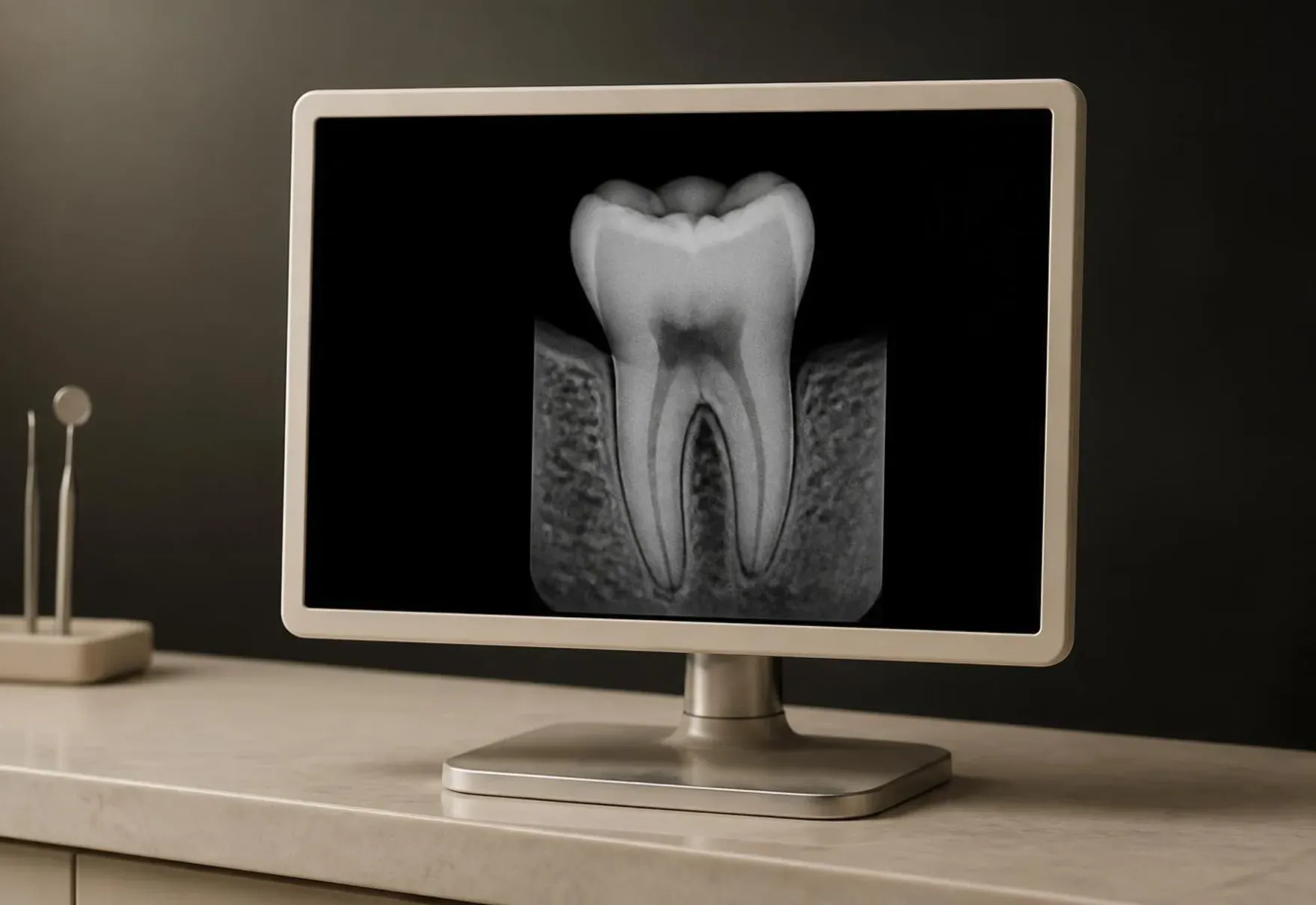
Where your toothache may be coming from
Almost every kind of toothache is a story about which of these layers has been reached. It is also why the pain changes character as it gets worse.
- Enamel — the hardest tissue in the body, and the only part with no nerve supply. Wear here is permanent.
- Dentine — threaded with microscopic tubules running toward the nerve. Exposed, it is sensitive and decays faster.
- Pulp — the nerve and blood supply, sealed inside rigid walls with one narrow exit. This is why inflammation here cannot resolve on its own.
- Root canal — the channel the pulp runs down. Treating it is what saves a tooth whose nerve has died.
- Bone and gum — what holds the tooth. Infection at the root tip spreads here first.
Why toothache does not resolve itself
Almost every other painful inflammation in the body has somewhere to swell into. The pulp (the nerve and blood supply at the center of a tooth) sits inside solid dentine with one narrow exit at the root tip. When it becomes inflamed it swells against its own walls, the pressure cuts off its blood supply, and the inflammation cannot resolve because it cannot expand.
That is the mechanism behind two things patients notice. First, the throbbing: it follows your pulse, and it is worse lying down. Second, the way the pain eventually stops. Once the pulp has died the pressure is gone, and it feels like recovery. But the bacteria are still there, and they now have a route into the bone around the root. A few weeks or months later the same tooth arrives as facial swelling.
This is the reason we ask you not to wait out a toothache, and the reason antibiotics on their own only hold the problem back until it can be treated.
What we do at the appointment
We find the cause first. That means your description of the pain, a digital X-ray, and a few short tests to work out which tooth is responsible and whether its nerve is alive. Sometimes it also means CBCT imaging, where the root and surrounding bone need to be seen in three dimensions. Referred pain is common (upper molars in particular refer to the lower jaw and to the ear), so identifying the right tooth matters before anything is done to it.
Then the pain is dealt with. Depending on the cause that means a filling, sealing an exposed surface, draining pressure, root canal treatment, or removing a tooth that cannot be saved. Where the tooth comes out, we plan the replacement at the same appointment, so you’re not left to think about it later. How a tooth is removed affects what can be done in that space afterwards. See missing teeth.
Anxiety is expected here and we plan around it, with comfort measures in every room and sedation options available to discuss.
If the tooth is swollen and tender to bite on, read about a dental abscess. Root canal treatment explains what happens when the nerve is the problem, and a cracked tooth is another common cause of pain on biting.
For an emergency toothache in Frisco, call us on (469) 262-2111.
Time in the chair for treating a toothache.
The scale runs to five hours — the same scale on every page, so the bars are comparable across the whole site.
Emergency toothache visit cost in Frisco: what to expect.
Emergency treatment is often the first half of a plan. A cracked tooth still needs a crown once the pain settles, and an abscessed tooth still has to be dealt with after the infection is under control. We book that before you leave.
You get the figure in writing before treatment starts. We accept all major PPO plans and file the claim for you, our membership plan takes a percentage off treatment, and CareCredit financing is available.
How plans usually cover treating a toothache.
Basic on some plans, major on others
- What plans pay
- Which means treating a toothache is paid at roughly 80% on one plan and roughly 50% on another, for identical treatment. It is one of the widest genuine variations in plan design, and it is worth knowing up front, before treatment.
- Deductible
- Usually applies either way.
What catches people out
- Which side of the line your plan puts it on changes your share by about 30 percentage points. We check the classification specifically for your plan — guessing at the common case is how people get surprised.
- Where it lands in the major category, a waiting period may come with it — six or twelve months of holding the policy before it is covered at all.
These are how dental plans usually classify this treatment — not a statement about your own plan. Yours is the one that governs, plans differ more than people expect, and the only reliable answer comes from reading your specific benefits, which we always do ahead of treatment and give you in writing.
And what changes out-of-network
A dentist who is in-network has signed a contract fixing what may be charged for each procedure and cannot bill you the difference. One who is out-of-network has signed nothing, so the full fee stands.
So the first difference is the price itself — the same treatment is simply allowed to cost more out-of-network, before anyone's plan is considered.
What you personally pay out of that depends on your own deductible and coinsurance, which is why there is no percentage here: it is not a property of the treatment, it is a property of your plan, and we verify yours before you commit. But two things follow for everybody. Your share is a share of a bigger number. And your annual maximum is spent by what the plan pays toward that bigger number, so the same treatment eats more of your benefit out-of-network.
An illustration, not a quote. Both allowed fees for treating a toothache are not yet on hand, so the chart above shows a crown instead — the one procedure we hold both sides for. The in-network side is today's contracted allowance; the out-of-network side is what a single carrier allowed during a period when we were not contracted with it, and it is a few years old. Across the 23 procedures where we hold both allowed fees, out-of-network is between 1.2 and 5 times the in-network figure — most often a little over twice.
Check the going rate yourself
FAIR Health's dental cost lookup is free, needs no account, and is not ours — it reports what a procedure typically costs in your area. It does not know your plan, so treat it as a ballpark figure — not a final answer.
Ask us for the number first
We verify your specific plan before your appointment and give you a written estimate: what the plan is expected to pay, and what you pay. If we get it wrong we tell you why.
Bring an Explanation of Benefits
Treated somewhere else? Your EOB shows exactly what the plan paid and what it counted against your maximum. Bring one in and we will read it with you — whether or not you become a patient here.
None of this says out-of-network dentists are worse dentists. Plenty are excellent, plenty are out-of-network for sound reasons, and people choose a dentist for who that person is. What we think you are owed is the information, so that whatever you choose, you chose it knowingly. The whole thing, explained properly, or call (469) 262-2111 and ask.
From your call to the follow-up visit
- The callFour questions we ask about your pain
How long it has hurt, whether it wakes you, whether heat sets it off, and whether anything is swollen. Those answers decide what we plan for before you arrive.
- At the appointmentCause, then relief
An X-ray and a few short tests find which tooth is responsible and whether its nerve is alive. Then the pain is dealt with — anesthetic, draining pressure, or opening and cleaning the nerve chamber.
- Same visitOptions in writing
What is wrong, what each route costs, and what happens if you wait. Nothing significant is decided while you are still hurting.
- Within weeksLasting repair
A filling, a crown, completed root canal treatment, or, where the tooth cannot be saved, an extraction with the replacement planned at the same time.
Booking toothache in Frisco
Call before you travel. For a knocked-out tooth or spreading facial swelling the advice we give you on the phone matters more than how quickly you get here.
- Hours
- Weekdays 9–6
Saturdays 9–3 - Languages
- English, Telugu, Hindi, Urdu
Arabic with Saba, our hygienist, Tuesdays, Thursdays and Fridays
Vietnamese with Anh, our hygienist, Saturdays
Cantonese and Mandarin with Dr. Louie, our periodontist, on his scheduled days, by internal referral
Toothache FAQs in Frisco, TX
Grouped so you can go straight to the one you came for.
Toothache — common questions
Can I be seen today for a toothache?
What is the strongest thing I can do for the pain at home?
The pain has stopped. Do I still need to come in?
Will I definitely need a root canal?
When is a toothache actually a medical emergency?
How much will it cost?
What can I do for a toothache at night?
When is a toothache an emergency?
Where can I get toothache relief near me in Frisco?
Will an emergency dentist pull a painful tooth?
Toothache at 7am? You'll be seen today.
Same-day and Saturday appointments for toothaches, broken teeth, knocked-out teeth and lost crowns. Call us and we'll tell you what to do first, while you're still at home.
Everything else under this roof.
White Lotus Dental offers nine dental specialties inside one calm office on Custer Road. Having general dentists and an in-house periodontist on staff means your entire family can receive preventive, restorative, and surgical treatments in one familiar place.
Preventive Dentistry
Regular dental checkups, professional cleanings, night guards, and jaw-pain care. Every routine exam includes an oral cancer screening to protect your long-term health.
Explore
Children's Dentistry
Gentle first dental visits, protective sealants, fluoride applications, and space maintainers. We accept Children's Medicaid and CHIP, and every young patient receives a toy-machine token at the end of their visit.
Explore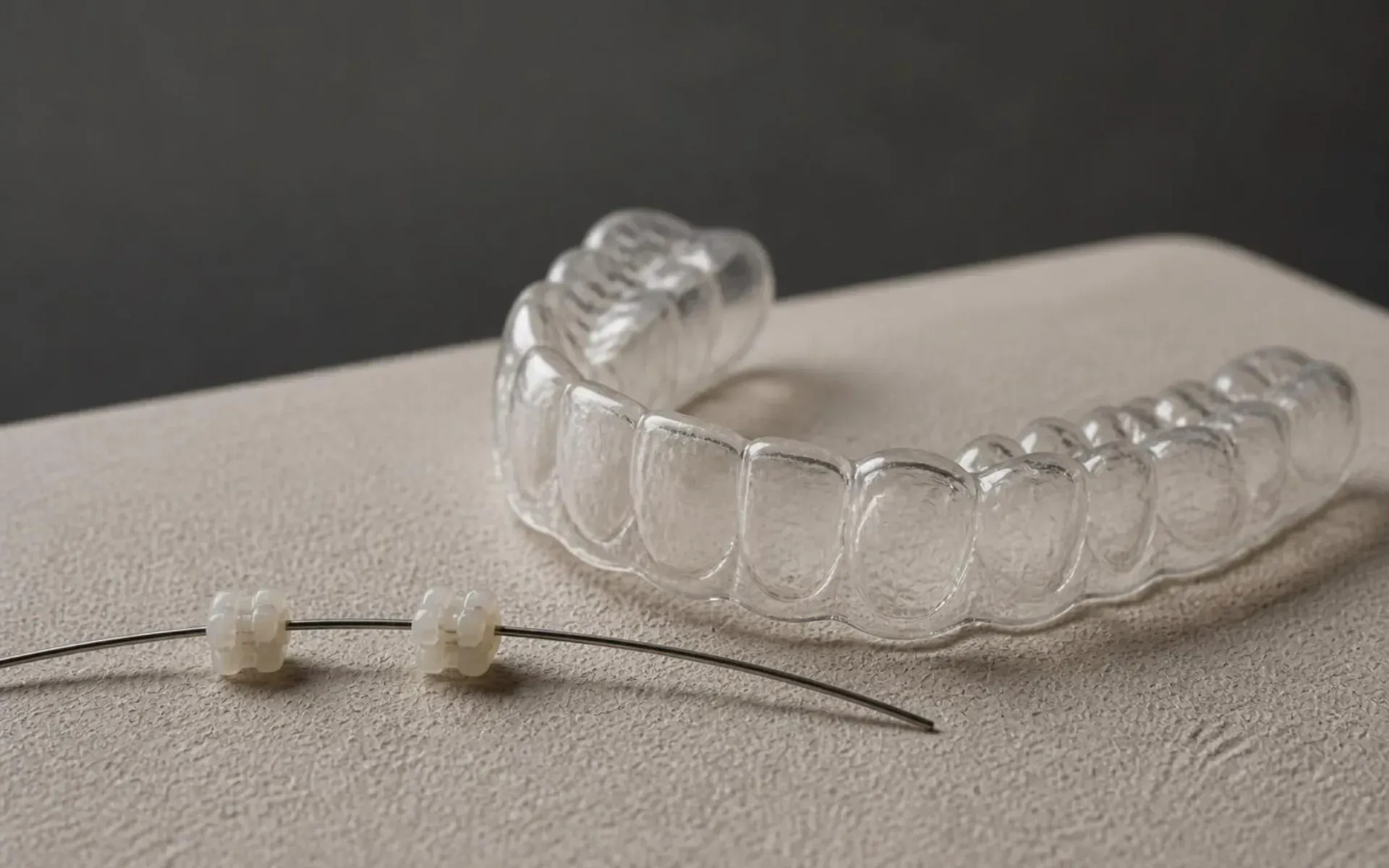
Orthodontics
Clear aligners with Invisalign® and comprehensive traditional braces. Your treatment is fitted, monitored, and adjusted in-house by your trusted dentist.
Explore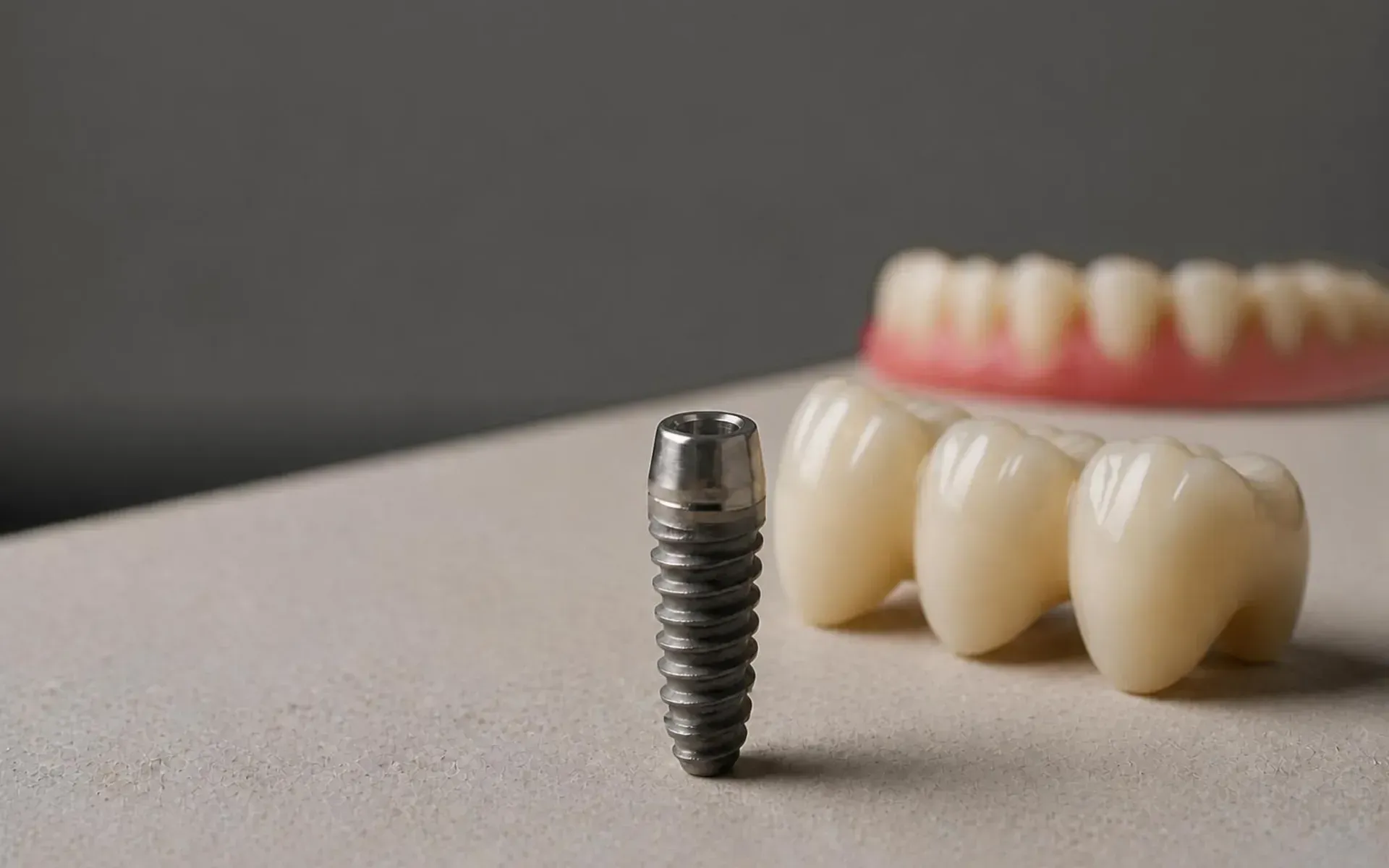
Missing Teeth
Permanent dental implants, dental bridges, and customized dentures planned using 3-D CBCT scans. Because our team includes a board-certified periodontist, your implant surgery, placement, and final crown are completed in the same building.
Explore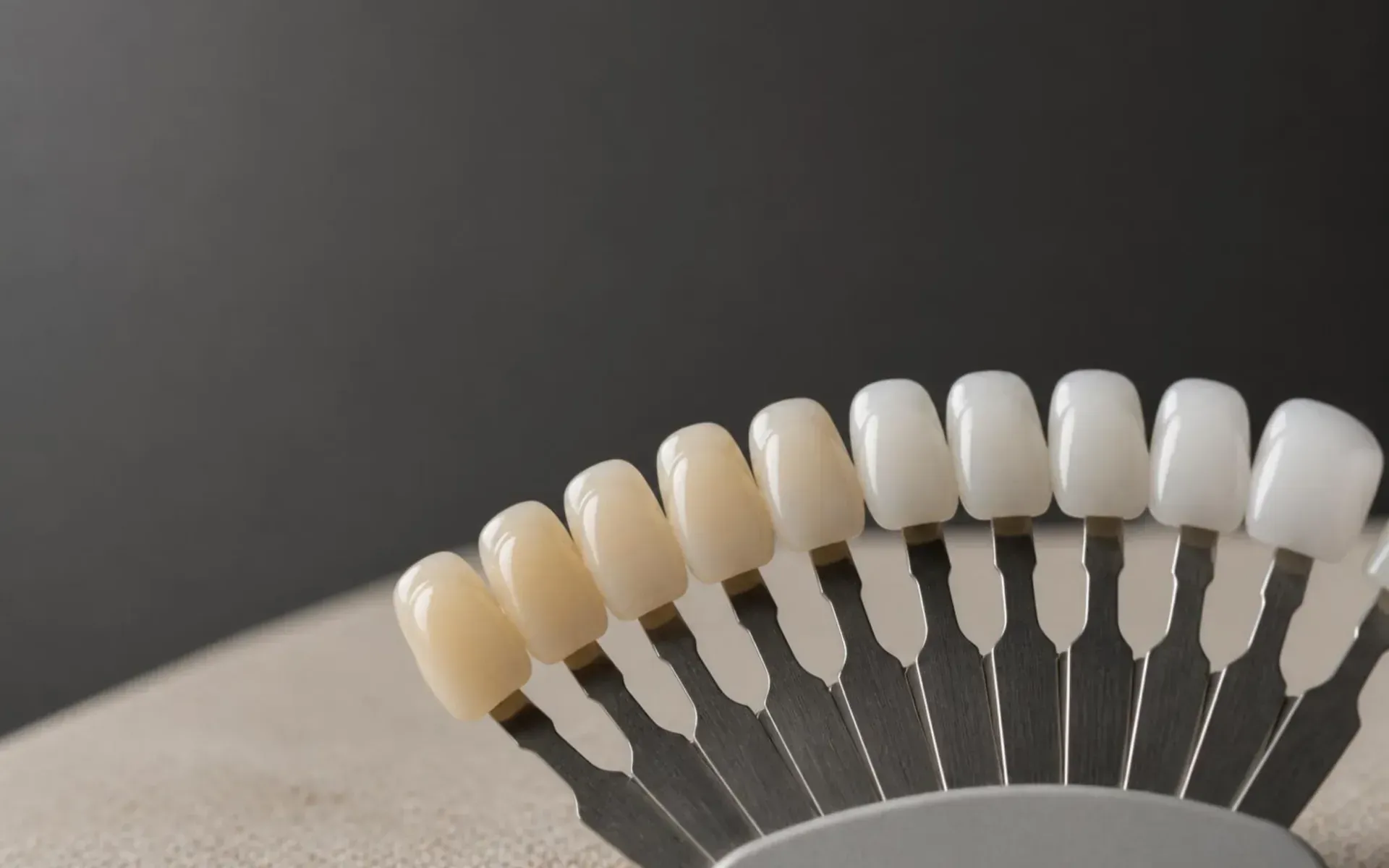
Cosmetic Dentistry
Professional Zoom whitening, custom take-home whitening trays, and composite tooth bonding designed to brighten and refine your natural smile.
Explore
Periodontics & Oral Surgery
Specialized gum disease therapy, scaling and root planing (deep cleanings), frenectomies, and periodontal surgery performed by our board-certified periodontist.
Explore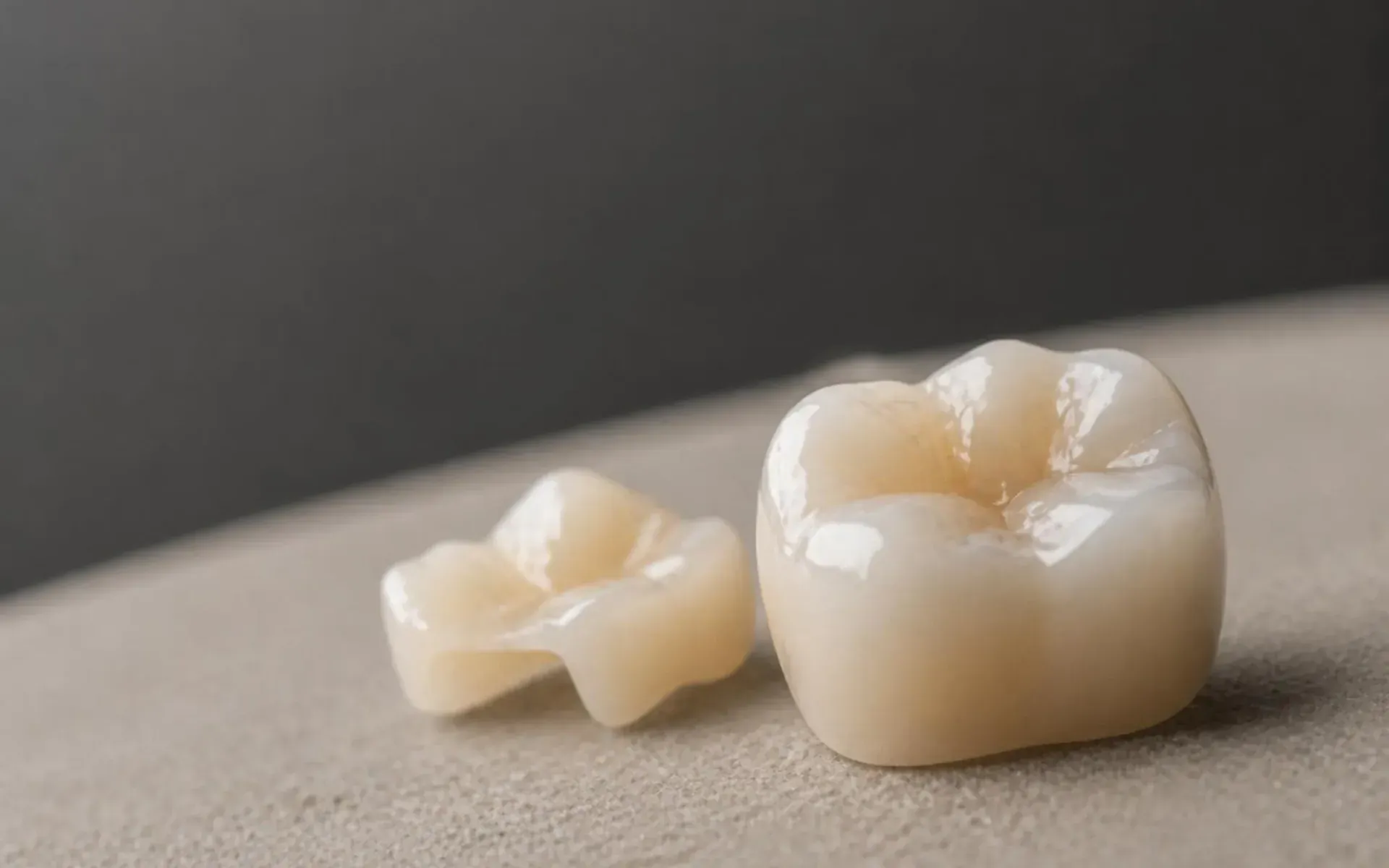
Restorative Dentistry
Custom porcelain crowns, bridges, tooth-colored fillings, and full-mouth restorations crafted to match the natural look, feel, and function of your teeth.
Explore
Sedation Dentistry
Relaxing dental care tailored to your comfort level. We offer nitrous oxide (laughing gas) for any routine clinic visit, as well as oral and IV sedation planned ahead with our periodontist.
Explore
Emergency Dentistry
Toothaches, broken teeth, knocked-out teeth and lost crowns — seen the same day, Saturdays included.
Explore