
Orthodontics
Aligners and comprehensive braces — with a straight answer about which one your teeth actually need, even when it is the less profitable one.
Straightening teeth does more than improve looks.
Crowded teeth trap plaque where floss cannot reach, which is why crowding and gum disease so often travel together. A bite that meets unevenly wears enamel down on the teeth taking the load, and that wear does not grow back.
So while most people arrive asking how their smile looks, orthodontics is usually solving two problems at once — and the second one is the reason to do it before it compounds.
Which appliance suits your teeth is decided from a scan, photographs and X-rays. Not from a brochure, and not from what happens to be on offer.
Every orthodontics treatment, on its own page.
How braces and clear aligner treatment is planned and tracked in Frisco
Teeth move through bone, so the plan starts with the health of the bone and gums — and check-ins every four to six weeks are what keep a case on schedule.
Scan, photographs and X-rays
A wand passed around the mouth, no impression trays. We also check gums and joints, because teeth move through bone and the bone has to be healthy for any of this to work. Where the bite itself is part of the question, or the patient is still growing, that includes a cephalometric — the side-on X-ray that precisely measures how the two jaws sit relative to each other.
Your treatment plan and total cost
You see the projected movement, and you get the total cost, the expected insurance contribution and the monthly figure — before anything is ordered.
Choosing the right appliance for your case
Aligners for most crowding and spacing; fixed straight-wire braces where roots have to move a long way or the bite itself needs correcting. Dr. Peravali treats comprehensive cases and refers out the ones that belong with an orthodontist — and she will tell you that at the consultation, before treatment starts.
Check-ins every four to six weeks
Seen regularly, a tooth that is off-track is a small adjustment. Discovered at the end of a mail-order series, it is a restart.
Retainers for life after treatment
A removable retainer or a fine wire bonded behind the front teeth. Teeth drift for life; the retainer is what makes a year of work permanent.
Braces and Invisalign from your own Frisco dentist: what to know
Why have orthodontics with your own dentist?
Orthodontics moves the crowns of teeth, and crowns are attached to roots sitting in bone of varying thickness and health. Moving a tooth into thin bone, or moving one with untreated gum disease beneath it, causes damage that is difficult to reverse. Before any case starts here we take X-rays, measure the gums and look at what the bite does under load — and if gum disease is present, it gets treated first. That sequencing is the single biggest advantage of having this done where your dental records already live.
Gum disease treatment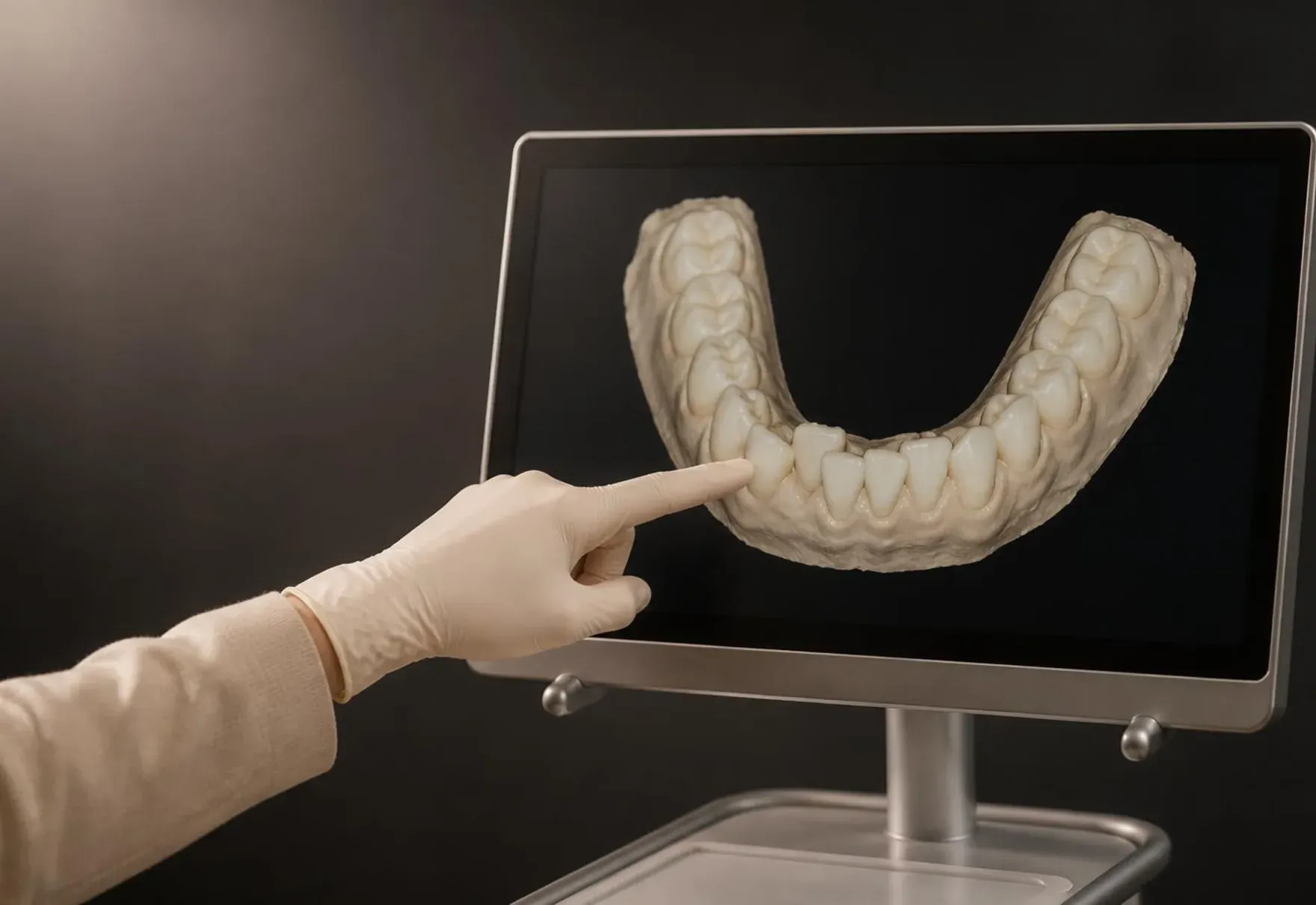
Orthodontics for adults and relapse cases
Two groups in particular. Patients who had braces as a teenager, stopped wearing the retainer some time in college, and have watched the front teeth close in again — those are often the quickest cases we treat. And patients who assumed the window had closed: teeth move at any age, as long as bone and gums are healthy. What changes with age is how carefully the movement is planned around existing crowns, bridges and recession, which is exactly the sort of detail a general practice is well placed to handle.
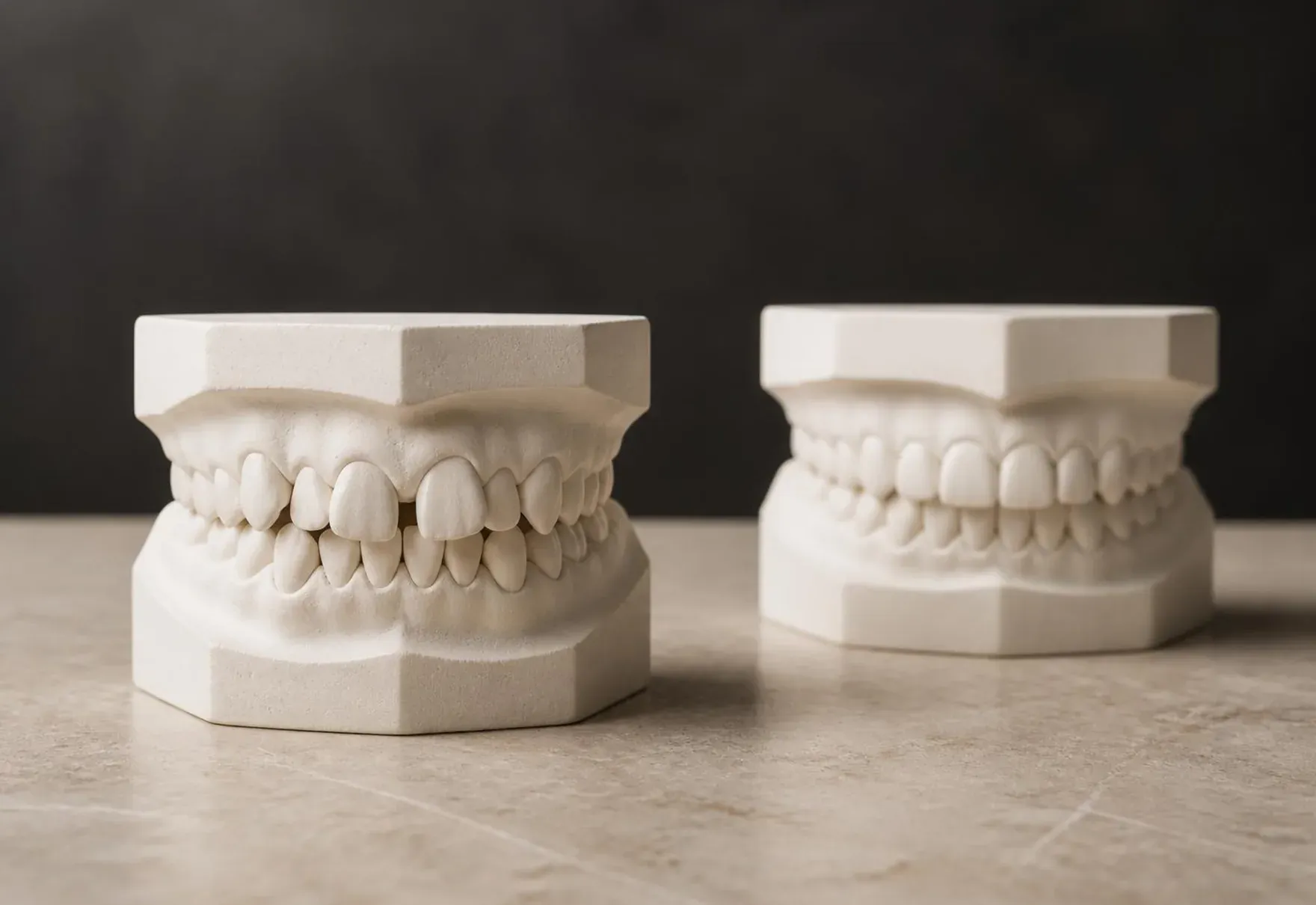
Orthodontic cases treated at our Frisco office
Every pair below was treated in this office. Each says what the patient came in with, what was done, and how long it took.
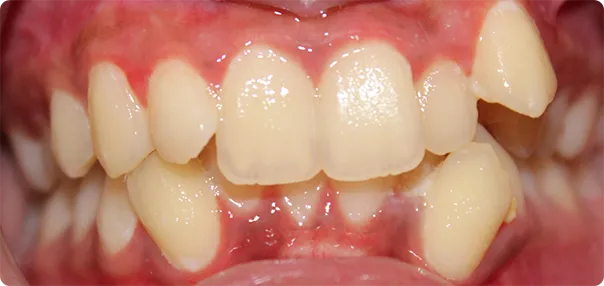
Before 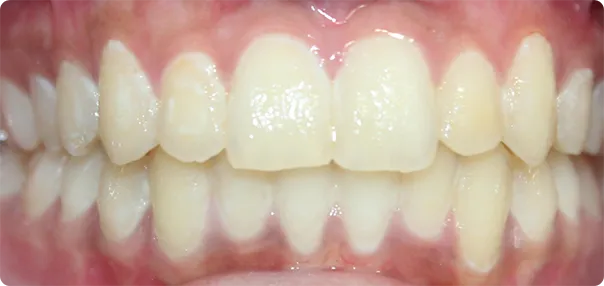
After - Came in with
- Crowded teeth, inflamed gums that bled, food trapping between the teeth, and real difficulty keeping them clean.
- What we did
- Invisalign, treated while the patient was still growing — the arches were widened and the crowding relieved. Conventionally this would have been split into two phases of treatment; it was done as one.
- Time in treatment
- 2 years
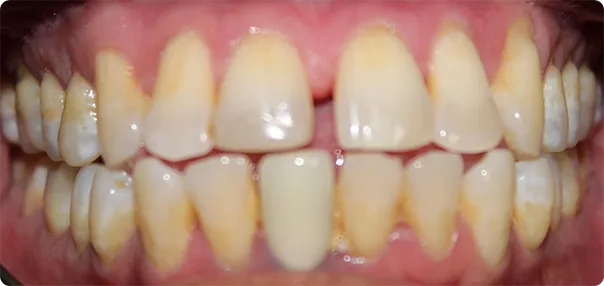
Before 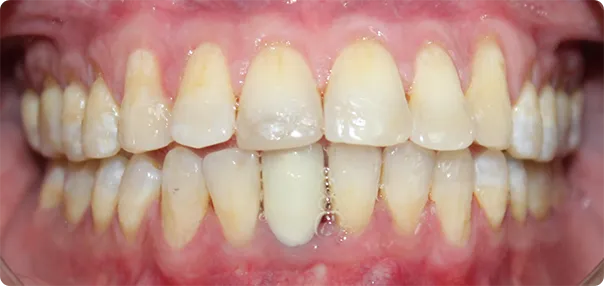
After - Came in with
- Spaces between the teeth.
- What we did
- Six Month Smiles — the spaces were closed.
- Time in treatment
- 12 months
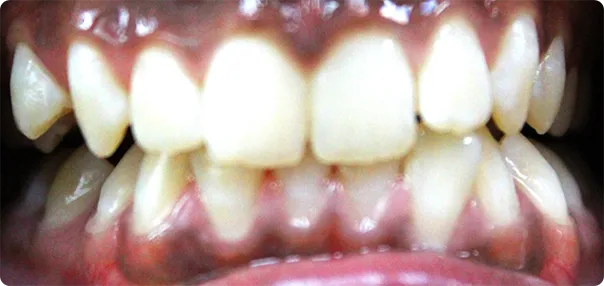
Before 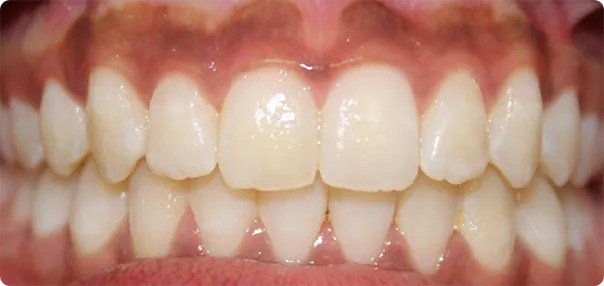
After - Came in with
- Narrow arches, crowding and inflamed gums.
- What we did
- Invisalign, treated while the patient was still growing — the arches were widened, the teeth straightened and the bite corrected. Conventionally a two-phase case; it was done as one.
- Time in treatment
- 18 months
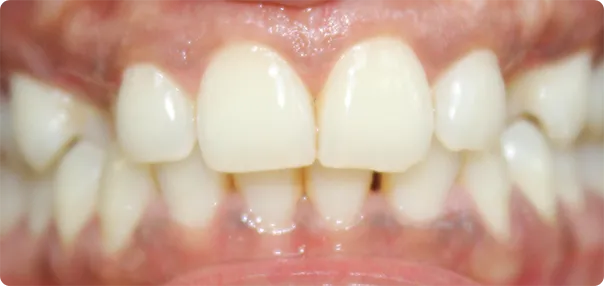
Before 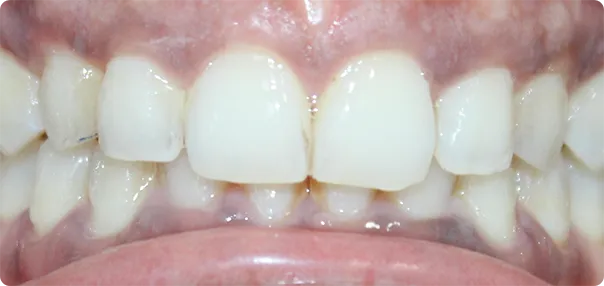
After - Came in with
- A canine blocked out of the arch, and a wish to improve the smile.
- What we did
- Invisalign.
- Time in treatment
- 24 months
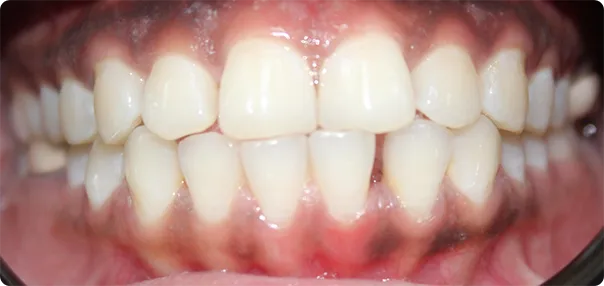
Before 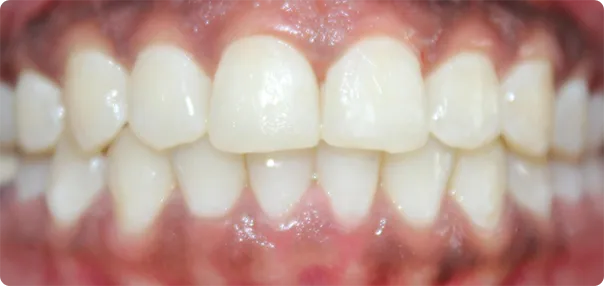
After - Came in with
- Spacing, and problems with the bite.
- What we did
- Invisalign — the spaces were closed and the bite corrected.
- Time in treatment
- 16 months
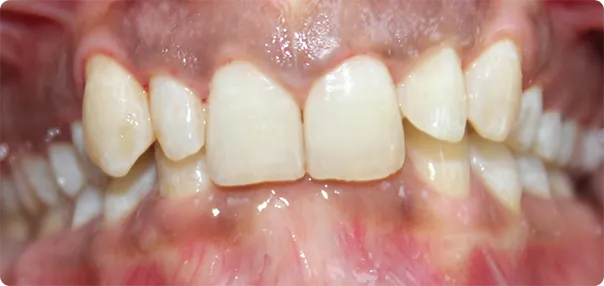
Before 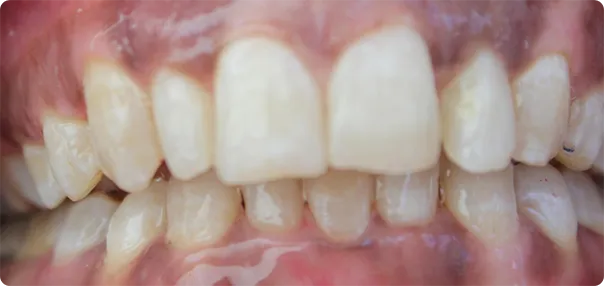
After - Came in with
- A deep bite with crowding.
- What we did
- Six Month Smiles.
- Time in treatment
- 12 months
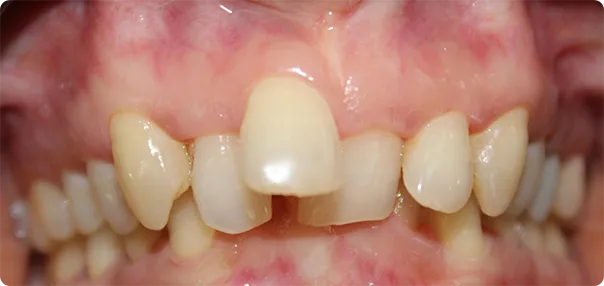
Before 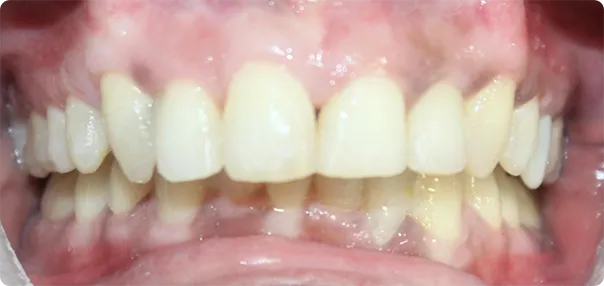
After - Came in with
- Crowding with inflamed gums and tartar build-up, and difficulty cleaning between the teeth.
- What we did
- Six Month Smiles — the crowding was corrected.
- Time in treatment
- 18 months
Orthodontic treatment for a growing child is often split into two courses — an early phase to make room, a pause while the adult teeth arrive, then a second phase to finish — with each phase quoted separately. Both teenage cases here had the makings of that. They were treated as one continuous course instead, which is why they ran eighteen months and two years: longer than a single phase, and less than two.
Six Month Smiles is the name of the bracket system. It is not a promise about how long treatment takes. The system is built to align the front teeth; whether we stop there or correct the bite as well is decided case by case, with you. These three were treated comprehensively — the bite included — which is why they took twelve to eighteen months, longer than the name on the system implies.
Every case on this page was treated in this office, by our own doctors. These are photographs of our own patients, published with their permission. They are close-up photographs of teeth — not portraits of faces — so no patient can be identified from them, which is exactly why patients were willing to let us show them.
Braces or aligners in Frisco: which fits your case?
We will tell you which category you fall into even when it is the less profitable answer.
| Feature | Invisalign | Straight-wire braces |
|---|---|---|
| Visible | Barely | Yes |
| Removable | Yes | No |
| Typical course | About 12 months | 18–24 months |
| Corrects | Most crowding and spacing | Virtually anything, including bite |
| Depends on you | Entirely — wear time | Very little |
| Retainer afterwards | Yes | Yes |
Why does straightening teeth take months?
Teeth are not pushed through bone like a peg through a hole. The bone itself is dissolved ahead of the tooth and rebuilt behind it, and that biology sets the pace.
- At rest — the root hangs in bone on the periodontal ligament, the thin layer that senses load.
- Under pressure — steady force from an aligner or a wire makes bone dissolve ahead of the tooth and rebuild behind it. Bone remodeling is what takes the months.
- Settled — the tooth is in its new position and the bone has rebuilt around it. Until the ligament fully reorganizes, a retainer holds the result.
How orthodontics fits into your overall dental plan
Looking for an orthodontist in Frisco, TX? White Lotus Dental is a general dental practice, not an orthodontic specialty practice. Our dentists plan and track braces and Invisalign for adults and teens, and Dr. Karuna Peravali refers out the cases that belong with an orthodontist. If straightening is one part of something larger (whitening, chips, worn edges, old bonding, a missing tooth), the order things happen in changes the result.
Teeth are usually moved first, because their final position decides what any restoration has to look like. Whitening follows, then bonding, veneers or crowns are matched to the new shade. Doing it the other way round means paying twice for the same front tooth.
Where a tooth is missing, the space is often a central orthodontic question in its own right: it can be closed, or held open at exactly the width an implant crown needs. See missing teeth and cosmetic dentistry, and raise it at the consultation.
Orthodontics near Frisco, Prosper and Plano
White Lotus Dental is at 8175 Custer Rd, Suite A110, Frisco, TX 75035. Patients come to us from across Frisco and from nearby Prosper, Plano, Little Elm, Allen, Celina and McKinney. We are open Monday, Tuesday, Thursday and Friday from 9 AM to 6 PM and Saturday from 9 AM to 3 PM. We are closed on Wednesday and Sunday, although our team still answers the phone on Wednesdays.
Each part of treatment has its own page. For choosing, read Invisalign, Invisalign or braces and clear and ceramic braces. For who it suits, see braces and aligners for adults, early (phase 1) orthodontics, bite problems explained and short-term orthodontics. For what happens next, see living with Invisalign, retainers and relapse and what orthodontics costs.
Our board-certified periodontist, Dr. Holvin Louie, treats gum disease first when it is present. Children’s Medicaid and CHIP are accepted here, and anyone without insurance can join our membership plan. To book a consultation, call (469) 262-2111 or request an appointment online.
Orthodontics cost in Frisco: what to expect
If a case would be better served by a specialist referral than by treatment here, we will say so at the consultation, before any deposit is paid.
You get the figure in writing before treatment starts. We accept all major PPO plans and file the claim for you, our membership plan takes a percentage off treatment, and CareCredit financing is available.
How plans usually cover orthodontic treatment.
Orthodontics — its own category, with its own ceiling
- What plans pay
- Commonly 50%, up to a separate lifetime maximum of around $1,000 to $2,000. Read that again: this is a lifetime maximum. It does not reset every year the way the annual one does.
- Deductible
- Often a separate one-off orthodontic deductible, and on some plans none at all.
What catches people out
- Age limits. A great many plans cover orthodontics only up to age 19, some only to 18. Adult orthodontic coverage exists but it is much less common than people expect.
- A lifetime maximum does not come back. Once it is spent it is spent, on that plan and any future one that counts prior treatment — which is why a second course of treatment is usually paid entirely by the patient.
- Benefits are paid in instalments across treatment — not up front — so changing employer mid-treatment can stop the payments partway through.
These are how dental plans usually classify this treatment — not a statement about your own plan. Yours is the one that governs, plans differ more than people expect, and the only reliable answer comes from reading your specific benefits, which we always do ahead of treatment and give you in writing.
And what changes out-of-network
A dentist who is in-network has signed a contract fixing what may be charged for each procedure and cannot bill you the difference. One who is out-of-network has signed nothing, so the full fee stands.
So the first difference is the price itself — the same treatment is simply allowed to cost more out-of-network, before anyone's plan is considered.
What you personally pay out of that depends on your own deductible and coinsurance, which is why there is no percentage here: it is not a property of the treatment, it is a property of your plan, and we verify yours before you commit. But two things follow for everybody. Your share is a share of a bigger number. And your orthodontic lifetime maximum is spent by what the plan pays toward that bigger number, so the same treatment eats more of your benefit out-of-network. That pot does not reset, which is what makes it bite.
The figures are on the treatment pages. This page covers several different procedures, and one chart here would have to average treatments that are not comparable — a filling against a full-arch case. Each treatment page carries its own allowed fee, in network and out.
Check the going rate yourself
FAIR Health's dental cost lookup is free, needs no account, and is not ours — it reports what a procedure typically costs in your area. It does not know your plan, so treat it as a ballpark figure — not a final answer.
Ask us for the number first
We verify your specific plan before your appointment and give you a written estimate: what the plan is expected to pay, and what you pay. If we get it wrong we tell you why.
Bring an Explanation of Benefits
Treated somewhere else? Your EOB shows exactly what the plan paid and what it counted against your maximum. Bring one in and we will read it with you — whether or not you become a patient here.
None of this says out-of-network dentists are worse dentists. Plenty are excellent, plenty are out-of-network for sound reasons, and people choose a dentist for who that person is. What we think you are owed is the information, so that whatever you choose, you chose it knowingly. The whole thing, explained properly, or call (469) 262-2111 and ask.
Aligner treatment timeline: a year, week by week
Twelve months to two years depending on the appliance and the case. What follows is the shape of a typical adult course.
- Week 1Scan, records and your treatment plan
A digital scan, photographs and X-rays, then the projected movement on screen and the full cost before anything is ordered.
- Weeks 2–4Fitting your first aligners
Aligners with their attachments, or brackets and a first wire. Expect two or three days of pressure each time something new goes on.
- Every 4–6 weeksShort check-ins
Ten minutes to confirm teeth are tracking to plan. An off-track tooth caught here is an adjustment; found at the end, it is a restart.
- The finishFinal adjustments to fine-tune your smile
The last millimeter takes longer than people expect, because it is the part that decides whether the result looks deliberate or nearly right.
- For lifeRetention: starting your retainers
A removable retainer or a wire bonded behind the front teeth. Teeth drift for life; this is what makes a year of work permanent.
Orthodontics in Frisco, TX
Orthodontic check-ins are short, so weekday evenings and Saturdays absorb them easily around work and school.
- Hours
- Weekdays 9–6
Saturdays 9–3 - Languages
- English, Telugu, Hindi, Urdu
Arabic with Saba, our hygienist, Tuesdays, Thursdays and Fridays
Vietnamese with Anh, our hygienist, Saturdays
Cantonese and Mandarin with Dr. Louie, our periodontist, on his scheduled days, by internal referral
Questions Frisco patients ask about braces and Invisalign
Grouped so you can go straight to the one you came for.
Orthodontics — common questions
How do I know which appliance I need?
Am I too old for orthodontics?
How much does treatment cost?
Do I have to wear a retainer afterwards?
Can you treat crowding if I also have gum disease?
Do you treat children and teenagers?
Is White Lotus Dental an orthodontist?
How long does orthodontic treatment take?
How much do braces cost in Texas?
Where can I get braces or Invisalign near me in Frisco?
Toothache at 7am? You'll be seen today.
Same-day and Saturday appointments for toothaches, broken teeth, knocked-out teeth and lost crowns. Call us and we'll tell you what to do first, while you're still at home.
Everything else under this roof.
White Lotus Dental offers nine dental specialties inside one calm office on Custer Road. Having general dentists and an in-house periodontist on staff means your entire family can receive preventive, restorative, and surgical treatments in one familiar place.
Preventive Dentistry
Regular dental checkups, professional cleanings, night guards, and jaw-pain care. Every routine exam includes an oral cancer screening to protect your long-term health.
Explore
Children's Dentistry
Gentle first dental visits, protective sealants, fluoride applications, and space maintainers. We accept Children's Medicaid and CHIP, and every young patient receives a toy-machine token at the end of their visit.
Explore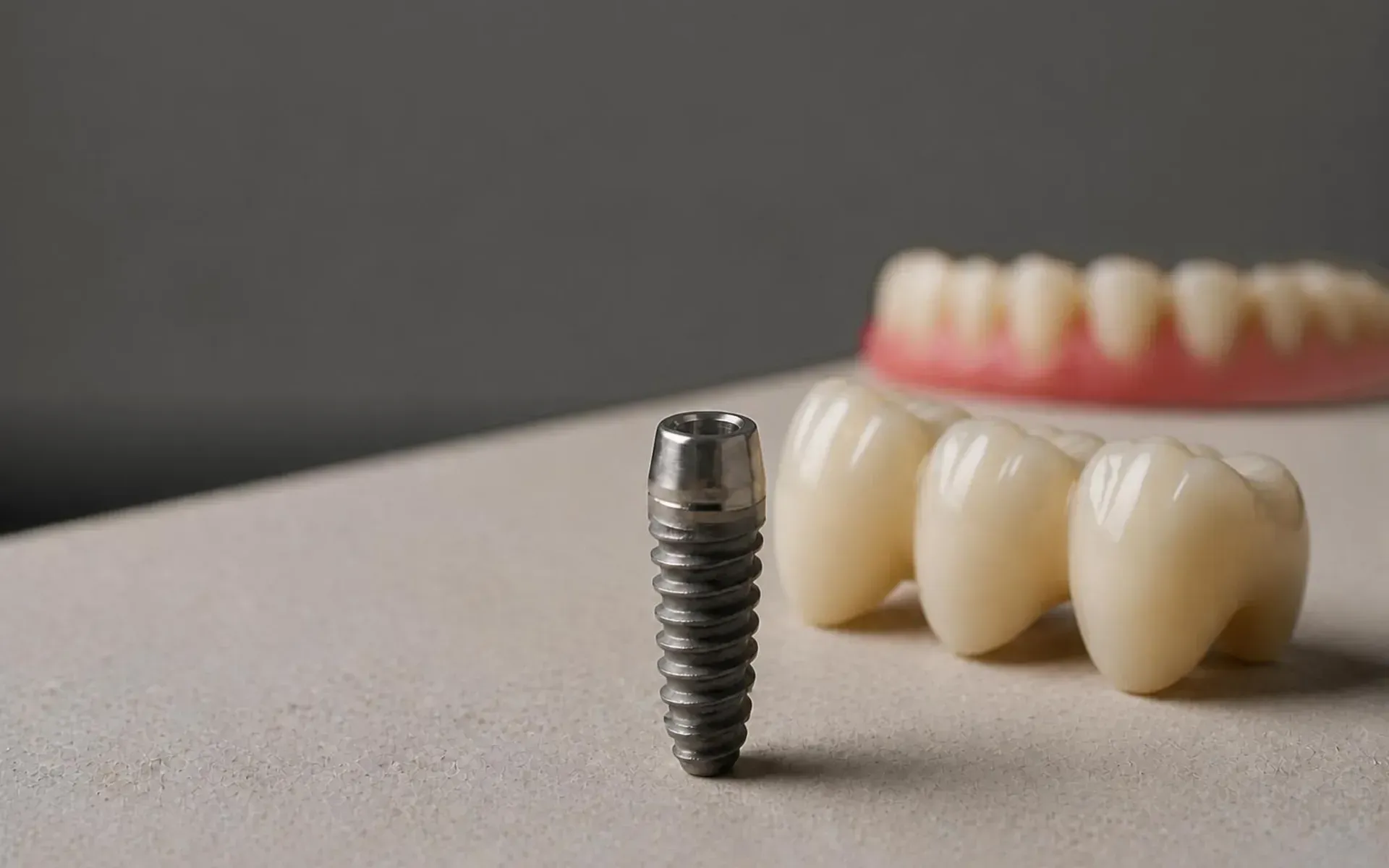
Missing Teeth
Permanent dental implants, dental bridges, and customized dentures planned using 3-D CBCT scans. Because our team includes a board-certified periodontist, your implant surgery, placement, and final crown are completed in the same building.
Explore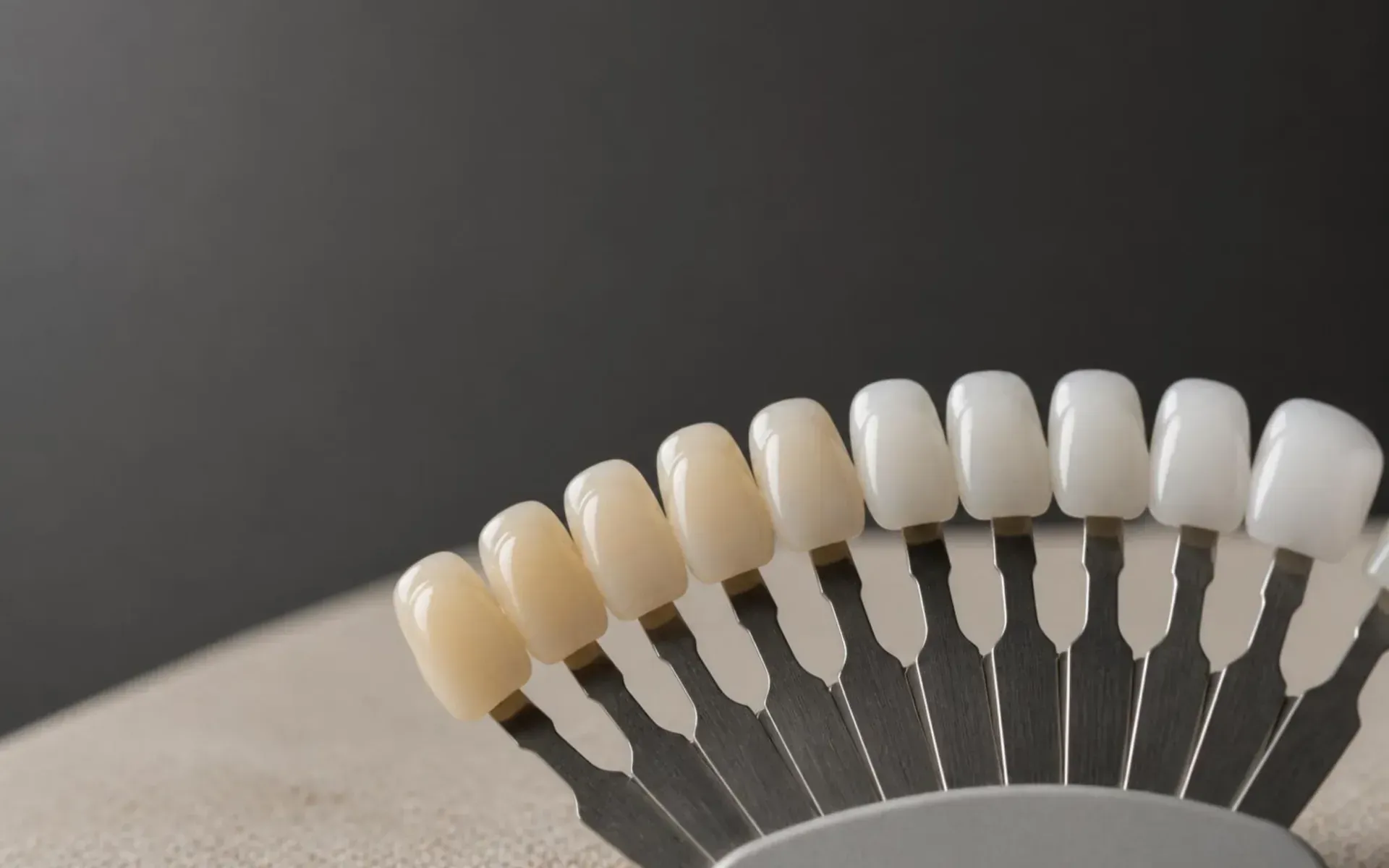
Cosmetic Dentistry
Professional Zoom whitening, custom take-home whitening trays, and composite tooth bonding designed to brighten and refine your natural smile.
Explore
Periodontics & Oral Surgery
Specialized gum disease therapy, scaling and root planing (deep cleanings), frenectomies, and periodontal surgery performed by our board-certified periodontist.
Explore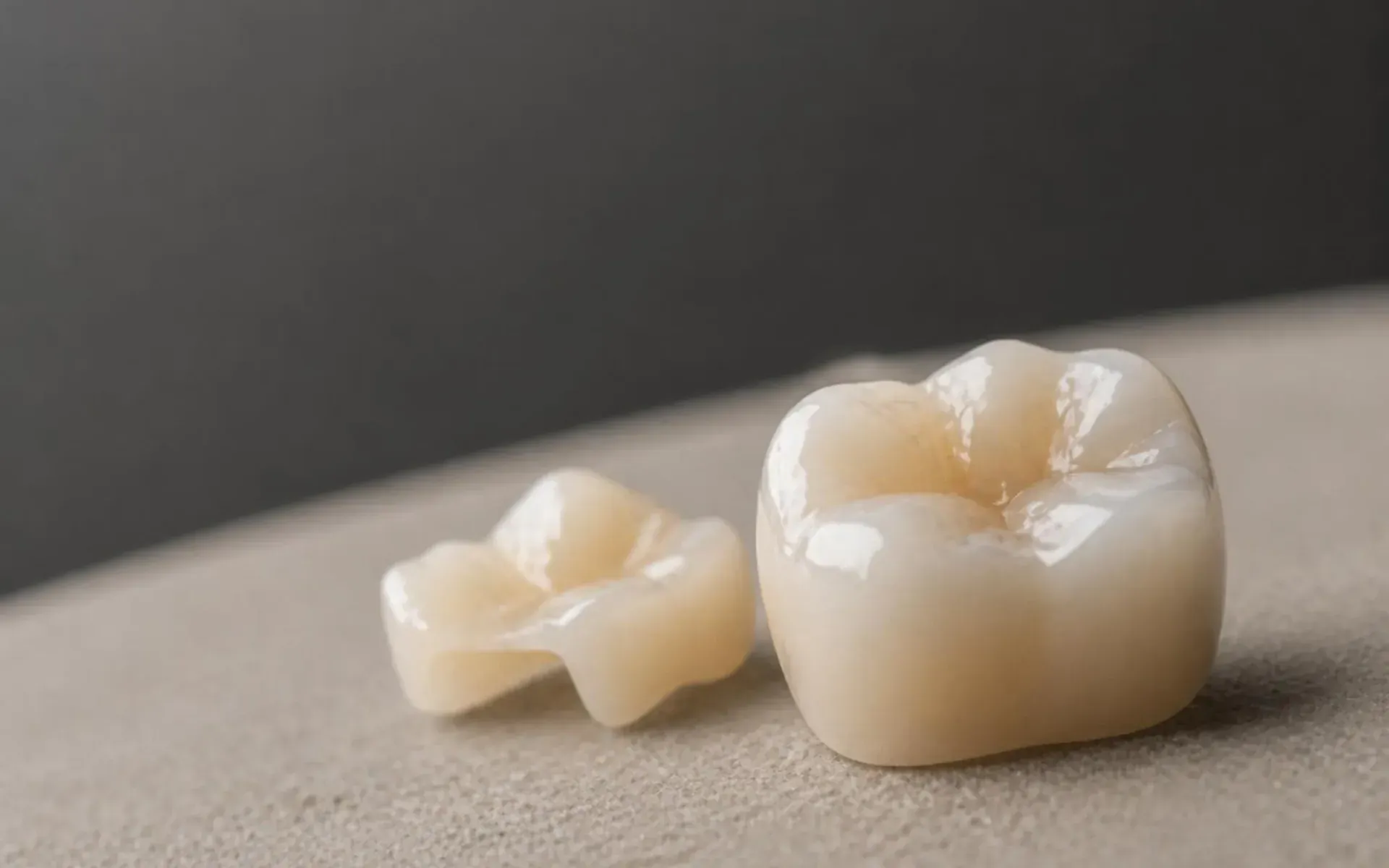
Restorative Dentistry
Custom porcelain crowns, bridges, tooth-colored fillings, and full-mouth restorations crafted to match the natural look, feel, and function of your teeth.
Explore
Sedation Dentistry
Relaxing dental care tailored to your comfort level. We offer nitrous oxide (laughing gas) for any routine clinic visit, as well as oral and IV sedation planned ahead with our periodontist.
Explore
Emergency Dentistry
Toothaches, broken teeth, knocked-out teeth and lost crowns — seen the same day, Saturdays included.
Explore