
Loose Tooth in Frisco, TX
In an adult, a loose tooth is always a signal — either something hit it, or the bone holding it has been quietly disappearing.
What to do today for a loose tooth
The advice for a loose tooth is the same whether it started with a knock or appeared on its own, with one exception, which we will ask you about on the phone.
Leave the loose tooth alone
Do not test it with your tongue or your fingers. Each movement tears a little more of the ligament and bone attachment that is still holding the tooth, and that attachment is exactly what we are trying to preserve.
Eat soft foods on the other side
Nothing that needs biting into with that tooth, nothing hard or crunchy, and nothing sticky enough to pull on it. This applies to front teeth in particular — biting into a sandwich puts a surprising sideways force on an upper incisor.
Keep the area very clean, gently
A soft brush, and warm salt-water rinses. If the cause is gum disease, plaque at the gum margin is the fuel for it, and stopping brushing because the area is tender makes the problem worse within days.
Cold compress if it followed an injury
Fifteen minutes on, fifteen off, on the outside of the lip or cheek. Note whether the tooth has moved position or changed height, and whether biting together feels different — that tells us what the socket has done.
Call us the same day
Call (469) 262-2111. A tooth loosened by a blow is splinted, and the sooner that happens the better the outcome. A tooth loosened by bone loss is a different treatment path, and both start with getting seen right away.
Loose adult tooth: what to know before you call
Loose after an injury
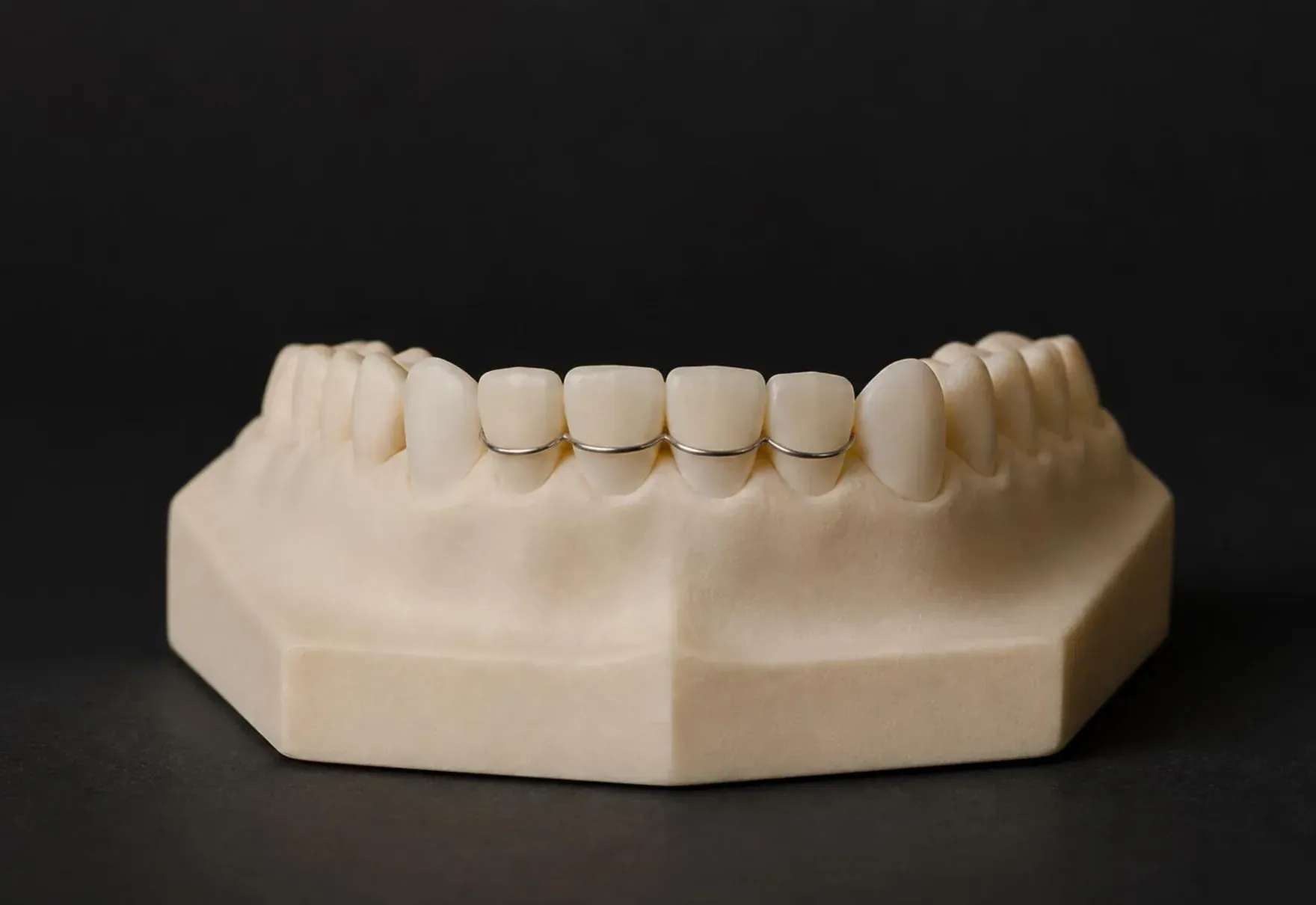
A blow can stretch or tear the ligament that suspends the tooth in bone, and sometimes fracture the socket wall around it. The treatment is to reposition the tooth if it has moved, and splint it to its neighbors, usually for two to four weeks. That lets the ligament reattach while the tooth is held still. X-rays check the root and the socket, and we look at the teeth either side too. A knock hard enough to loosen one tooth often affects more than one. Over the following months the nerve is monitored. A traumatized tooth sometimes darkens or dies later, and root canal treatment then keeps it. Most teeth splinted promptly after an injury are still in service years afterwards.
A loose tooth with no injury
This is the more common version and the more serious one. A tooth that becomes loose on its own has usually lost the bone that held it, to advanced gum disease. That is a slow, painless process that people notice only when teeth start to move or when gums bleed and recede. Grinding and clenching accelerate it, and so does an uneven bite that overloads one tooth. Treatment begins with measuring the pockets around every tooth and taking X-rays to see the bone level. Then comes deep cleaning below the gum line to remove the deposits driving the inflammation. Where teeth remain mobile afterwards, splinting, bite adjustment or grafting may be options — all decided by our board-certified periodontist, in this building.
Gum disease treatment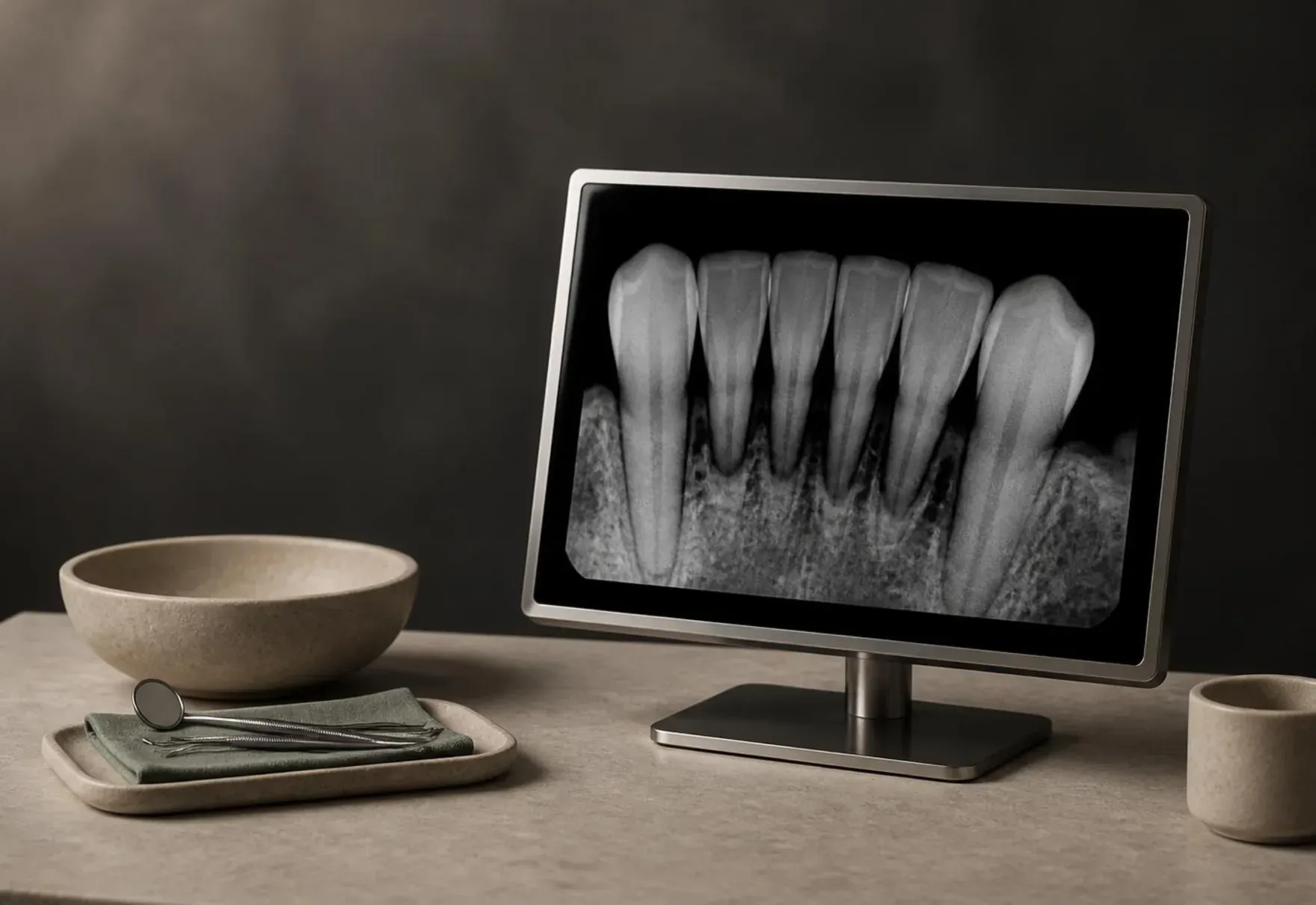
Loose tooth near Frisco, Prosper and Plano
We see a loose tooth at our office at 8175 Custer Rd, Suite A110, Frisco, TX 75035. Gum treatment is planned with Dr. Holvin Louie, our board-certified periodontist, in the same building. We are open Monday, Tuesday, Thursday and Friday from 9 AM to 6 PM and Saturday from 9 AM to 3 PM. We are closed Wednesday and Sunday, though the phone is answered on Wednesday. Patients come from Frisco and from Prosper, Plano, Little Elm, Allen, Celina and McKinney.
Call (469) 262-2111Which kind of loose tooth do you have?
The distinction decides both the urgency and the treatment, and it is usually clear from your answer to one question: did something hit it.
| Feature | After an injury | No injury |
|---|---|---|
| Likely cause | Torn ligament, fractured socket | Bone loss from advanced gum disease |
| How soon | Same day | Same week — sooner if it is painful |
| First treatment | Reposition and splint | Measure, X-ray, deep clean below the gum |
| Later | Monitor the nerve; root canal if it dies | Ongoing maintenance every 3–4 months |
| Other teeth | Check the neighbors for hidden damage | Almost always affected too |
How much support your loose tooth has left
A tooth that has loosened on its own has lost attachment. These are the three states the probe finds, and only the first one is where you want to be.
- Healthy — 1 to 3mm, bone high against the root, no movement. This is what the other teeth should be measuring.
- Early loss — 4 to 5mm. No looseness yet, but the attachment is detaching and this is the stage where treatment reverses most of the damage.
- Advanced — 6mm and beyond with bone gone from around the root. This is where teeth move. Treatment stabilizes it; the bone already lost does not return.
What holds a tooth in place
A tooth is not fused to the jaw. It hangs in its socket on the periodontal ligament — a layer a fraction of a millimeter thick, made of fibers running from root to bone. That ligament has its own blood supply and nerve endings. It is why teeth have a tiny natural give, and why you can feel a hair between your teeth. It is also why a tooth can be moved deliberately with orthodontics.
Looseness means that attachment has been compromised, and there are only two ways for that to happen. Either it was torn mechanically — a blow, a fall, a sporting collision. Or it was destroyed gradually by inflammation, which is what advanced gum disease is.
The first is dramatic and gets attention. The second is silent, and by the time a tooth moves, a substantial proportion of the bone around it has already gone. Both are treatable. Only one of them is usually noticed early.
Why we check every tooth
If the cause is periodontal, the loose tooth is a symptom of a condition affecting the whole mouth, and treating one tooth in isolation is close to pointless.
So the appointment includes measuring the pocket depth around every tooth. We also take X-rays to establish bone levels and assess how your bite distributes force. That produces a full map of your mouth: which teeth are stable, which are borderline, and where the disease is still active.
Treatment then runs in stages: deep cleaning below the gum line to remove the deposits driving the inflammation, re-measuring after healing to see what has responded, and surgical or laser treatment from our board-certified periodontist where pockets remain deep. Maintenance visits every three to four months are the part that keeps the result, and the part most often skipped.
If the looseness comes from gum disease, the stages of gum disease explains how far it has progressed and what each stage needs. If a knock caused it, read about a knocked-out tooth, because the same injury can do both.
For a loose tooth in Frisco, call us on (469) 262-2111.
Time in the chair for treatment for a loose tooth.
The scale runs to five hours — the same scale on every page, so the bars are comparable across the whole site.
Loose tooth treatment cost in Frisco: what to expect.
The periodontal membership plan is $500 a year and includes four cleanings, which suits patients whose gums need watching every three months.
You get the figure in writing before treatment starts. We accept all major PPO plans and file the claim for you, our membership plan takes a percentage off treatment, and CareCredit financing is available.
How plans usually cover treatment for a loose tooth.
Basic on some plans, major on others
- What plans pay
- Which means treatment for a loose tooth is paid at roughly 80% on one plan and roughly 50% on another, for identical treatment. It is one of the widest genuine variations in plan design, and it is worth knowing up front, before treatment.
- Deductible
- Usually applies either way.
What catches people out
- Which side of the line your plan puts it on changes your share by about 30 percentage points. We check the classification specifically for your plan — guessing at the common case is how people get surprised.
- Where it lands in the major category, a waiting period may come with it — six or twelve months of holding the policy before it is covered at all.
These are how dental plans usually classify this treatment — not a statement about your own plan. Yours is the one that governs, plans differ more than people expect, and the only reliable answer comes from reading your specific benefits, which we always do ahead of treatment and give you in writing.
And what changes out-of-network
In-network allowed fee
$153–289
This is the contracted allowance for treatment for a loose tooth — taken from our own contracted schedules. Only the in-network figure here is one we would stand behind, so this shows a single number on its own. Estimating the other side would make a comparison out of a guess, and the comparison is the whole point of it.
A dentist who is in-network has signed a contract fixing what may be charged for each procedure and cannot bill you the difference. One who is out-of-network has signed nothing, so the full fee stands.
So the first difference is the price itself — the same treatment is simply allowed to cost more out-of-network, before anyone's plan is considered.
What you personally pay out of that depends on your own deductible and coinsurance, which is why there is no percentage here: it is not a property of the treatment, it is a property of your plan, and we verify yours before you commit. But two things follow for everybody. Your share is a share of a bigger number. And your annual maximum is spent by what the plan pays toward that bigger number, so the same treatment eats more of your benefit out-of-network.
Check the going rate yourself
FAIR Health's dental cost lookup is free, needs no account, and is not ours — it reports what a procedure typically costs in your area. It does not know your plan, so treat it as a ballpark figure — not a final answer.
Ask us for the number first
We verify your specific plan before your appointment and give you a written estimate: what the plan is expected to pay, and what you pay. If we get it wrong we tell you why.
Bring an Explanation of Benefits
Treated somewhere else? Your EOB shows exactly what the plan paid and what it counted against your maximum. Bring one in and we will read it with you — whether or not you become a patient here.
None of this says out-of-network dentists are worse dentists. Plenty are excellent, plenty are out-of-network for sound reasons, and people choose a dentist for who that person is. What we think you are owed is the information, so that whatever you choose, you chose it knowingly. The whole thing, explained properly, or call (469) 262-2111 and ask.
What happens after a loose tooth is stabilized
Splinting or deep cleaning is the beginning. Whether the tooth is still there in ten years is decided by what follows.
- Week 1Stabilizing the tooth
Repositioned and splinted if it followed a blow; deep cleaned below the gum line if the bone is the reason.
- Weeks 2–4Rest while the tooth reattaches
Soft food on that side and no testing it with your tongue. A ligament held still reattaches; one that is wiggled daily does not.
- Week 8Re-measure
The same readings again. Pockets that have shrunk mean the tissue is responding; those that have not are where surgery or grafting is considered.
- Months 3–12Monitoring the nerve
After trauma, a tooth can darken or die months later. Reviewed on X-ray, and treated with root canal treatment if it does — which usually keeps it.
- Every 3–4 monthsOngoing maintenance
The single strongest predictor of keeping teeth after periodontal treatment. Patients who stop lose ground within a year.
Booking loose tooth in Frisco
The first thing we will ask is whether anything hit it. That one answer sends the appointment down two completely different paths.
- Hours
- Weekdays 9–6
Saturdays 9–3 - Languages
- English, Telugu, Hindi, Urdu
Arabic with Saba, our hygienist, Tuesdays, Thursdays and Fridays
Vietnamese with Anh, our hygienist, Saturdays
Cantonese and Mandarin with Dr. Louie, our periodontist, on his scheduled days, by internal referral
Loose Tooth FAQs in Frisco, TX
Grouped so you can go straight to the one you came for.
Loose Tooth — common questions
Can a loose adult tooth tighten up again?
Should I pull it out myself?
Is a loose tooth painful?
My child's tooth is loose. Is that the same thing?
Can the tooth be splinted permanently?
What does treatment cost?
Can a loose adult tooth tighten back up?
Is a loose tooth a sign of gum disease?
What can a dentist do for a loose adult tooth?
Will a dentist pull a loose tooth?
How long can a tooth stay loose before I see a dentist?
Toothache at 7am? You'll be seen today.
Same-day and Saturday appointments for toothaches, broken teeth, knocked-out teeth and lost crowns. Call us and we'll tell you what to do first, while you're still at home.
Everything else under this roof.
White Lotus Dental offers nine dental specialties inside one calm office on Custer Road. Having general dentists and an in-house periodontist on staff means your entire family can receive preventive, restorative, and surgical treatments in one familiar place.
Preventive Dentistry
Regular dental checkups, professional cleanings, night guards, and jaw-pain care. Every routine exam includes an oral cancer screening to protect your long-term health.
Explore
Children's Dentistry
Gentle first dental visits, protective sealants, fluoride applications, and space maintainers. We accept Children's Medicaid and CHIP, and every young patient receives a toy-machine token at the end of their visit.
Explore
Orthodontics
Clear aligners with Invisalign® and comprehensive traditional braces. Your treatment is fitted, monitored, and adjusted in-house by your trusted dentist.
Explore
Missing Teeth
Permanent dental implants, dental bridges, and customized dentures planned using 3-D CBCT scans. Because our team includes a board-certified periodontist, your implant surgery, placement, and final crown are completed in the same building.
Explore
Cosmetic Dentistry
Professional Zoom whitening, custom take-home whitening trays, and composite tooth bonding designed to brighten and refine your natural smile.
Explore
Periodontics & Oral Surgery
Specialized gum disease therapy, scaling and root planing (deep cleanings), frenectomies, and periodontal surgery performed by our board-certified periodontist.
Explore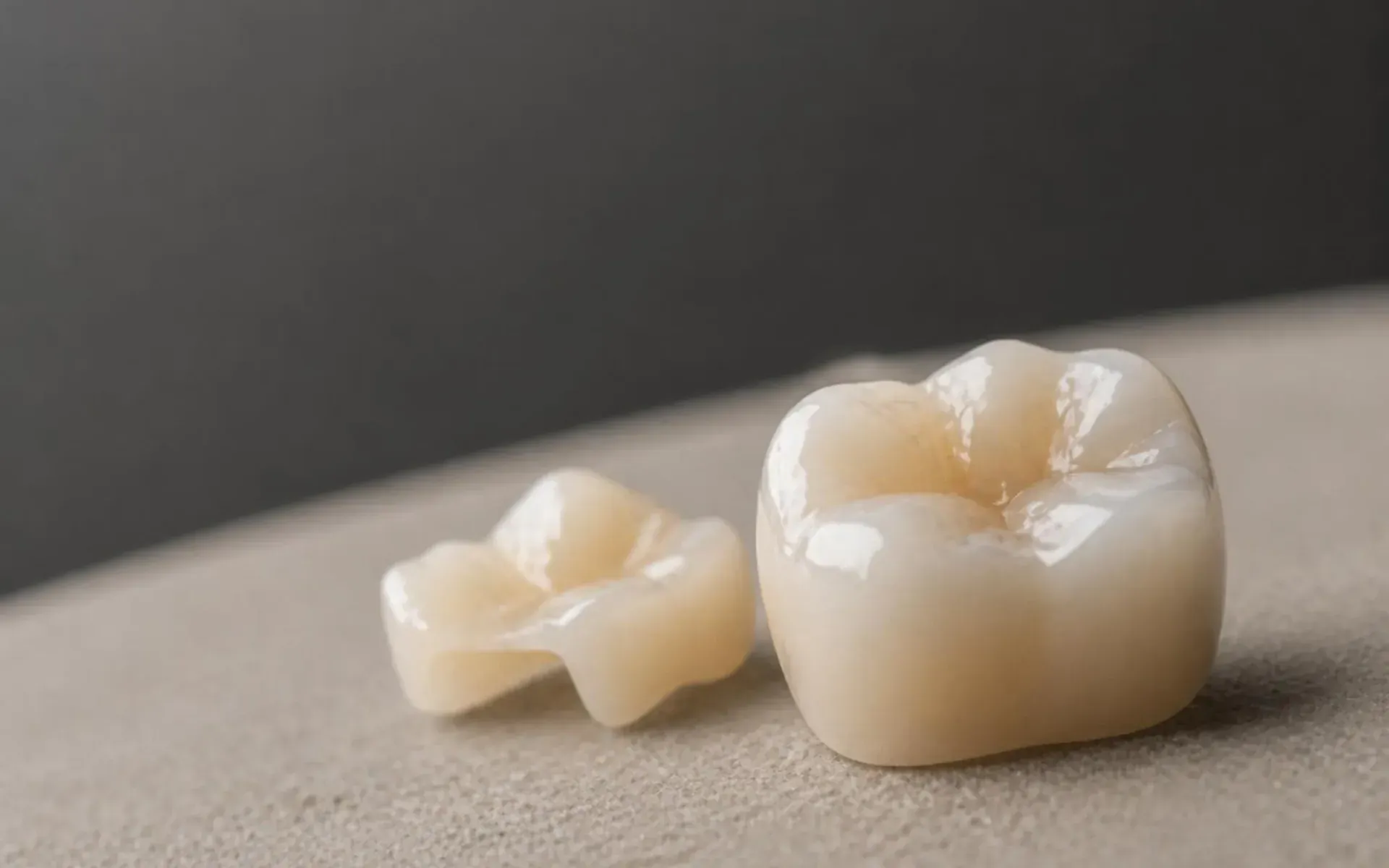
Restorative Dentistry
Custom porcelain crowns, bridges, tooth-colored fillings, and full-mouth restorations crafted to match the natural look, feel, and function of your teeth.
Explore
Sedation Dentistry
Relaxing dental care tailored to your comfort level. We offer nitrous oxide (laughing gas) for any routine clinic visit, as well as oral and IV sedation planned ahead with our periodontist.
Explore
Emergency Dentistry
Toothaches, broken teeth, knocked-out teeth and lost crowns — seen the same day, Saturdays included.
Explore