
Osseous Surgery (Pocket Reduction) in Frisco, TX
What happens when scaling and root planing has not been enough. Done here, many times, by a board-certified periodontist — with the trade explained before you agree to it.
How we decide if you need gum surgery
Every patient here follows a sequence before gum surgery is even considered, and most stop partway along it.
Scaling and root planing comes first
The deep cleaning is the first phase of periodontal treatment and it is often the whole of it. A large proportion of patients respond well enough that surgery does not come up at all. Anyone recommending gum surgery before this has been done and measured is skipping the step that decides whether surgery is needed.
Re-measured at six to eight weeks
The same six readings per tooth, compared against the first set. This is the evidence. Pockets that have come to four millimeters or under are managed with maintenance. Pockets still at five, six, seven with bleeding are the ones that need a different answer.
Finding out why some pockets did not respond
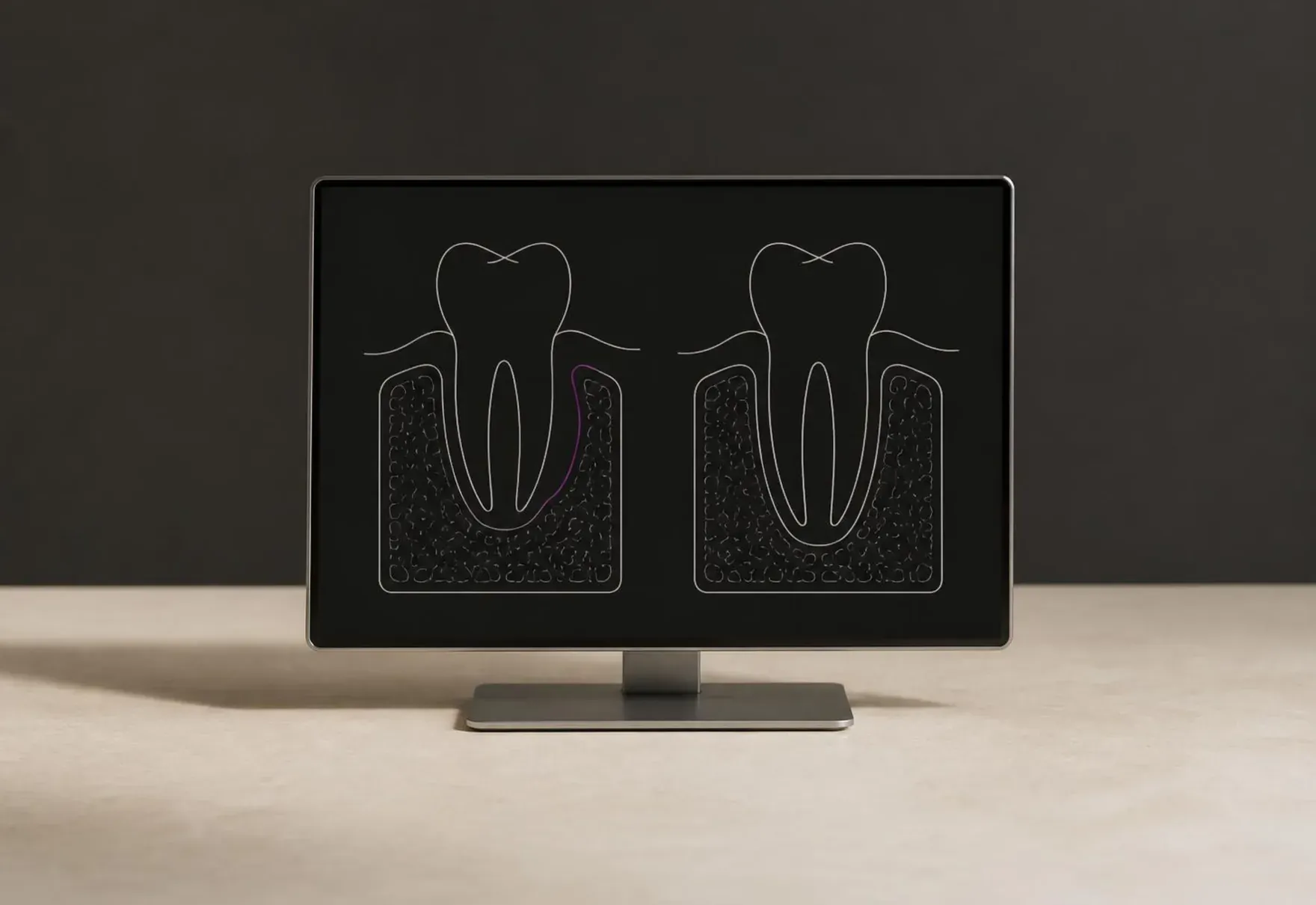
Usually because the pocket is too deep for any instrument to clean reliably, or because the bone has been lost in an irregular crater shape that holds bacteria no matter how well it is cleaned. That shape is the actual problem, and it is what the surgery addresses.
How osseous surgery is done
The gum is lifted away, and the root surfaces are cleaned directly under vision, with a clear view of the site. The irregular bone contour is then smoothed so there is no crater left to trap bacteria. The gum is then repositioned closer to the bone, which is what reduces the pocket. Done under local anesthetic with sedation available.
When bone regeneration is possible instead
In certain defect shapes, bone can be regenerated and kept, using grafting material and a membrane. Not every defect qualifies — it depends on the shape, and the scan and the surgery itself decide it. Where it is possible, Dr. Louie will say so, because keeping bone is better than recontouring it.
Ongoing maintenance after gum surgery
Every three to four months. Surgery reduces the pockets; maintenance is what keeps them reduced. This part is not optional and it is the reason the surgery was worth having.
Osseous surgery: what to know first
Why more deep cleaning would not fix deep pockets
This is the question patients ask and rarely get answered properly. A periodontal pocket at seven millimeters cannot be reliably cleaned with an instrument passed down it. That is not because anyone is doing it badly — it is because you are working blind around the curved anatomy of a root you cannot see. Worse, the bone loss underneath is usually not even. It goes in craters and troughs, and a crater in bone holds a colony of bacteria that nothing reaches from above. So a second round of scaling in a site that did not respond to the first is very often a second round of the same result. Osseous surgery is not "a stronger clean". It changes the shape of the problem. The roots are cleaned under direct vision, the crater is smoothed out, and the gum is placed where it can actually be maintained with a toothbrush.
Trade-offs we explain before you agree to surgery
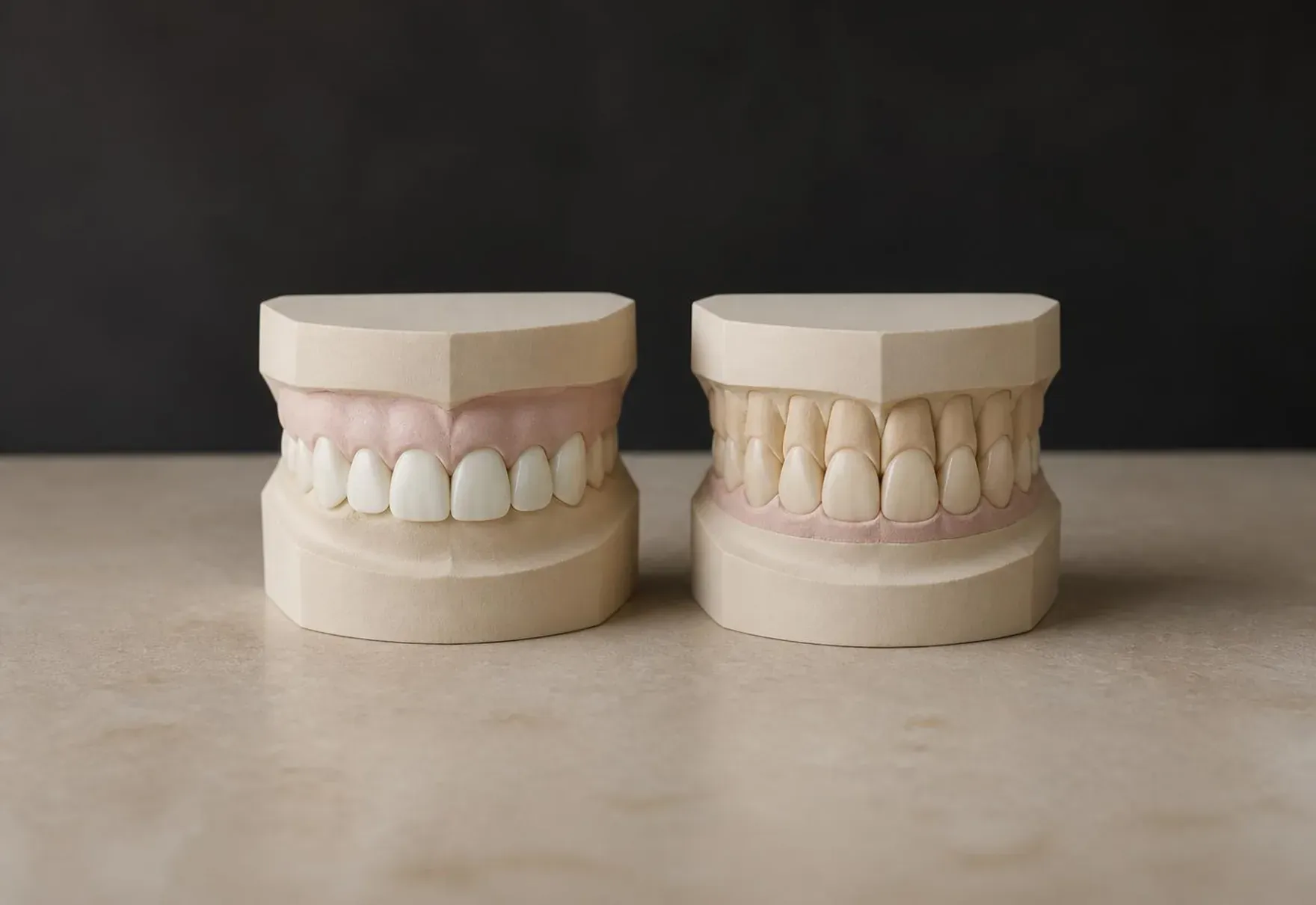
Reducing a pocket means putting the gum back closer to the bone — and where bone has already been lost, that means the gum sits lower than it did. Your teeth will look longer, and in the upper front region that can be noticeable. There may be more sensitivity, and more space between teeth where the gum has receded. This is not pleasant to hear, and it should be said before the surgery, not discovered after it. Here is the other side: the alternative is keeping deep pockets that cannot be cleaned, continuing bone loss, and eventually losing the teeth. Longer-looking teeth that you keep is the trade. Most people, told plainly, take it, and the ones who would rather not are entitled to make that choice knowingly.
Osseous Surgery (Pocket Reduction) near Frisco, Prosper and Plano
Osseous surgery is planned and done in our office at 8175 Custer Rd, Suite A110, Frisco, TX 75035, by Dr. Holvin Louie, our board-certified periodontist. We are open Monday, Tuesday, Thursday and Friday from 9 AM to 6 PM and Saturday from 9 AM to 3 PM. Wednesday and Sunday we are closed, though the phone is still answered on Wednesday. Patients come from Frisco and from Prosper, Plano, Little Elm, Allen, Celina and McKinney.
Call (469) 262-2111Deep cleaning, or surgery?
They are stages of one treatment, and this is what separates them.
| Feature | Scaling and root planing | Osseous surgery |
|---|---|---|
| When | First, always | Only if pockets remain after re-measuring |
| Access to the root | Blind, from above | Direct vision, gum lifted |
| The bone shape | Unchanged | Recontoured, or regenerated where possible |
| Who does it | Hygienist or doctor | Dr. Louie, board-certified periodontist |
| Anesthetic | Local | Local, sedation available |
| Recovery | Days of sensitivity | About a week, sutures at 7–10 days |
| Effect on appearance | Some tightening as swelling resolves | Teeth look longer — a real trade |
| Afterwards | Maintenance every 3–4 months | Maintenance every 3–4 months |
What osseous surgery changes
The pocket is the problem and the bone shape underneath is why it persists. Both are far easier to follow drawn than described.
- Healthy — the probe stops at 1–3mm and the bone sits high against the tooth. Nothing to treat.
- Early pocket — 4–5mm. The attachment has begun to detach and deposits are collecting where a brush cannot reach.
- Deep pocket — 6mm and beyond, with bone lost around the root. This is the stage that loosens teeth, and it is painless until it does.
Before you agree to gum surgery anywhere
Osseous surgery, also called pocket reduction surgery, is a form of gum flap surgery. The gum is lifted, the roots are cleaned and the bone under it is smoothed, so deep pockets can be kept clean. At White Lotus Dental in Frisco it is done by Dr. Holvin Louie, our board-certified periodontist.
Before you agree to it, ask two questions, in this order.
“Have I had scaling and root planing, and were my pockets re-measured afterwards?”
Osseous surgery is the second phase of periodontal treatment. The first phase is the deep cleaning, and a great many patients respond well enough that surgery turns out not to be needed at all. The re-measurement at six to eight weeks is what tells anyone whether it did. Surgery recommended before that step has skipped the evidence.
“Which specific pockets are still deep, and can you show me the numbers?”
You should be able to see a chart with the first set of readings and the second, and be shown exactly which teeth still measure five, six or seven millimeters. If two quadrants responded and two did not, only two should be on the estimate.
Both are normal questions and a good practice will answer them right away — the charting already exists, it takes a minute to turn the screen round.
And if you would like a second opinion on a surgical plan from somewhere else, bring the estimate and your X-rays. We will tell you honestly what we think, including when we think the plan is right.
Related: the deep cleaning that always comes first, maintenance every three to four months afterwards, and the stages of gum disease.
Time in the chair for gum surgery.
The scale runs to five hours — the same scale on every page, so the bars are comparable across the whole site.
Osseous surgery cost in Frisco: what to expect.
Osseous surgery is scheduled into one of Dr. Louie's days, planned several days in advance.
You get the figure in writing before treatment starts. We accept all major PPO plans and file the claim for you, our membership plan takes a percentage off treatment, and CareCredit financing is available.
How plans usually cover gum surgery.
Major — Class III on most plans
- What plans pay
- Commonly around 50% once the deductible is met, which means gum surgery is the kind of treatment where the plan covers about half and the annual maximum decides the rest.
- Deductible
- Usually applies, and for major work it is rarely waived.
What catches people out
- Waiting periods. Six or twelve months of holding the policy before major work is covered is common, and it catches people who have just changed employer.
- The annual maximum. At around 50%, one major procedure can consume most of a $1,000 to $2,000 benefit by itself — which is why the order treatment is done in matters.
- Frequency limits by tooth. "Once every five years" or "once every seven years" is standard wording, and it counts from the date of the last one wherever it was done.
- Pre-authorisation. Not required by every plan, but where it is required, treatment done ahead of approval can be refused outright. We submit it for anything substantial as a matter of course.
- Usually once every three years per area, and often only where non-surgical treatment has been tried and charted first — which it will have been here, because that is the order we treat in anyway.
These are how dental plans usually classify this treatment — not a statement about your own plan. Yours is the one that governs, plans differ more than people expect, and the only reliable answer comes from reading your specific benefits, which we always do ahead of treatment and give you in writing.
And what changes out-of-network
A dentist who is in-network has signed a contract fixing what may be charged for each procedure and cannot bill you the difference. One who is out-of-network has signed nothing, so the full fee stands.
So the first difference is the price itself — the same treatment is simply allowed to cost more out-of-network, before anyone's plan is considered.
What you personally pay out of that depends on your own deductible and coinsurance, which is why there is no percentage here: it is not a property of the treatment, it is a property of your plan, and we verify yours before you commit. But two things follow for everybody. Your share is a share of a bigger number. And your annual maximum is spent by what the plan pays toward that bigger number, so the same treatment eats more of your benefit out-of-network.
An illustration, not a quote. Both allowed fees for gum surgery are not yet on hand, so the chart above shows a crown instead — the one procedure we hold both sides for. The in-network side is today's contracted allowance; the out-of-network side is what a single carrier allowed during a period when we were not contracted with it, and it is a few years old. Across the 23 procedures where we hold both allowed fees, out-of-network is between 1.2 and 5 times the in-network figure — most often a little over twice.
Check the going rate yourself
FAIR Health's dental cost lookup is free, needs no account, and is not ours — it reports what a procedure typically costs in your area. It does not know your plan, so treat it as a ballpark figure — not a final answer.
Ask us for the number first
We verify your specific plan before your appointment and give you a written estimate: what the plan is expected to pay, and what you pay. If we get it wrong we tell you why.
Bring an Explanation of Benefits
Treated somewhere else? Your EOB shows exactly what the plan paid and what it counted against your maximum. Bring one in and we will read it with you — whether or not you become a patient here.
None of this says out-of-network dentists are worse dentists. Plenty are excellent, plenty are out-of-network for sound reasons, and people choose a dentist for who that person is. What we think you are owed is the information, so that whatever you choose, you chose it knowingly. The whole thing, explained properly, or call (469) 262-2111 and ask.
Osseous surgery recovery: the first two weeks
- Days 1–2Swelling and leaving the area alone
Ordinary anti-inflammatories are enough for most people, with cold compresses for the first day. Soft food. No brushing the surgical site and no vigorous rinsing — you will be given an antimicrobial rinse instead.
- Days 3–7Steady improvement
Discomfort reduces daily. Some sensitivity of the exposed root surfaces begins around now and is expected. Most people are working normally throughout.
- Days 7–10Stitches come out
A short appointment, and the point where the site is checked and you are shown how to start cleaning it again.
- Weeks 2–6Sensitivity, then settling
Root sensitivity to cold is the most common complaint at this stage. A sensitivity toothpaste used daily helps most people considerably more than occasional use. Tell us if it does not — it can be treated.
- Weeks 6–8Re-measuring your pockets
The readings that show what the surgery achieved. This is the appointment that turns a procedure you went through into a number you can see.
- Every 3–4 months, permanentlyUpkeep to protect your results
Maintenance. Surgery reduces the pockets and maintenance is what stops them coming back. Skipping it undoes the surgery over a few years.
Booking osseous surgery (pocket reduction) in Frisco
If gum surgery has been recommended to you and scaling and root planing was not done first, or was done but not re-measured, that is worth a second opinion. The re-measurement is the evidence that surgery is needed at all.
- Hours
- Weekdays 9–6
Saturdays 9–3 - Languages
- English, Telugu, Hindi, Urdu
Arabic with Saba, our hygienist, Tuesdays, Thursdays and Fridays
Vietnamese with Anh, our hygienist, Saturdays
Cantonese and Mandarin with Dr. Louie, our periodontist, on his scheduled days, by internal referral
Osseous Surgery FAQs in Frisco, TX
Grouped so you can go straight to the one you came for.
Osseous Surgery (Pocket Reduction) — common questions
What is osseous surgery?
Why can't I just have another deep cleaning?
Will my teeth look longer afterwards?
Is osseous surgery painful?
How long is the recovery?
Does it cure gum disease?
Can I avoid it?
How much does it cost and will insurance pay?
Do I have to go to a specialist for this?
How long is recovery after osseous surgery?
Is osseous surgery the same as gum flap surgery?
What are the downsides of osseous surgery?
Is osseous surgery a major surgery?
Where can I get osseous surgery near me in Frisco?
Toothache at 7am? You'll be seen today.
Same-day and Saturday appointments for toothaches, broken teeth, knocked-out teeth and lost crowns. Call us and we'll tell you what to do first, while you're still at home.
Everything else under this roof.
White Lotus Dental offers nine dental specialties inside one calm office on Custer Road. Having general dentists and an in-house periodontist on staff means your entire family can receive preventive, restorative, and surgical treatments in one familiar place.
Preventive Dentistry
Regular dental checkups, professional cleanings, night guards, and jaw-pain care. Every routine exam includes an oral cancer screening to protect your long-term health.
Explore
Children's Dentistry
Gentle first dental visits, protective sealants, fluoride applications, and space maintainers. We accept Children's Medicaid and CHIP, and every young patient receives a toy-machine token at the end of their visit.
Explore
Orthodontics
Clear aligners with Invisalign® and comprehensive traditional braces. Your treatment is fitted, monitored, and adjusted in-house by your trusted dentist.
Explore
Missing Teeth
Permanent dental implants, dental bridges, and customized dentures planned using 3-D CBCT scans. Because our team includes a board-certified periodontist, your implant surgery, placement, and final crown are completed in the same building.
Explore
Cosmetic Dentistry
Professional Zoom whitening, custom take-home whitening trays, and composite tooth bonding designed to brighten and refine your natural smile.
Explore
Periodontics & Oral Surgery
Specialized gum disease therapy, scaling and root planing (deep cleanings), frenectomies, and periodontal surgery performed by our board-certified periodontist.
Explore
Restorative Dentistry
Custom porcelain crowns, bridges, tooth-colored fillings, and full-mouth restorations crafted to match the natural look, feel, and function of your teeth.
Explore
Sedation Dentistry
Relaxing dental care tailored to your comfort level. We offer nitrous oxide (laughing gas) for any routine clinic visit, as well as oral and IV sedation planned ahead with our periodontist.
Explore
Emergency Dentistry
Toothaches, broken teeth, knocked-out teeth and lost crowns — seen the same day, Saturdays included.
Explore