
Broken Denture Repair in Frisco, TX
Bring every piece and skip the glue. A denture that broke once has usually been telling you something about its fit for months.
What to do with a broken denture before you come in
Two of these steps are about the repair. The rest are about your mouth, which needs looking after while the denture is out.
Collect every fragment
Including the small ones and any tooth that has come off. A clean break with all pieces present is often a straightforward repair; a missing piece means part of the denture has to be rebuilt, which takes longer and costs more.
Do not attempt a home repair
Superglue is the single most common reason a repairable denture becomes an unrepairable one. It sets in the wrong position, and it is difficult to remove. It also contaminates the acrylic, so a proper bond cannot be made, and it is not intended for use in the mouth. Denture repair kits from a pharmacy carry the same risk.
Do not wear a cracked denture
A crack running through an acrylic plate concentrates force at its tip. So wearing it usually finishes the break — often at a worse moment. A sharp broken edge also cuts the gum and tongue quickly, and those ulcers take longer to heal than the repair takes to do.
Care for your mouth until your visit
Rinse with warm salt water, and clean any remaining teeth and the gums with a soft brush. If there is a sore spot from a break that happened earlier, a warm salt-water rinse several times a day settles it.
Call us and describe the break
Whether the plate has snapped in two, whether a single tooth has come off, whether a metal clasp is bent or broken, and whether the denture had started to feel loose before it happened. Some repairs are done in a day; some need the laboratory. We will tell you which on the phone.
Broken denture repair: what to know before you come in
Why dentures break and what it tells us
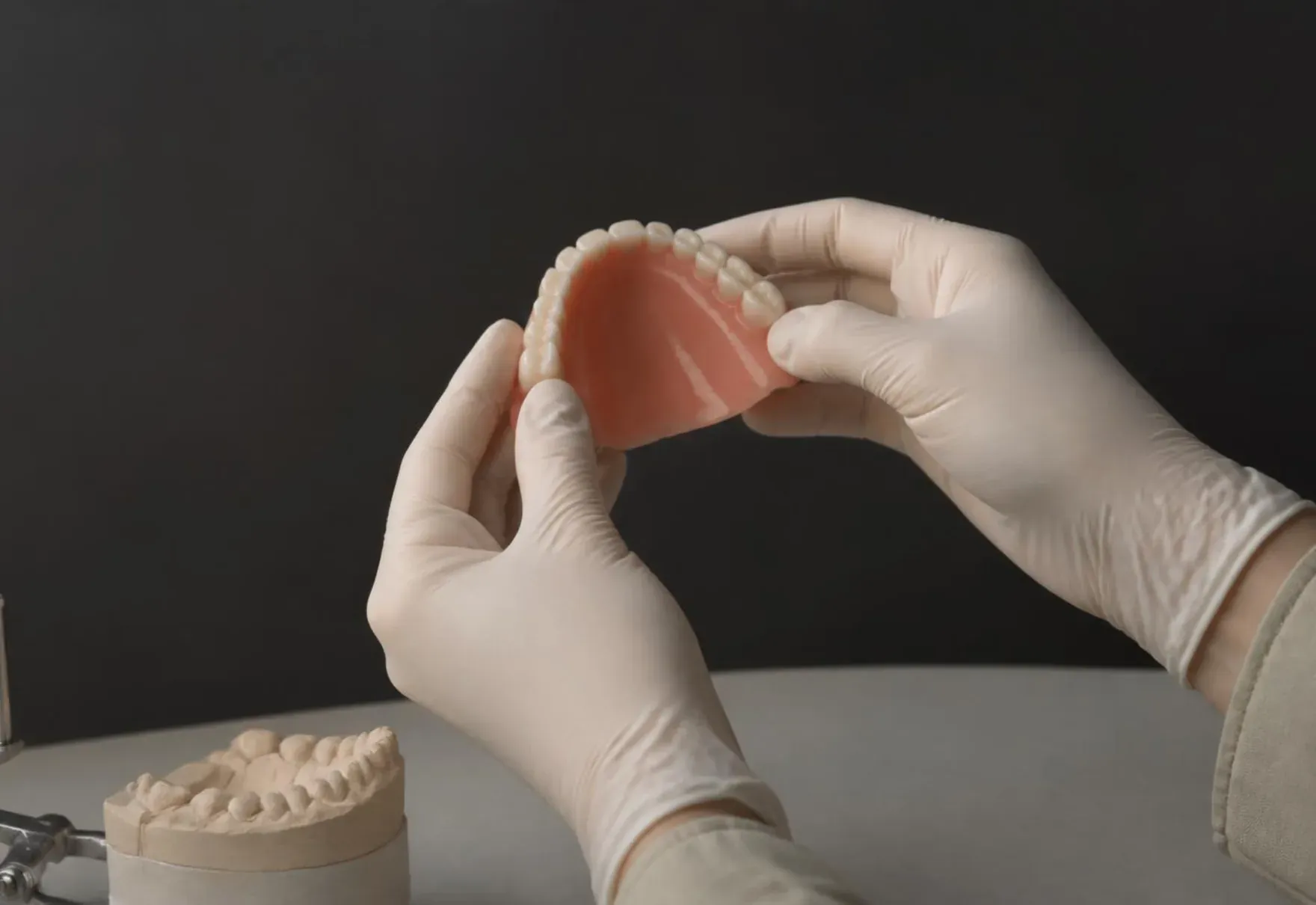
Acrylic is strong in compression and weak in flexion, so a denture breaks where it bends. Almost always, that bending is caused by a fit that has drifted. The ridge of bone under a denture continues to change shape year after year. It changes faster in the first year after teeth are lost, and continues slowly for years afterward, until the denture rocks slightly on a high point with each bite. That rocking flexes the plate until it fatigues and snaps. A midline crack in an upper denture is the classic result. So a fracture repaired on its own, with the fit left unaddressed, tends to happen again, often in the same place. This is why a repair appointment here includes checking the fit surface and the bite. We will tell you honestly whether what you need is a reline, a rebase, or a new denture.
Repair, reline or replace
A simple fracture with all pieces present is bonded and reinforced, and many are back in your mouth the same day. A tooth that has debonded from the plate is reattached. A denture that has become loose because the ridge has changed is relined: new material is added to the fit surface so it seats accurately again. That is a far smaller undertaking than a new denture, and it often solves the looseness people have been living with. Where the acrylic has been repaired several times, the teeth are worn flat, or the shape no longer supports the face, a new denture is the more honest answer. And where movement is the real complaint, two implants can retain a lower denture and end the rocking altogether.
Dentures and implant-retained options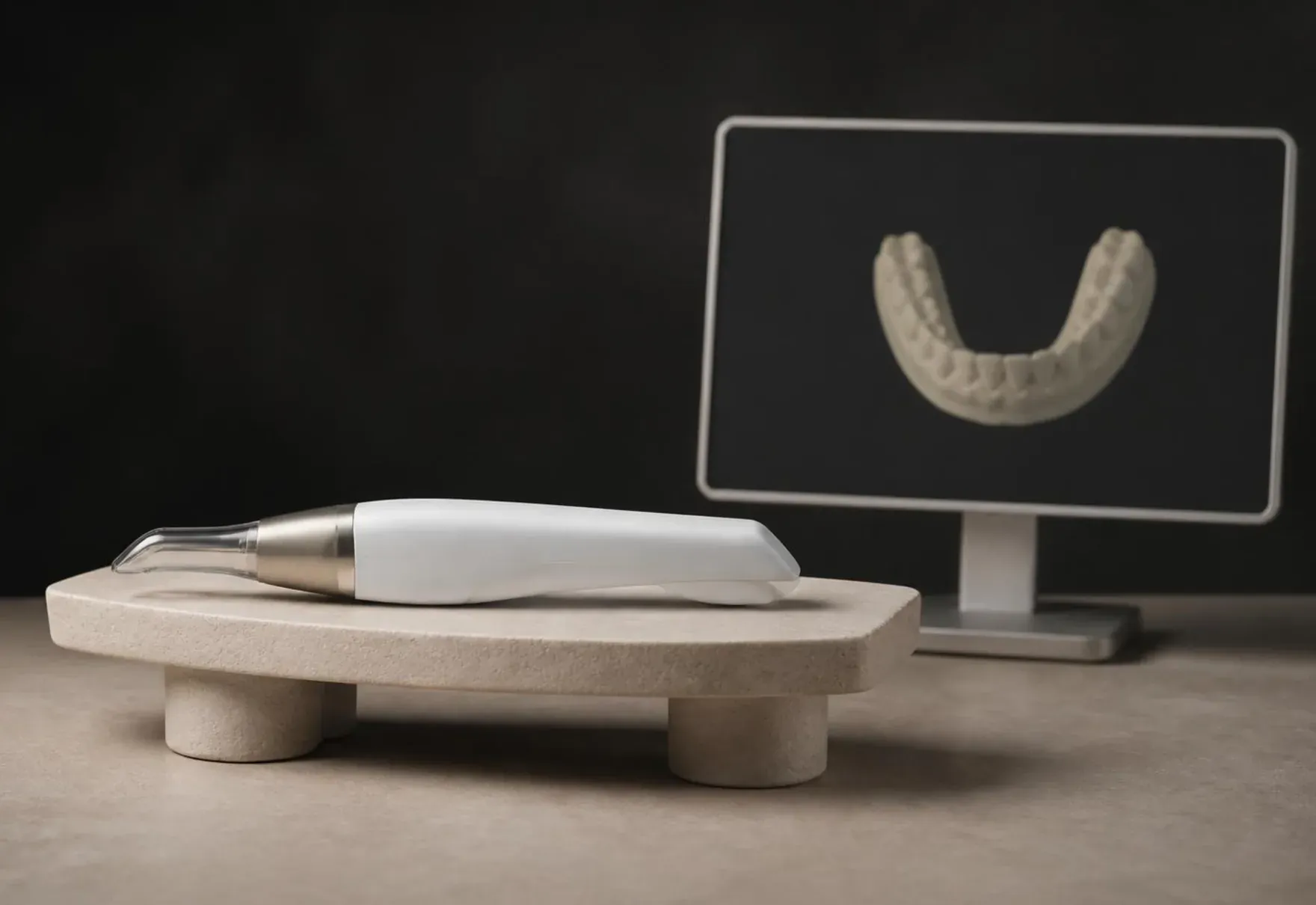
Types of denture breaks and what each usually needs
Described over the phone, this is generally enough for us to tell you whether it is a same-day repair.
| Feature | Snapped plate | Tooth off the plate | Broken clasp | Loose but intact |
|---|---|---|---|---|
| Usual fix | Bond and reinforce | Reattach the tooth | Repair or replace the clasp | Reline the fit surface |
| Turnaround | Often same day | Often same day | Sometimes the laboratory | A short course of appointments |
| Root cause to check | Fit has drifted; the plate is flexing | Bite force, or the tooth was worn | Metal fatigue, or a changed ridge | Bone under the denture has changed |
| Wear it meanwhile | No | Only if no sharp edge | Usually yes, carefully | Yes |
Why a denture that fit well stops fitting
Nothing has gone wrong with the denture. The ridge it was made for has changed shape underneath it — and that is also what makes it flex until it cracks.
- The day it was made — the denture is fitted to this ridge, and it seats evenly along its whole length.
- The first year — most of the change happens now. The denture begins to contact on a high point and rock very slightly with each bite.
- Five years on — a flatter, narrower ridge. The plate flexes over the high point with every chew until the acrylic fatigues and snaps, usually down the middle.
A broken denture is repairable more often than most people expect, and denture repair is often done the same day. At White Lotus Dental in Frisco, TX, we bond and reinforce the break, then look at why it happened so that it does not happen again.
Why most denture problems start under the denture
Most conversations about dentures are about the teeth. Almost every problem, though, comes from the surface facing the other way — the fit surface that rests on your gum.
When teeth are removed the bone that held them starts to remodel, quickly at first and then slowly for the rest of your life. The ridge becomes narrower and flatter. A denture made to fit that ridge in year one is sitting on a different shape by year five. It contacts on a high point, tips slightly, and needs suction and muscle control to stay put.
That is the origin of nearly every complaint we hear. Looseness, sore spots at the edges, food getting underneath, a sudden change in speech, and fractures through the middle of the plate are all versions of the same underlying story.
Relining, which means adding material to the fit surface so it matches the ridge again, is the unglamorous, highly effective answer, and it is a much smaller undertaking than a new denture. It is worth asking about long before anything breaks.
What a denture repair visit includes
The fracture first: the pieces are assessed, bonded and reinforced where they can be, or a laboratory repair is arranged where the break needs more.
Then the reason. We look at the fit surface, check where the denture contacts your gum, and look at your bite. We also check for the sore spots that tell us where it has been rocking. Sometimes the denture actually needs relining and not another repair, and we will say so plainly. If a denture has been repaired several times already, we will be straight with you about whether a replacement is the better use of your money.
If you still have natural teeth supporting a partial denture, we check those too. A partial that has broken often broke because the teeth carrying its clasps have changed, and those teeth need looking at before the same break happens again.
Broken denture near Frisco, Prosper and Plano
White Lotus Dental is at 8175 Custer Rd, Suite A110, Frisco, TX 75035. If you are searching for denture repair near you, call (469) 262-2111 and describe the break before you travel. We are open Monday, Tuesday, Thursday and Friday from 9 AM to 6 PM and Saturday from 9 AM to 3 PM. We are closed on Wednesday and Sunday, although the phones are answered on Wednesday.
Patients come to us from Frisco and from nearby Prosper, Plano, Little Elm, Allen, Celina and McKinney.
A repair can show that a denture has reached the end of its life. Our pages on complete dentures, partial dentures and implant-supported dentures explain the options, and we will go through them with you after we look at the fit.
To arrange a repair, call (469) 262-2111 or request an appointment online.
Time in the chair for a denture repair.
The scale runs to five hours — the same scale on every page, so the bars are comparable across the whole site.
Denture repair cost in Frisco: what to expect.
If a denture has been repaired more than twice, we will tell you plainly that a reline or a remake is the better use of your money at that point.
You get the figure in writing before treatment starts. We accept all major PPO plans and file the claim for you, our membership plan takes a percentage off treatment, and CareCredit financing is available.
How plans usually cover a denture repair.
Basic restorative — Class II on most plans
- What plans pay
- Commonly around 80% once the deductible is met, so a denture repair is usually the least painful kind of treatment to have covered.
- Deductible
- Usually applies — typically $50 to $100 a person, once a plan year, and it comes off the first treatment of the year — not spread across visits.
What catches people out
- Alternate benefit, sometimes written as LEAT. Where a cheaper material or procedure would do, the plan pays for that one and leaves you the difference. The classic case is a white filling on a back tooth paid at the silver rate.
- Waiting periods on a new policy. Usually shorter for basic work than for major, but not always absent — worth knowing if you have just changed jobs.
- Repairs are covered more often than replacements, and usually with their own frequency limit — commonly once in a twelve-month period.
These are how dental plans usually classify this treatment — not a statement about your own plan. Yours is the one that governs, plans differ more than people expect, and the only reliable answer comes from reading your specific benefits, which we always do ahead of treatment and give you in writing.
And what changes out-of-network
In-network allowed fee
$134
This is the contracted allowance for a denture repair — taken from our own contracted schedules. Only the in-network figure here is one we would stand behind, so this shows a single number on its own. Estimating the other side would make a comparison out of a guess, and the comparison is the whole point of it.
A dentist who is in-network has signed a contract fixing what may be charged for each procedure and cannot bill you the difference. One who is out-of-network has signed nothing, so the full fee stands.
So the first difference is the price itself — the same treatment is simply allowed to cost more out-of-network, before anyone's plan is considered.
What you personally pay out of that depends on your own deductible and coinsurance, which is why there is no percentage here: it is not a property of the treatment, it is a property of your plan, and we verify yours before you commit. But two things follow for everybody. Your share is a share of a bigger number. And your annual maximum is spent by what the plan pays toward that bigger number, so the same treatment eats more of your benefit out-of-network.
Check the going rate yourself
FAIR Health's dental cost lookup is free, needs no account, and is not ours — it reports what a procedure typically costs in your area. It does not know your plan, so treat it as a ballpark figure — not a final answer.
Ask us for the number first
We verify your specific plan before your appointment and give you a written estimate: what the plan is expected to pay, and what you pay. If we get it wrong we tell you why.
Bring an Explanation of Benefits
Treated somewhere else? Your EOB shows exactly what the plan paid and what it counted against your maximum. Bring one in and we will read it with you — whether or not you become a patient here.
None of this says out-of-network dentists are worse dentists. Plenty are excellent, plenty are out-of-network for sound reasons, and people choose a dentist for who that person is. What we think you are owed is the information, so that whatever you choose, you chose it knowingly. The whole thing, explained properly, or call (469) 262-2111 and ask.
How a denture ages and where problems can start
Knowing the sequence makes the difference between a denture that is maintained and one that is endured.
- Months 0–6Settling in
Speech and eating adapt over a few weeks. Sore spots are normal early and are adjusted — they are not something to tolerate.
- Year 1The first reline is often due
The ridge changes fastest in the first year after teeth are lost. A reline here prevents years of rocking later.
- Years 2–5Rocking, then cracking
A denture that moves is flexing, and flexing is what breaks acrylic. This is the point at which most midline fractures happen.
- Any timeThe drop
Handled over a folded towel or a basin of water. A denture dropped on a bathroom floor is one of the most common causes of the break that brings people in.
- Every yearA check-up, even with no teeth
Ridge shape, soft tissues and fit, plus an oral-cancer screening — even more important once teeth are gone.
Booking broken denture repair in Frisco
Bring every piece in a bag or box, and please do not glue them together first — superglue is the most common reason a repairable denture cannot be repaired.
- Hours
- Weekdays 9–6
Saturdays 9–3 - Languages
- English, Telugu, Hindi, Urdu
Arabic with Saba, our hygienist, Tuesdays, Thursdays and Fridays
Vietnamese with Anh, our hygienist, Saturdays
Cantonese and Mandarin with Dr. Louie, our periodontist, on his scheduled days, by internal referral
Broken Denture Repair FAQs in Frisco, TX
Grouped so you can go straight to the one you came for.
Broken Denture Repair — common questions
Can you repair my denture the same day?
Can I use superglue until my appointment?
Why does my denture keep breaking in the same place?
How long can I go with it out?
Does insurance cover denture repairs?
Would implants stop this happening?
Can a broken denture be fixed the same day?
Should I use denture glue to fix a crack?
How much does it cost to repair a broken denture?
Where can I get denture repair near me in Frisco?
Toothache at 7am? You'll be seen today.
Same-day and Saturday appointments for toothaches, broken teeth, knocked-out teeth and lost crowns. Call us and we'll tell you what to do first, while you're still at home.
Everything else under this roof.
White Lotus Dental offers nine dental specialties inside one calm office on Custer Road. Having general dentists and an in-house periodontist on staff means your entire family can receive preventive, restorative, and surgical treatments in one familiar place.
Preventive Dentistry
Regular dental checkups, professional cleanings, night guards, and jaw-pain care. Every routine exam includes an oral cancer screening to protect your long-term health.
Explore
Children's Dentistry
Gentle first dental visits, protective sealants, fluoride applications, and space maintainers. We accept Children's Medicaid and CHIP, and every young patient receives a toy-machine token at the end of their visit.
Explore
Orthodontics
Clear aligners with Invisalign® and comprehensive traditional braces. Your treatment is fitted, monitored, and adjusted in-house by your trusted dentist.
Explore
Missing Teeth
Permanent dental implants, dental bridges, and customized dentures planned using 3-D CBCT scans. Because our team includes a board-certified periodontist, your implant surgery, placement, and final crown are completed in the same building.
Explore
Cosmetic Dentistry
Professional Zoom whitening, custom take-home whitening trays, and composite tooth bonding designed to brighten and refine your natural smile.
Explore
Periodontics & Oral Surgery
Specialized gum disease therapy, scaling and root planing (deep cleanings), frenectomies, and periodontal surgery performed by our board-certified periodontist.
Explore
Restorative Dentistry
Custom porcelain crowns, bridges, tooth-colored fillings, and full-mouth restorations crafted to match the natural look, feel, and function of your teeth.
Explore
Sedation Dentistry
Relaxing dental care tailored to your comfort level. We offer nitrous oxide (laughing gas) for any routine clinic visit, as well as oral and IV sedation planned ahead with our periodontist.
Explore
Emergency Dentistry
Toothaches, broken teeth, knocked-out teeth and lost crowns — seen the same day, Saturdays included.
Explore