Restorative Dentistry
Crowns, bridges, dentures and tooth-colored fillings — repairs built to look like teeth and to keep as much of the original tooth as possible.
Restorative dentistry in Frisco: we save your natural tooth first
That principle governs everything on this page. Restorative dentistry is repair, and the goal is to preserve as much natural tooth as the situation allows.
It rules out a certain kind of dentistry. A tooth that a filling would fix does not get a crown here, and sound fillings are not replaced just because of their color.
Where a filling is cracked, leaking or has decay beneath it, replacing it is straightforwardly right. Where it is intact, removing it costs you tooth structure you cannot get back.
Every restorative dentistry treatment, on its own page.
How restorative dentistry rebuilds a damaged tooth
The aim is always the smallest thing that will last — a filling where a filling will hold, a crown where it will not, and honesty about which of the two you are looking at.
Find out what is wrong with the tooth
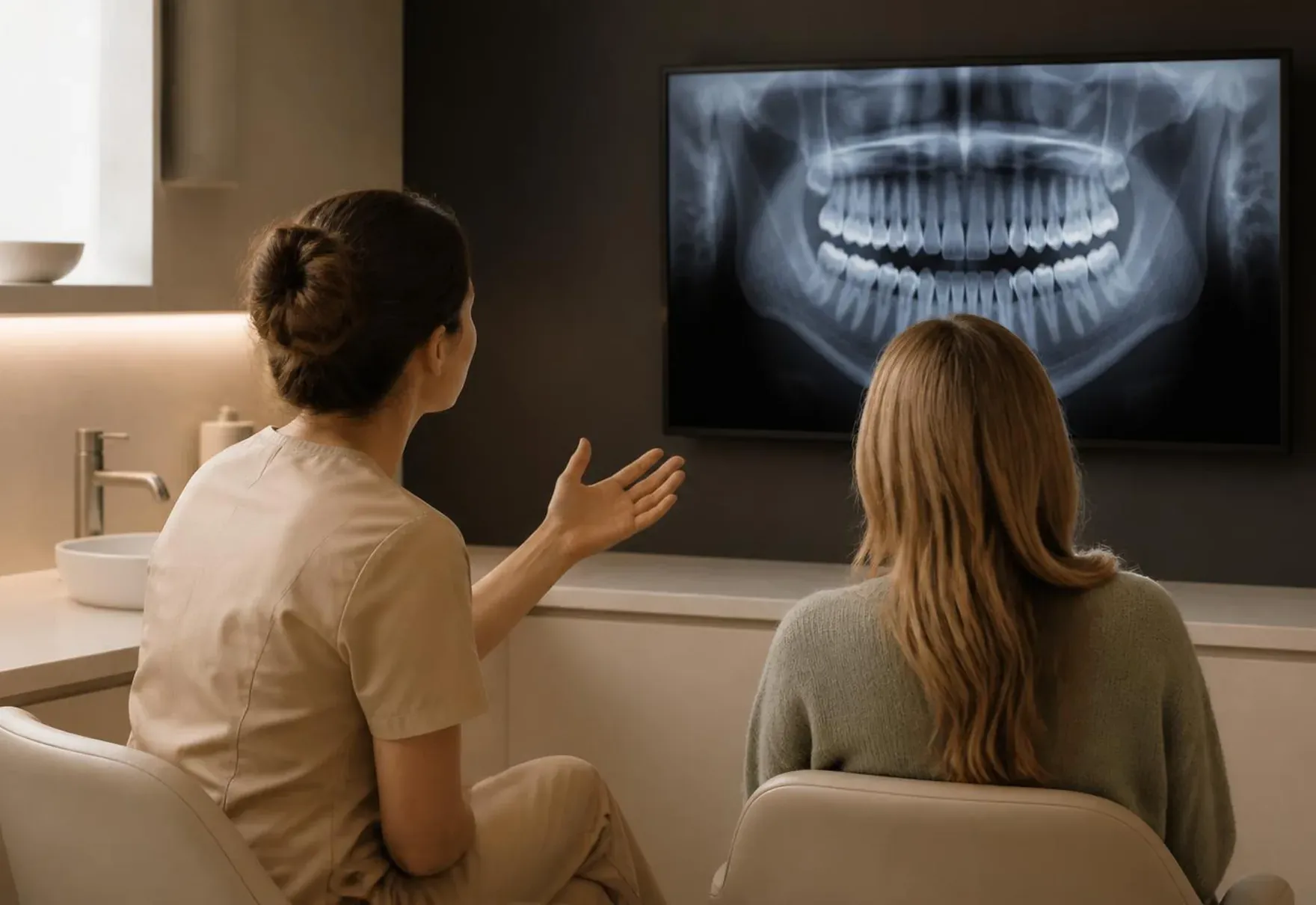
A cracked cusp, decay under an old filling and a failing margin look similar and need different treatments. X-rays read by Overjet.ai, near-infrared scanning and the intraoral camera separate them.
Choose the smallest repair that will hold
A filling where a filling will last, a crown where the tooth has lost too much structure to hold one. We will tell you which, and why, on the monitor.
Prepare the tooth and scan it
The tooth is prepared and scanned digitally. A temporary protects it while the permanent restoration is made.
Check the fit, bite and shade
At the second visit all three are checked before anything is cemented. If it is not right, it goes back. A crown you were talked into accepting is one you will dislike for a decade.
Protect the repaired tooth
A night guard if you grind, because grinding is what breaks restorations, and a maintenance interval that keeps the margins clean.
What to know before restorative treatment in Frisco
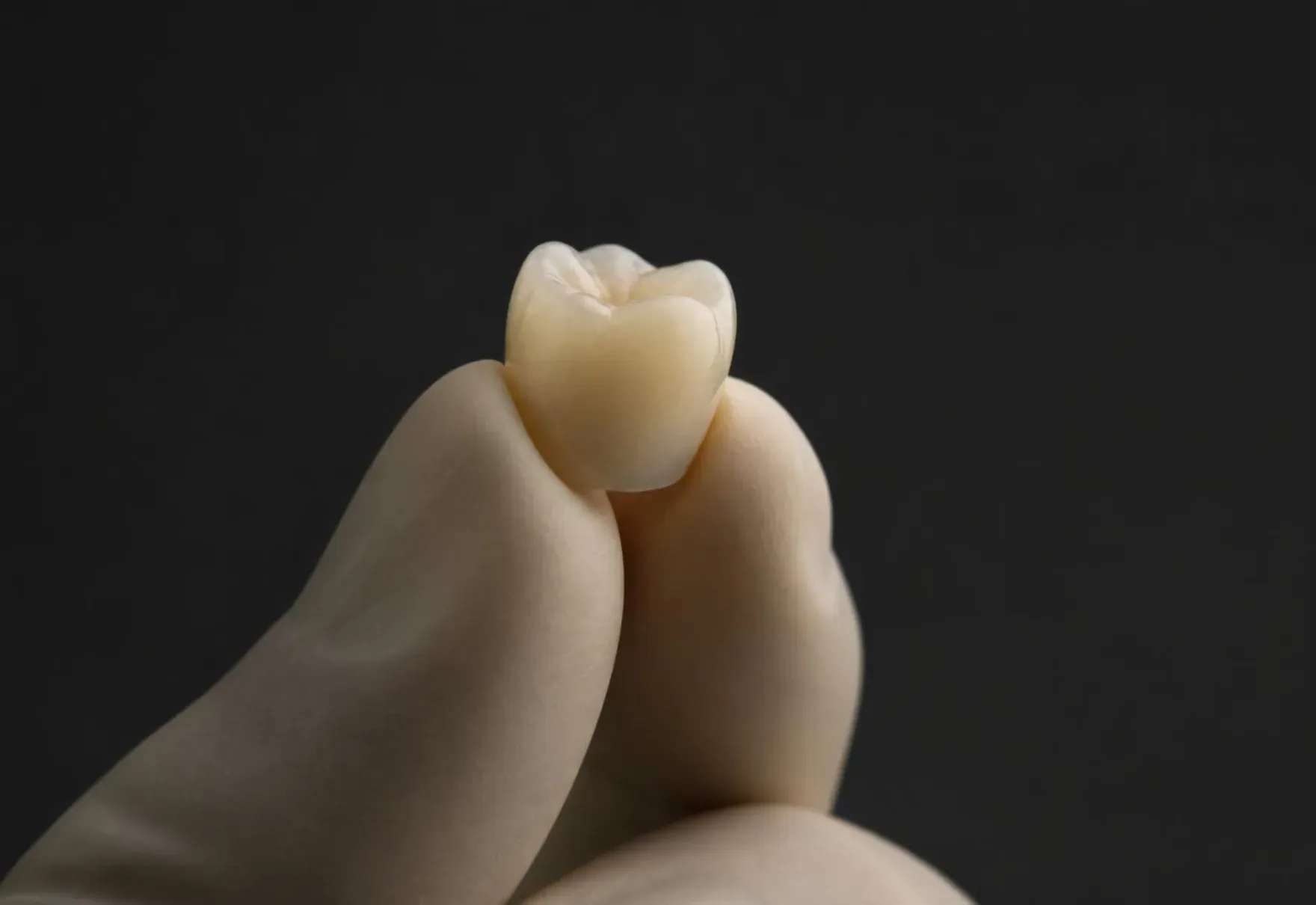
Crowns, and why they are all metal-free now
A dark line at the gumline is the classic tell of an older porcelain-fused-to-metal crown. All-ceramic and zirconia have no metal core, so there is no gray shadow as gums recede over the years, and modern zirconia is strong enough for molars carrying full chewing load. Where a tooth is under exceptional force we will talk through the trade-off between strength and translucency — not default automatically.
Implant-supported dentures that stay in place
The complaint we hear most often about dentures made somewhere else is movement, particularly lower dentures, which have far less ridge to hold onto. The answer is implant support: two or more implants with the denture clipping firmly onto them. It stays put while you eat, and it preserves the bone a conventional denture allows to shrink away. We make full and partial dentures here, and handle relines and repairs, not always starting over.
Implant-supported options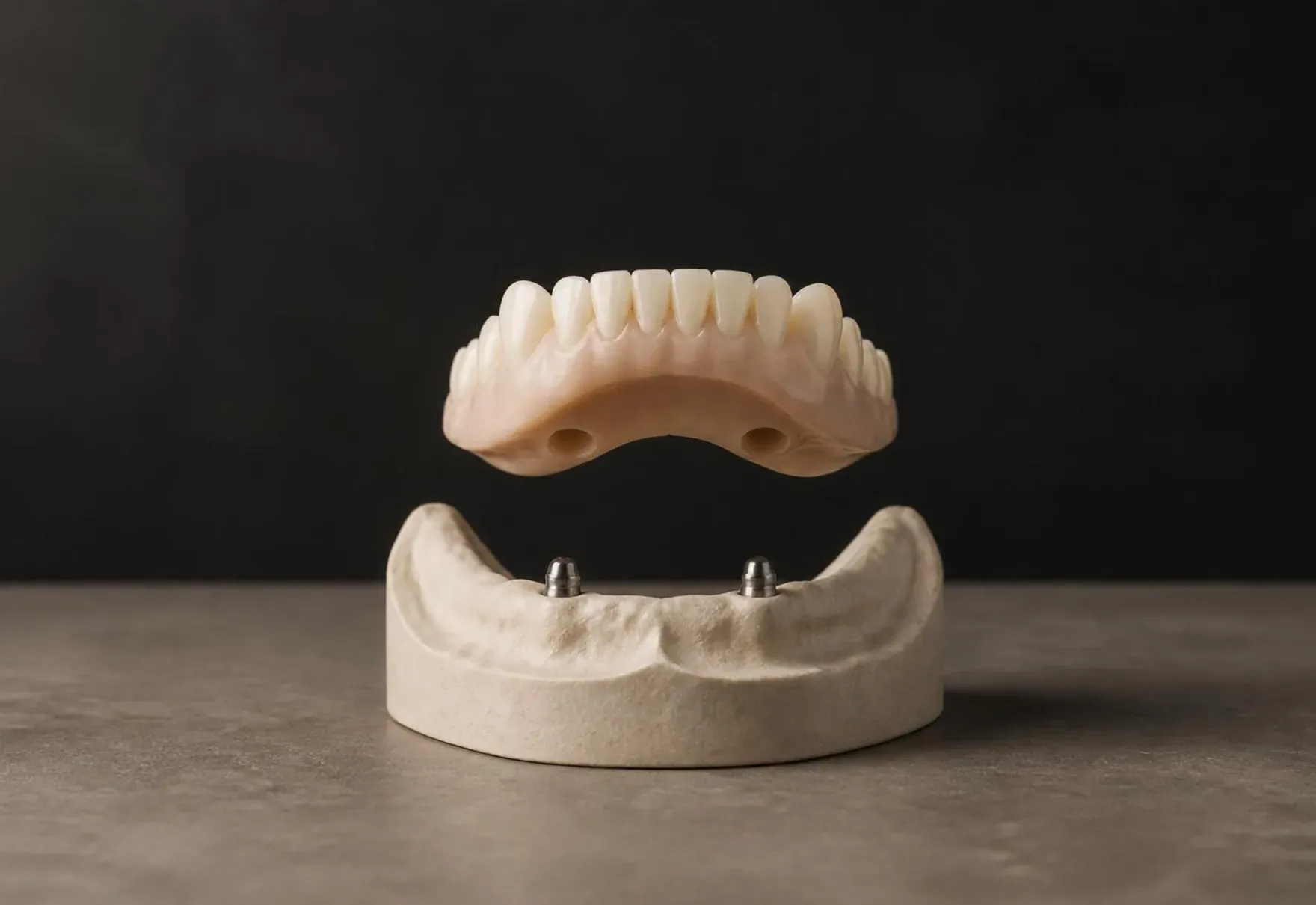
Root canals and extractions, both done here
Root canal treatment saves a tooth whose nerve has become infected, and the reputation is worse than the experience. For most patients it feels like having a large filling done, and it ends the pain that brought them in. Extraction is the last resort and sometimes the right one — a tooth split below the gumline is not always salvageable, and spending money to keep it another eighteen months is rarely a favor. Either way we talk about what replaces it in the same conversation.
Restorative dentistry near Frisco, Prosper and Plano
Restorative dentistry is provided in our office at 8175 Custer Rd, Suite A110, Frisco, TX 75035. We are open Monday, Tuesday, Thursday and Friday from 9 AM to 6 PM and Saturday from 9 AM to 3 PM. Wednesday and Sunday we are closed, though the phone is still answered on Wednesday. Patients come from Frisco and from Prosper, Plano, Little Elm, Allen, Celina and McKinney. Call (469) 262-2111 to book a visit.
Call (469) 262-2111Filling or crown? Choosing the right restorative treatment
How much tooth is left decides this — not preference.
| Feature | Filling | Crown | Extract & replace |
|---|---|---|---|
| Tooth structure left | Most of it | Too little to hold a filling | Split or destroyed |
| Visits | One | Two | Several, over months |
| Protects against fracture | No | Yes — it holds the tooth together | N/A |
| Typical lifespan | 7–10 years | 10–15 years | Decades, for an implant |
How much natural tooth does each repair keep?
These are not four prices for the same job. They are four different amounts of natural tooth removed, and the right one is decided by how much sound tooth is left.
- A filling — the decay is removed and the space filled. Least tooth taken, and the right answer while enough sound wall remains.
- An onlay — rebuilds a broken cusp and the biting surface while keeping the walls of the tooth.
- A crown — covers the whole coronal tooth and holds it together. The answer for a cracked tooth or one with little wall left.
- A veneer — a facing bonded to the front of a front tooth, for appearance rather than strength.
When several teeth need restorative dentistry
A mouth that needs a lot may have multiple failing restorations, worn-down teeth from years of grinding or several missing teeth. Treating one tooth at a time in the order they hurt produces an expensive mess. The bite has to be planned as a whole.
That kind of case is why having a periodontist in-house matters. Gum health, bone support, implant positions and the final restorations get planned together by the people doing all of it. See periodontics for the foundation work.
Comfort during restorative dentistry
Restorative appointments are longer than a checkup, and we plan for that. Anesthetic is warmed before use, which removes most of the sting people brace for. Blankets are there for the asking, neck pillows are warmed, Nitrous oxide is available with any of our doctors, and oral conscious or IV sedation with Dr. Louie on his scheduled days, for longer appointments or anxious patients.
If you have avoided dental work for years because of a bad experience, say so when you book. It changes how we schedule the visit.
Our restorative dentistry treatments in Frisco, TX
Each treatment has its own page: tooth-colored fillings, deep fillings and sensitivity, filling or crown, dental crowns, root canal treatment and root canal retreatment.
A Holistic Approach to Restorative Dentistry in Frisco
Our holistic approach shapes how we restore teeth in Frisco. We start with the gentlest treatment that will last, and we explain why before we begin. A small cavity gets a tooth-colored filling. A tooth that needs more protection gets a crown, and a tooth with a damaged nerve gets a root canal when it can be saved.
Comfort is part of the plan. We warm the anesthetic, and nitrous oxide can be used at your visit. Dr. Louie provides oral conscious or IV sedation on his scheduled days when it is arranged ahead. See how we choose between treatment options.
Restorative dentistry cost in Frisco: what to expect
Where a tooth is borderline, we will give you the realistic lifespan of each option honestly — including what happens if you decide to do nothing for now.
You get the figure in writing before treatment starts. We accept all major PPO plans and file the claim for you, our membership plan takes a percentage off treatment, and CareCredit financing is available.
How plans usually cover restorative work.
Basic on some plans, major on others
- What plans pay
- Which means restorative work is paid at roughly 80% on one plan and roughly 50% on another, for identical treatment. It is one of the widest genuine variations in plan design, and it is worth knowing up front, before treatment.
- Deductible
- Usually applies either way.
What catches people out
- Which side of the line your plan puts it on changes your share by about 30 percentage points. We check the classification specifically for your plan — guessing at the common case is how people get surprised.
- Where it lands in the major category, a waiting period may come with it — six or twelve months of holding the policy before it is covered at all.
These are how dental plans usually classify this treatment — not a statement about your own plan. Yours is the one that governs, plans differ more than people expect, and the only reliable answer comes from reading your specific benefits, which we always do ahead of treatment and give you in writing.
And what changes out-of-network
A dentist who is in-network has signed a contract fixing what may be charged for each procedure and cannot bill you the difference. One who is out-of-network has signed nothing, so the full fee stands.
So the first difference is the price itself — the same treatment is simply allowed to cost more out-of-network, before anyone's plan is considered.
What you personally pay out of that depends on your own deductible and coinsurance, which is why there is no percentage here: it is not a property of the treatment, it is a property of your plan, and we verify yours before you commit. But two things follow for everybody. Your share is a share of a bigger number. And your annual maximum is spent by what the plan pays toward that bigger number, so the same treatment eats more of your benefit out-of-network.
The figures are on the treatment pages. This page covers several different procedures, and one chart here would have to average treatments that are not comparable — a filling against a full-arch case. Each treatment page carries its own allowed fee, in network and out.
Check the going rate yourself
FAIR Health's dental cost lookup is free, needs no account, and is not ours — it reports what a procedure typically costs in your area. It does not know your plan, so treat it as a ballpark figure — not a final answer.
Ask us for the number first
We verify your specific plan before your appointment and give you a written estimate: what the plan is expected to pay, and what you pay. If we get it wrong we tell you why.
Bring an Explanation of Benefits
Treated somewhere else? Your EOB shows exactly what the plan paid and what it counted against your maximum. Bring one in and we will read it with you — whether or not you become a patient here.
None of this says out-of-network dentists are worse dentists. Plenty are excellent, plenty are out-of-network for sound reasons, and people choose a dentist for who that person is. What we think you are owed is the information, so that whatever you choose, you chose it knowingly. The whole thing, explained properly, or call (469) 262-2111 and ask.
Dental crown timeline: from preparation to years later
The most common restorative sequence here, and the one people most often ask about.
- Visit onePrepare and scan
The tooth is shaped, a digital scan replaces the impression tray, and a temporary crown protects it. Anesthetic throughout; sedation available if you want it.
- 1–2 weeksIn the lab
The crown is made in porcelain or zirconia with no metal core, matched to your other teeth, so there is no gray line at the gum as the years pass.
- Visit twoFit and check
Fit, bite and shade checked before it is cemented. A crown that is a fraction high is uncomfortable for months, so this is worth the extra minutes.
- First fortnightSettling in after the fit
Mild sensitivity to cold is normal and fades. Anything that persists, or a bite that feels wrong, is adjusted at no charge — just tell us.
- YearsWhy the edge of the crown matters
Decay at the join between crown and tooth is the usual reason crowns are replaced, and floss is the only thing that reaches it. That is what hygiene visits check.
Restorative Dentistry in Frisco, TX
Bring any old crown or broken piece with you, however unpromising it looks — recementing your own crown is quicker and cheaper than making a new one.
- Hours
- Weekdays 9–6
Saturdays 9–3 - Languages
- English, Telugu, Hindi, Urdu
Arabic with Saba, our hygienist, Tuesdays, Thursdays and Fridays
Vietnamese with Anh, our hygienist, Saturdays
Cantonese and Mandarin with Dr. Louie, our periodontist, on his scheduled days, by internal referral
Restorative Dentistry FAQs in Frisco, TX
Grouped so you can go straight to the one you came for.
Restorative Dentistry — common questions
How long does a dental crown last?
Should I replace my old silver fillings?
What is the difference between a bridge and an implant?
Do you make dentures in-house?
Will a filling or crown match my other teeth?
Is restorative work covered by insurance?
What is restorative dentistry?
Can I get several teeth fixed in one visit?
When is a tooth not restorable?
Is restorative dentistry worth it?
Where can I find a restorative dentist near me in Frisco?
Toothache at 7am? You'll be seen today.
Same-day and Saturday appointments for toothaches, broken teeth, knocked-out teeth and lost crowns. Call us and we'll tell you what to do first, while you're still at home.
Everything else under this roof.
White Lotus Dental offers nine dental specialties inside one calm office on Custer Road. Having general dentists and an in-house periodontist on staff means your entire family can receive preventive, restorative, and surgical treatments in one familiar place.
Preventive Dentistry
Regular dental checkups, professional cleanings, night guards, and jaw-pain care. Every routine exam includes an oral cancer screening to protect your long-term health.
Explore
Children's Dentistry
Gentle first dental visits, protective sealants, fluoride applications, and space maintainers. We accept Children's Medicaid and CHIP, and every young patient receives a toy-machine token at the end of their visit.
Explore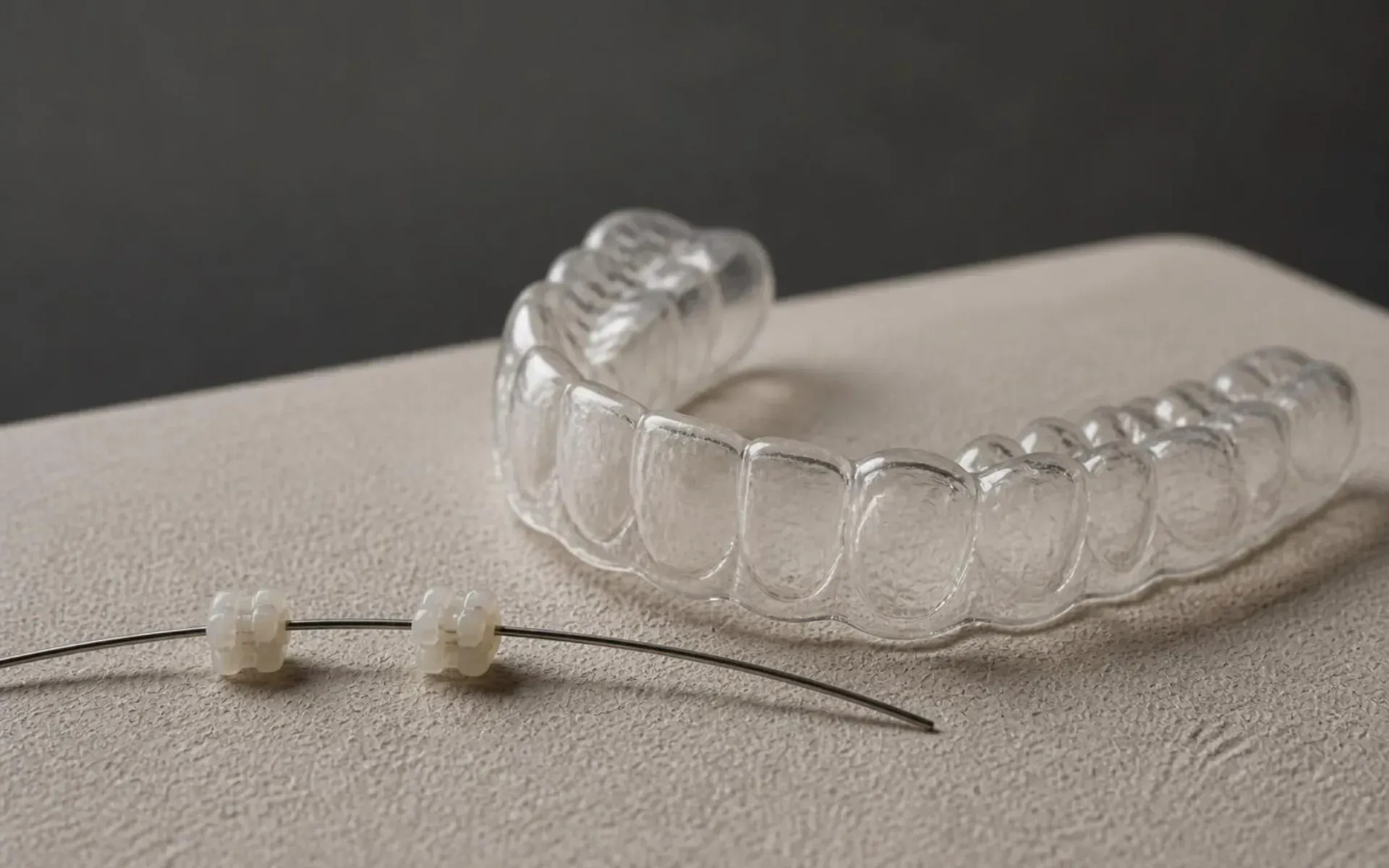
Orthodontics
Clear aligners with Invisalign® and comprehensive traditional braces. Your treatment is fitted, monitored, and adjusted in-house by your trusted dentist.
Explore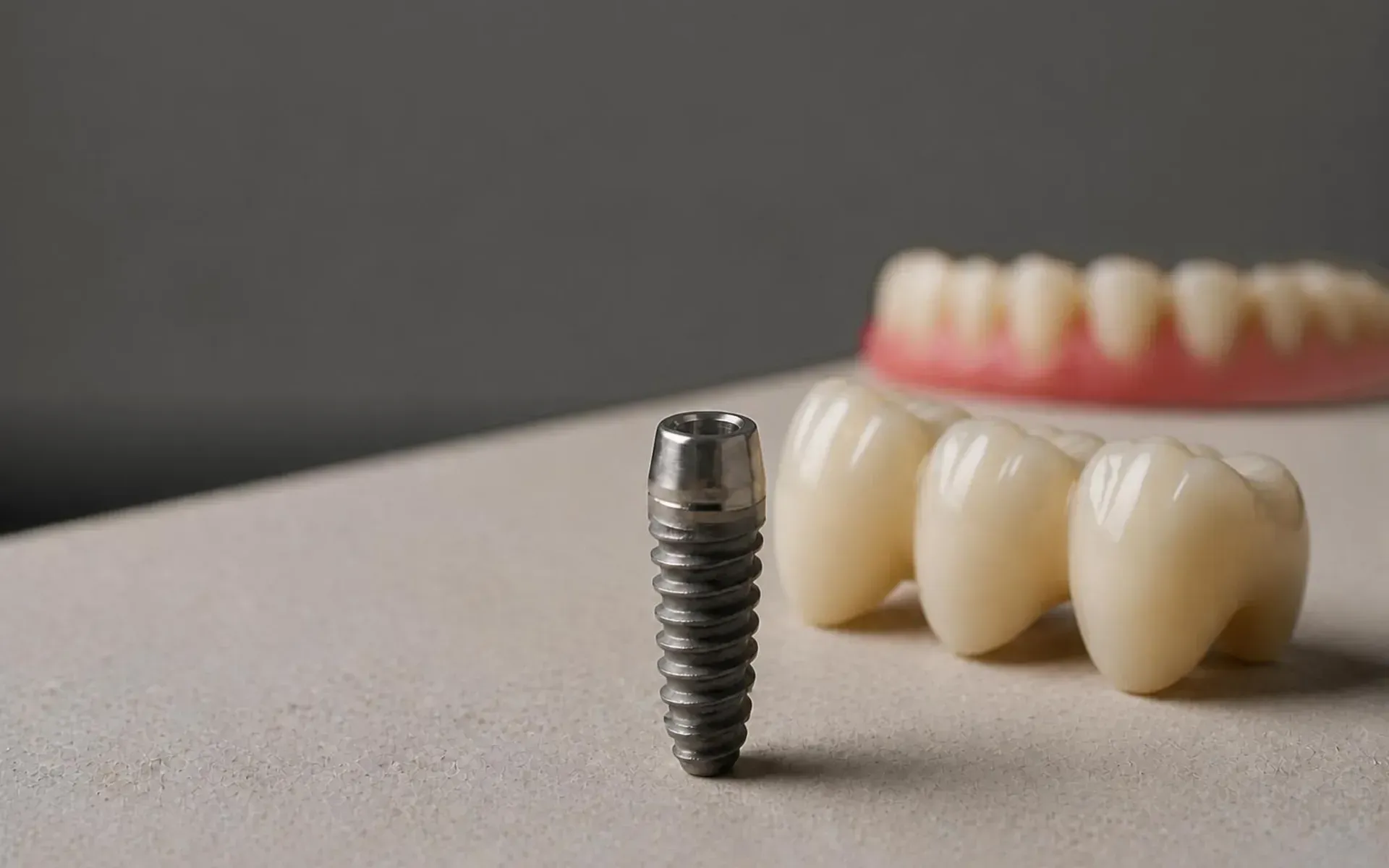
Missing Teeth
Permanent dental implants, dental bridges, and customized dentures planned using 3-D CBCT scans. Because our team includes a board-certified periodontist, your implant surgery, placement, and final crown are completed in the same building.
Explore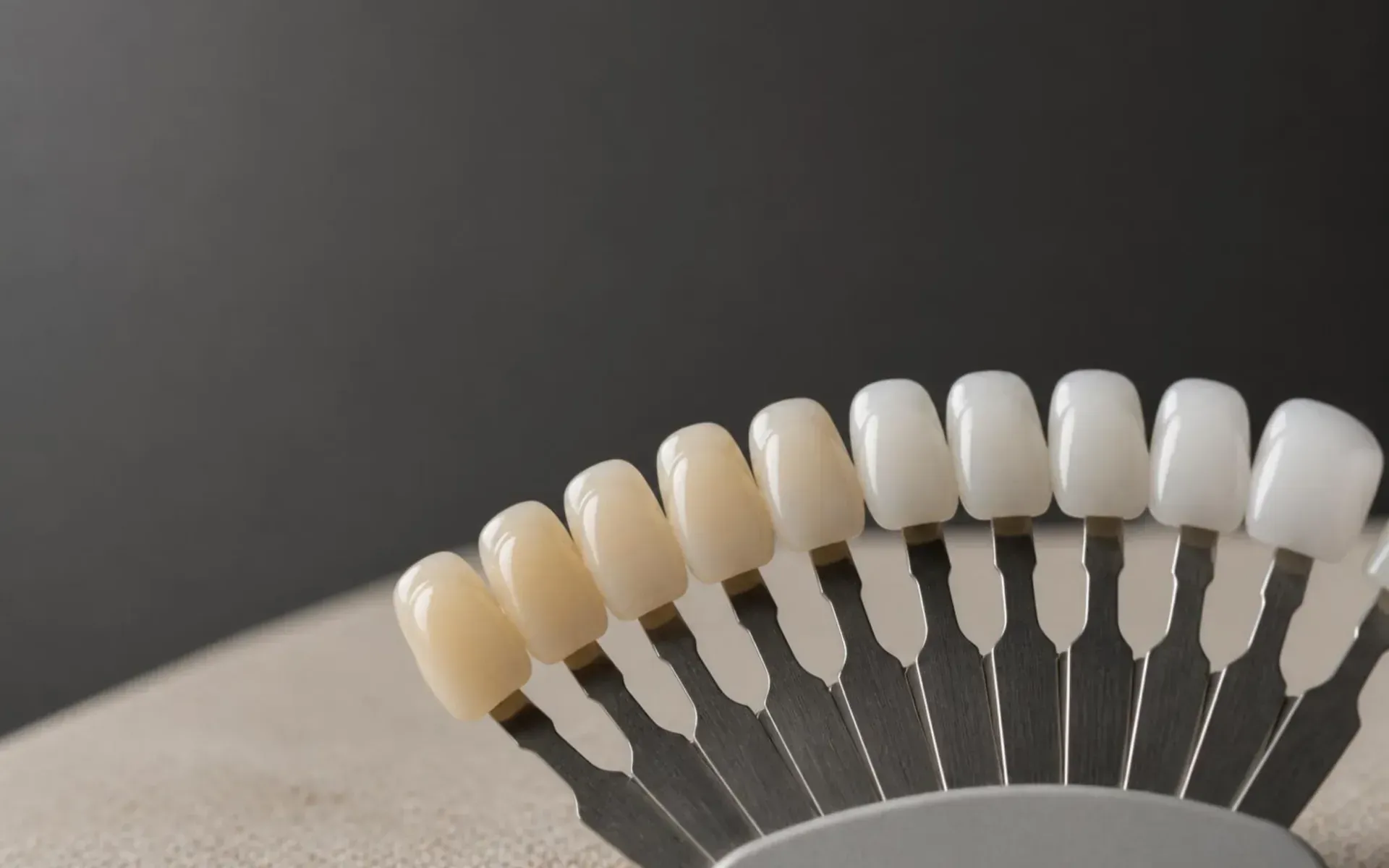
Cosmetic Dentistry
Professional Zoom whitening, custom take-home whitening trays, and composite tooth bonding designed to brighten and refine your natural smile.
Explore
Periodontics & Oral Surgery
Specialized gum disease therapy, scaling and root planing (deep cleanings), frenectomies, and periodontal surgery performed by our board-certified periodontist.
Explore
Sedation Dentistry
Relaxing dental care tailored to your comfort level. We offer nitrous oxide (laughing gas) for any routine clinic visit, as well as oral and IV sedation planned ahead with our periodontist.
Explore
Emergency Dentistry
Toothaches, broken teeth, knocked-out teeth and lost crowns — seen the same day, Saturdays included.
Explore