Wisdom Teeth Recovery in Frisco, TX
Everything that happens in the first ten days, in the order it happens — including the one pattern of pain that means you should come straight in.
What to eat after wisdom teeth removal, day by day
The rule is simpler than most lists make it: nothing that needs chewing, nothing hot, nothing sharp, and nothing sucked through a straw. Everything else is detail.
Day one: cold and smooth
Yoghurt, smooth apple sauce, ice cream, cold soup, a milkshake eaten with a spoon, no straw, protein drinks poured into a glass. Cold genuinely helps the swelling as well as being comfortable. Do not rinse, spit, or use a straw at all today.
Days 2 to 3: warm and soft
Scrambled egg, mashed potato, congee or porridge, dal, refried beans, blended soup, well-cooked pasta, soft tofu, banana, avocado. Keep food warm; heat increases swelling and can disturb the clot. Begin gentle warm salt-water rinses now, letting the water fall out of your mouth on its own.
Days 4 to 7: soft, and chew away from the sites
Soft fish, minced meat in sauce, soft cooked vegetables, idli, khichdi, macaroni cheese, oatmeal. Start chewing on the front and on the opposite side. Still nothing crunchy, nothing with small seeds or grains that can lodge in a socket.
Week two — most things back
Gradually return to a normal diet as it feels comfortable. Bony impaction sites take longer, and chewing directly on them is the last thing to come back.
What to avoid for the full week
Straws, smoking and vaping — all three create suction, and suction is the main cause of a dry socket. Alcohol. Anything sharp, crunchy or seeded: chips, crackers, nuts, popcorn, rice with hard grains, sesame and chia seeds. And carbonated drinks for the first few days.
The most important thing to remember
A blood clot forms in each socket and it is the entire dressing on the wound. Everything on this page is really about protecting it for three days.
Wisdom teeth recovery: what to know first
Caring for yourself in the first 48 hours
Ice on the outside of the face, twenty minutes on and twenty off, for the first day — it is the single most effective thing you can do about swelling, and people consistently underuse it. Keep your head propped up, including overnight; lying flat makes the throbbing worse. Take the anti-inflammatory before the anesthetic wears off, not after the pain arrives, because staying ahead of it takes far less medication than catching up with it. Rest properly today. Not "work from home", actual rest. And expect the swelling to be worse on the morning of day two than it was on day one. That is the normal curve, not a complication, and knowing it in advance saves a great many worried phone calls.
Dry socket: how to recognize it and how to avoid it
A dry socket is what happens when the clot is lost before the socket has healed underneath, leaving bone exposed. It is the most common complication after wisdom teeth removal, it is more likely after bony impactions, and it is far more likely in people who smoke or use straws. The pattern is unmistakable once you know it. Pain that was settling starts getting worse around day three to five, becomes a deep constant ache often spreading to the ear or temple, and does not respond well to ordinary painkillers. There may be a bad taste or smell. It is not dangerous and it is not your fault, but it will not resolve comfortably on its own. The treatment takes minutes, the relief is often immediate, and there is no reason to endure it for a weekend.
More about dry socket
Wisdom teeth aftercare near Frisco, Prosper and Plano
Questions about wisdom teeth recovery are welcome at (469) 262-2111, including from patients whose surgery was done elsewhere. Our office is at 8175 Custer Rd, Suite A110, Frisco, TX 75035. We are open Monday, Tuesday, Thursday and Friday from 9 AM to 6 PM and Saturday from 9 AM to 3 PM. Wednesday and Sunday we are closed, though the phone is still answered on Wednesday. Patients come from Frisco and from Prosper, Plano, Little Elm, Allen, Celina and McKinney.
Call (469) 262-2111Normal healing or a reason to call us?
The left column is what recovery looks like. The right column is not an emergency in most cases — it is a reason to pick up the phone.
| Feature | Expected | Call us |
|---|---|---|
| Pain | Worst at 24–48 hours, then easing | Increasing after day three |
| Swelling | Peaks day two, then reduces | Increasing after day four, or with fever |
| Bleeding | Oozing for a few hours; pinkish saliva day one | Steady bleeding that gauze does not stop |
| Taste and smell | Unpleasant for a few days | Foul taste with worsening pain |
| Jaw opening | Stiff for several days, improving | Getting tighter after day four |
| Numbness | Gone within hours of the anesthetic | Still numb the next day |
| Temperature | Slightly raised on day one | Fever, or feeling genuinely unwell |
Wisdom teeth recovery follows a fairly predictable pattern: swelling that peaks around forty-eight hours, pain that eases from day three, and a return to most foods during the second week. This guide from White Lotus Dental in Frisco walks through it day by day, with what to eat and when to call.
Had your wisdom teeth out somewhere else?
You are still welcome to call us.
Post-operative worry does not respect which practice did the surgery, and a dry socket at nine on a Saturday morning is a real problem whoever removed the tooth. We would much rather answer the phone than have somebody spend a weekend on it because they felt awkward about asking.
The first call should be to the practice that operated — they have your records and they should want to know. But if you cannot reach them, or you are away from home, or something about it does not feel right, ring us.
Related: how wisdom teeth removal is done here, dry socket, and wisdom tooth pain before removal.
How plans usually cover wisdom tooth removal.
Sometimes dental, sometimes medical
- What plans pay
- Surgical work like wisdom tooth removal is often covered as oral surgery on the dental plan — commonly somewhere between 50% and 80% depending on how the plan classes it. Where there is a medical indication, some cases are billed to the medical plan instead.
- Deductible
- Usually applies. And if it goes to the medical plan, that is a different deductible of a different size, often much larger.
What catches people out
- Which plan pays changes the arithmetic completely. We check both before treatment starts, so nothing is billed on a guess.
- Coordination of benefits. Where both plans are involved, the order they pay in is set by fixed rules — not by preference — and getting it the wrong way round delays everything.
These are how dental plans usually classify this treatment — not a statement about your own plan. Yours is the one that governs, plans differ more than people expect, and the only reliable answer comes from reading your specific benefits, which we always do ahead of treatment and give you in writing.
And what changes out-of-network
A dentist who is in-network has signed a contract fixing what may be charged for each procedure and cannot bill you the difference. One who is out-of-network has signed nothing, so the full fee stands.
So the first difference is the price itself — the same treatment is simply allowed to cost more out-of-network, before anyone's plan is considered.
What you personally pay out of that depends on your own deductible and coinsurance, which is why there is no percentage here: it is not a property of the treatment, it is a property of your plan, and we verify yours before you commit. But two things follow for everybody. Your share is a share of a bigger number. And your annual maximum is spent by what the plan pays toward that bigger number, so the same treatment eats more of your benefit out-of-network.
An illustration, not a quote. Both allowed fees for wisdom tooth removal are not yet on hand, so the chart above shows a crown instead — the one procedure we hold both sides for. The in-network side is today's contracted allowance; the out-of-network side is what a single carrier allowed during a period when we were not contracted with it, and it is a few years old. Across the 23 procedures where we hold both allowed fees, out-of-network is between 1.2 and 5 times the in-network figure — most often a little over twice.
Check the going rate yourself
FAIR Health's dental cost lookup is free, needs no account, and is not ours — it reports what a procedure typically costs in your area. It does not know your plan, so treat it as a ballpark figure — not a final answer.
Ask us for the number first
We verify your specific plan before your appointment and give you a written estimate: what the plan is expected to pay, and what you pay. If we get it wrong we tell you why.
Bring an Explanation of Benefits
Treated somewhere else? Your EOB shows exactly what the plan paid and what it counted against your maximum. Bring one in and we will read it with you — whether or not you become a patient here.
None of this says out-of-network dentists are worse dentists. Plenty are excellent, plenty are out-of-network for sound reasons, and people choose a dentist for who that person is. What we think you are owed is the information, so that whatever you choose, you chose it knowingly. The whole thing, explained properly, or call (469) 262-2111 and ask.
Wisdom teeth recovery timeline: the first ten days
- Hours 0–4Gauze and no rinsing
Firm pressure on the gauze for the time you were told. Do not rinse, spit, or check the sites with your tongue. Eat only once sensation has fully returned, so you do not bite your lip or cheek.
- Hours 4–24Ice, elevation, stay ahead of the pain
Twenty minutes on, twenty off. Head propped up. Take pain relief on a regular schedule, before it is needed. Cold soft food.
- Days 2–3Peak discomfort, then it starts to improve
Swelling and stiffness peak around forty-eight hours and then start improving. Begin gentle warm salt-water rinses. Bruising on the cheek or jaw is normal and can appear late.
- Days 3–5The window to watch
Pain should now be reducing every day. If it starts increasing instead, that is the dry socket pattern — call us right away. Bony extraction sites are the ones to watch most.
- Days 5–10Back to ordinary life
Most people are working or studying normally well before this. Gently begin cleaning near the sites with a soft brush, and start easing the jaw open as stiffness allows.
- Weeks 2–4Sockets close over
Gum closes over the sockets. Food may lodge in a healing socket for a while — rinse it gently, do not poke at it, and a curved irrigating syringe is worth asking us for if it is bothering you.
Booking wisdom teeth recovery in Frisco
If you are reading this at eleven at night wondering whether your pain is normal, use the table above. Pain rising after day three is worth a call in the morning. Bleeding you cannot control, difficulty breathing or swallowing, or a spreading facial swelling with fever is not a wait-until-morning situation.
- Hours
- Weekdays 9–6
Saturdays 9–3 - Languages
- English, Telugu, Hindi, Urdu
Arabic with Saba, our hygienist, Tuesdays, Thursdays and Fridays
Vietnamese with Anh, our hygienist, Saturdays
Cantonese and Mandarin with Dr. Louie, our periodontist, on his scheduled days, by internal referral
Wisdom Teeth Recovery FAQs in Frisco, TX
Grouped so you can go straight to the one you came for.
Wisdom Teeth Recovery — common questions
What can I eat after wisdom teeth removal?
Why can't I use a straw?
How long does wisdom teeth recovery take?
When does the swelling go down?
How do I know if I have a dry socket?
When can I brush my teeth?
Food keeps getting stuck in the socket. What should I do?
When can I exercise again?
My lip is still numb the day after. Is that normal?
When can I eat solid food after wisdom teeth removal?
Who can I call in Frisco if my wisdom teeth recovery does not feel right?
Toothache at 7am? You'll be seen today.
Same-day and Saturday appointments for toothaches, broken teeth, knocked-out teeth and lost crowns. Call us and we'll tell you what to do first, while you're still at home.
Everything else under this roof.
White Lotus Dental offers nine dental specialties inside one calm office on Custer Road. Having general dentists and an in-house periodontist on staff means your entire family can receive preventive, restorative, and surgical treatments in one familiar place.
Preventive Dentistry
Regular dental checkups, professional cleanings, night guards, and jaw-pain care. Every routine exam includes an oral cancer screening to protect your long-term health.
Explore
Children's Dentistry
Gentle first dental visits, protective sealants, fluoride applications, and space maintainers. We accept Children's Medicaid and CHIP, and every young patient receives a toy-machine token at the end of their visit.
Explore
Orthodontics
Clear aligners with Invisalign® and comprehensive traditional braces. Your treatment is fitted, monitored, and adjusted in-house by your trusted dentist.
Explore
Missing Teeth
Permanent dental implants, dental bridges, and customized dentures planned using 3-D CBCT scans. Because our team includes a board-certified periodontist, your implant surgery, placement, and final crown are completed in the same building.
Explore
Cosmetic Dentistry
Professional Zoom whitening, custom take-home whitening trays, and composite tooth bonding designed to brighten and refine your natural smile.
Explore
Periodontics & Oral Surgery
Specialized gum disease therapy, scaling and root planing (deep cleanings), frenectomies, and periodontal surgery performed by our board-certified periodontist.
Explore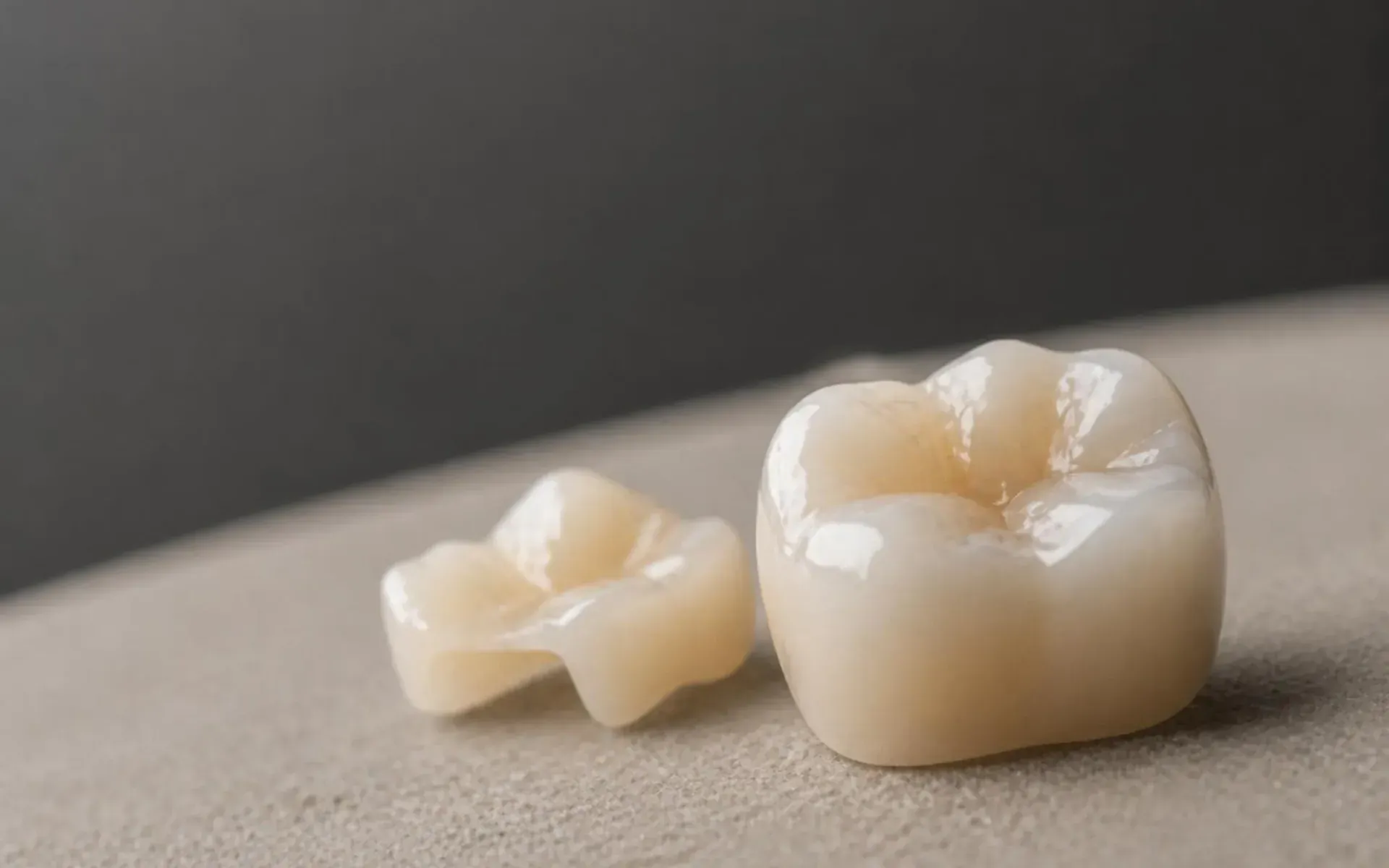
Restorative Dentistry
Custom porcelain crowns, bridges, tooth-colored fillings, and full-mouth restorations crafted to match the natural look, feel, and function of your teeth.
Explore
Sedation Dentistry
Relaxing dental care tailored to your comfort level. We offer nitrous oxide (laughing gas) for any routine clinic visit, as well as oral and IV sedation planned ahead with our periodontist.
Explore
Emergency Dentistry
Toothaches, broken teeth, knocked-out teeth and lost crowns — seen the same day, Saturdays included.
Explore