Early (Phase 1) Orthodontics in Frisco, TX
Phase 1 orthodontics in Frisco helps a specific and fairly small group of children. For most, the honest answer is to watch, and that watching is itself a real, considered choice.
What early (Phase 1) orthodontics can and cannot do
The case for early treatment, around age eight, rests on growth. Where growth is the mechanism, timing genuinely matters. Where it is not, waiting usually costs nothing.
Crossbites: the strongest case for early treatment
A crossbite applies sideways force to teeth not built for it. In a growing child, it can cause the lower jaw to shift to one side to find a comfortable bite. Correcting it while the palate is still developing is more straightforward than correcting it afterwards. If there is one clear argument for early treatment, this is it.
Significant overjet: protecting the front teeth
Upper front teeth that stick out well ahead of the lower ones are considerably more likely to be broken in a fall or a knock. And children fall. Reducing that risk is a real reason to treat before the teenage years. It is a safety argument as much as a cosmetic one.
Severe crowding and lack of space
Where the arch is clearly too small for the teeth that are coming, creating space early can reduce what is needed later — and occasionally avoid extractions. "Occasionally" is the honest word. It does not always.
Habits that are moving teeth
Thumb or dummy habits continuing once the adult front teeth are through can push them forward. Where gentler approaches have had a fair try and it has genuinely persisted, an appliance works well at that point.
When we refer to an orthodontist
Class III cases, where the lower jaw sits forward, are referred to an orthodontist, including in early treatment. That is a skeletal problem and specialist work, handled by the orthodontist we refer to.
For most children, we watch and review growth
Records, a scan, and a plan to review it — at recall visits you were coming to anyway. Where growth is the question, those records include a cephalometric: a side-on X-ray taken to a fixed geometry. That way the same measurement can be directly compared two years later, with no re-estimating needed. That is what turns watching into a plan. Most bites that look alarming at eight resolve or become straightforward at twelve. Treating them twice costs more, takes longer, and asks a great deal of a child.
Phase 1 orthodontics: what parents should know
Why we are cautious about two phases
Early treatment is genuinely valuable for a small group of children. It is also, across the profession, recommended more often than the evidence comfortably supports. The uncomfortable version: for many problems, two phases of treatment produce a result no better than one phase started at twelve. And it costs more, takes far longer, and asks more of a child's patience. Research comparing early treatment of prominent front teeth against a single later course has repeatedly found similar end results. The real exception is a reduced risk of trauma in the meantime, which is a legitimate reason on its own. So our position is narrow. Treat early where growth is the mechanism and timing genuinely matters: crossbites, significant overjet, habits that are actively moving teeth, and severe space problems. Watch everything else. And where we recommend watching, that is a plan with review appointments — not a way of saying no. Two of the teenage cases in our smile gallery show what that looks like when it works. Both had the makings of a two-phase case, and both were treated as a single course instead, at eighteen months and two years.
Straight wire braces or Invisalign First
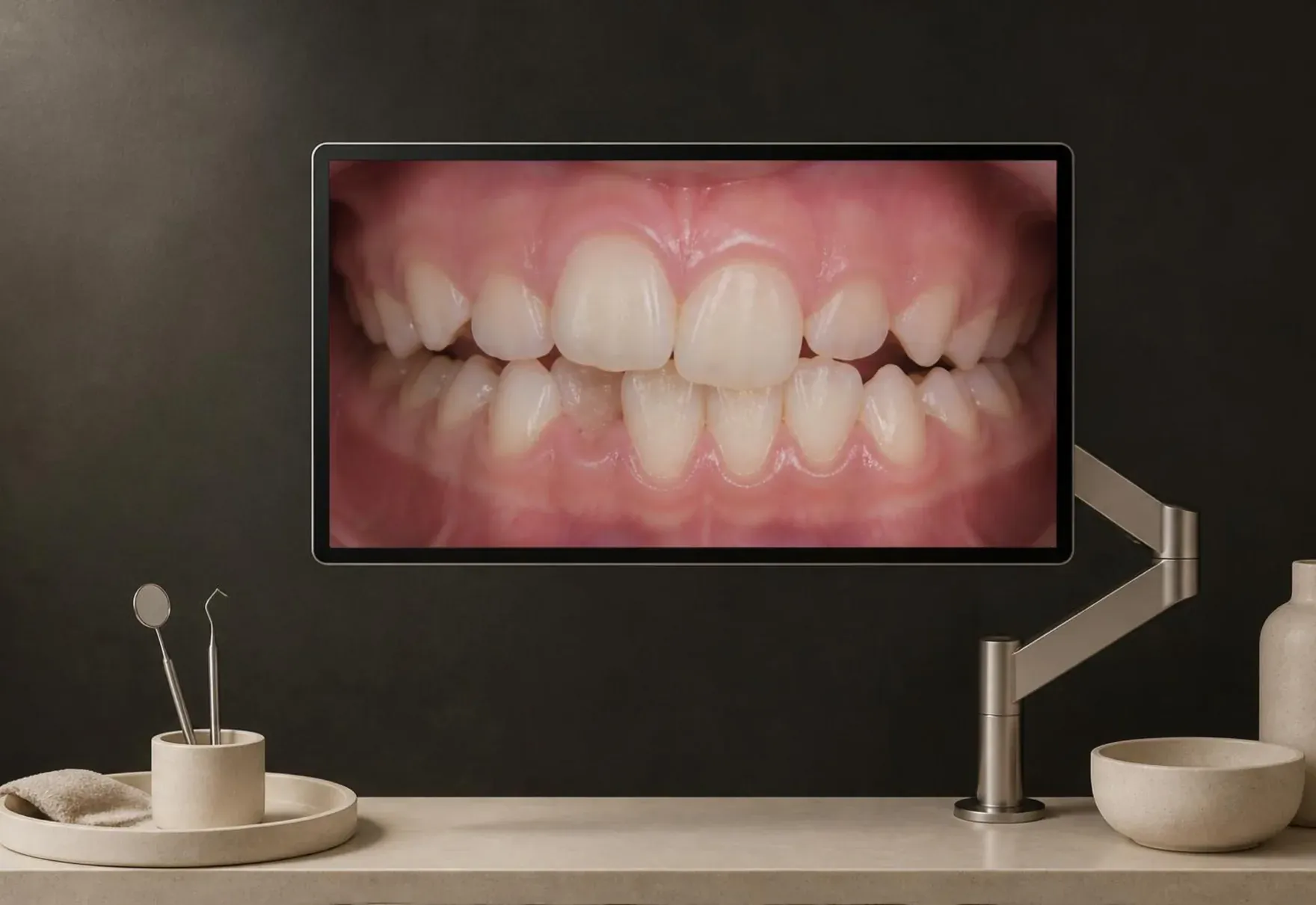
Both are available here for early treatment and they suit different children. Fixed straight-wire appliances do not depend on cooperation, which for a seven-year-old is a genuine advantage. They work whether or not anyone remembers. Invisalign First is the aligner system designed for the mixed dentition. It accounts for teeth still erupting and jaws still growing, and it avoids brackets and wires entirely. It depends on wear time, which for a young child depends on a parent as much as the child. The right choice is about the specific problem being corrected. It is also about your family honestly assessing whether the wear time will happen. There is no premium option here and no reason to choose one for appearance; we will tell you which suits the case.
Early (Phase 1) Orthodontics near Frisco, Prosper and Plano
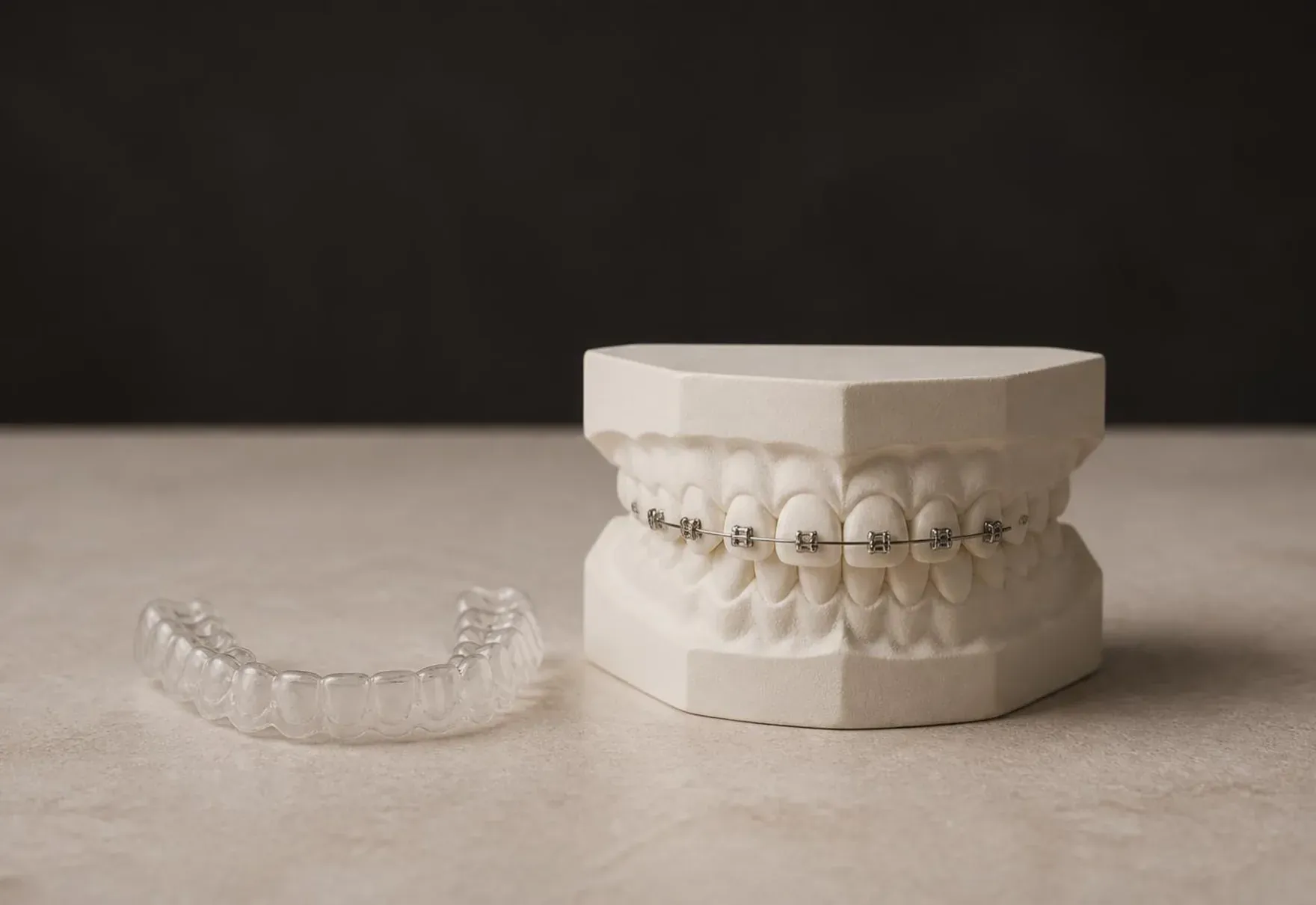
Children's bite assessments are done at our office at 8175 Custer Rd, Suite A110, Frisco, TX 75035, where Dr. Peravali looks at your child's bite with records and tells you whether it is a treat-now, watch-and-review or specialist case. We are open Monday, Tuesday, Thursday and Friday from 9 AM to 6 PM and Saturday from 9 AM to 3 PM. Wednesday and Sunday we are closed, though the phone is still answered on Wednesday. Families come from Frisco and from Prosper, Plano, Little Elm, Allen, Celina and McKinney.
Call (469) 262-2111Two cases that could have been treated in two phases
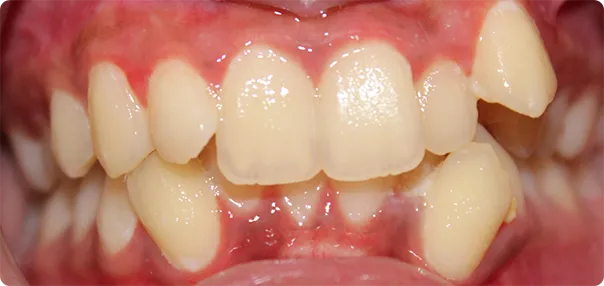
Both had the indications for early treatment. Both were watched and then treated once, in the permanent teeth.
Before 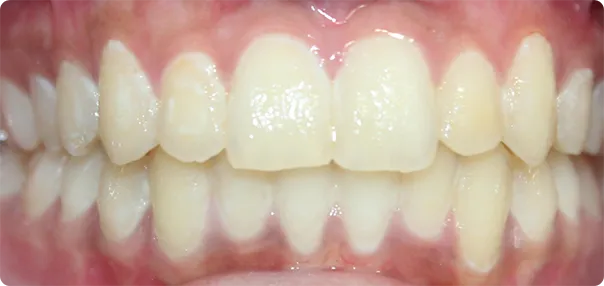
After - Came in with
- Crowded teeth, inflamed gums that bled, food trapping between the teeth, and real difficulty keeping them clean.
- What we did
- Invisalign, treated while the patient was still growing — the arches were widened and the crowding relieved. Conventionally this would have been split into two phases of treatment; it was done as one.
- Time in treatment
- 2 years
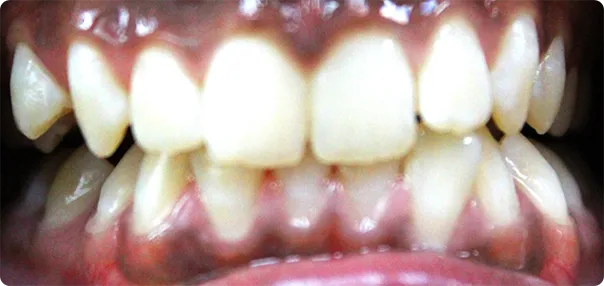
Before 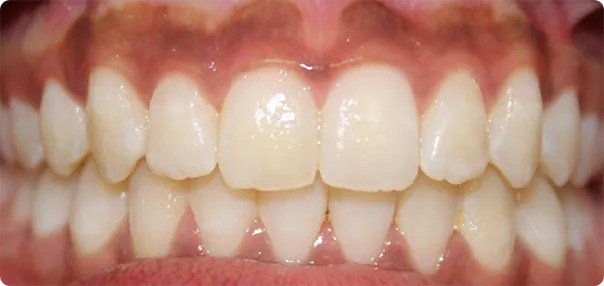
After - Came in with
- Narrow arches, crowding and inflamed gums.
- What we did
- Invisalign, treated while the patient was still growing — the arches were widened, the teeth straightened and the bite corrected. Conventionally a two-phase case; it was done as one.
- Time in treatment
- 18 months
Orthodontic treatment for a growing child is often split into two courses — an early phase to make room, a pause while the adult teeth arrive, then a second phase to finish — with each phase quoted separately. Both teenage cases here had the makings of that. They were treated as one continuous course instead, which is why they ran eighteen months and two years: longer than a single phase, and less than two.
Every case on this page was treated in this office, by our own doctors. These are photographs of our own patients, published with their permission. They are close-up photographs of teeth — not portraits of faces — so no patient can be identified from them, which is exactly why patients were willing to let us show them.
Treat now, or wait?
The honest split, problem by problem.
| Feature | Treat early | Usually wait |
|---|---|---|
| Crossbite | Yes — the strongest case | — |
| Significant overjet | Often, mainly for trauma risk | — |
| Habit still moving teeth | Yes, after gentler approaches | — |
| Severe crowding or space loss | Sometimes | Often fine to wait |
| Mild or moderate crowding | — | Wait — it is often simpler at 12 |
| Deep bite, no damage | — | Wait |
| Appearance of the front teeth | — | Wait, unless trauma risk is real |
| Class III | — | Referred to an orthodontist |
What to ask if early treatment has been recommended
Early orthodontic treatment is worth doing for some children, and it is recommended more widely than the evidence supports. Three questions separate the two.
1. “What specifically are we correcting, and what happens if we wait?”
A strong answer names the problem and the cost of waiting — this crossbite is shifting her jaw to one side, these front teeth are prominent enough to be at real risk in a fall. A weaker answer is about crowding that will still be there at twelve.
2. “Will this avoid braces later, or make them simpler?”
“Avoid” is very often overpromised. “Make simpler” or “prevent a specific harm” is usually the truthful version, and it may still be a good reason.
3. “What is the total cost of both phases, and how much of the lifetime insurance benefit will Phase 1 use?”
Ask this before the first appliance goes on — it is the single most common financial surprise in children’s orthodontics.
We will answer all three. For most children, our answer to the first one is that there is nothing yet that waiting would cost you.
Related reading: space maintainers and habits covers baby-tooth loss and thumb or dummy habits, bite problems explained shows which bites need treating, and children’s dentistry describes how we care for younger patients.
To book a children’s bite assessment in Frisco, call (469) 262-2111 or request an appointment online.
Time in the chair for early treatment.
The scale runs to five hours — the same scale on every page, so the bars are comparable across the whole site.
Phase 1 orthodontics cost in Frisco: what to expect
You get the figure in writing before treatment starts. We accept all major PPO plans and file the claim for you, our membership plan takes a percentage off treatment, and CareCredit financing is available.
How plans usually cover early treatment.
Orthodontics — its own category, with its own ceiling
- What plans pay
- Commonly 50%, up to a separate lifetime maximum of around $1,000 to $2,000. Read that again: this is a lifetime maximum. It does not reset every year the way the annual one does.
- Deductible
- Often a separate one-off orthodontic deductible, and on some plans none at all.
What catches people out
- Age limits. A great many plans cover orthodontics only up to age 19, some only to 18. Adult orthodontic coverage exists but it is much less common than people expect.
- A lifetime maximum does not come back. Once it is spent it is spent, on that plan and any future one that counts prior treatment — which is why a second course of treatment is usually paid entirely by the patient.
- Benefits are paid in instalments across treatment — not up front — so changing employer mid-treatment can stop the payments partway through.
- Early treatment can spend the lifetime benefit. Some plans treat a phase one course and later full treatment as two separate claims against one lifetime maximum. And a few will not pay for early treatment at all. It is the single most useful thing to check before starting.
These are how dental plans usually classify this treatment — not a statement about your own plan. Yours is the one that governs, plans differ more than people expect, and the only reliable answer comes from reading your specific benefits, which we always do ahead of treatment and give you in writing.
And what changes out-of-network
A dentist who is in-network has signed a contract fixing what may be charged for each procedure and cannot bill you the difference. One who is out-of-network has signed nothing, so the full fee stands.
So the first difference is the price itself — the same treatment is simply allowed to cost more out-of-network, before anyone's plan is considered.
What you personally pay out of that depends on your own deductible and coinsurance, which is why there is no percentage here: it is not a property of the treatment, it is a property of your plan, and we verify yours before you commit. But two things follow for everybody. Your share is a share of a bigger number. And your orthodontic lifetime maximum is spent by what the plan pays toward that bigger number, so the same treatment eats more of your benefit out-of-network. That pot does not reset, which is what makes it bite.
An illustration, not a quote. Both allowed fees for early treatment are not yet on hand, so the chart above shows a crown instead — the one procedure we hold both sides for. The in-network side is today's contracted allowance; the out-of-network side is what a single carrier allowed during a period when we were not contracted with it, and it is a few years old. Across the 23 procedures where we hold both allowed fees, out-of-network is between 1.2 and 5 times the in-network figure — most often a little over twice.
Check the going rate yourself
FAIR Health's dental cost lookup is free, needs no account, and is not ours — it reports what a procedure typically costs in your area. It does not know your plan, so treat it as a ballpark figure — not a final answer.
Ask us for the number first
We verify your specific plan before your appointment and give you a written estimate: what the plan is expected to pay, and what you pay. If we get it wrong we tell you why.
Bring an Explanation of Benefits
Treated somewhere else? Your EOB shows exactly what the plan paid and what it counted against your maximum. Bring one in and we will read it with you — whether or not you become a patient here.
None of this says out-of-network dentists are worse dentists. Plenty are excellent, plenty are out-of-network for sound reasons, and people choose a dentist for who that person is. What we think you are owed is the information, so that whatever you choose, you chose it knowingly. The whole thing, explained properly, or call (469) 262-2111 and ask.
- Hours
- Weekdays 9–6
Saturdays 9–3 - Languages
- English, Telugu, Hindi, Urdu
Arabic with Saba, our hygienist, Tuesdays, Thursdays and Fridays
Vietnamese with Anh, our hygienist, Saturdays
Cantonese and Mandarin with Dr. Louie, our periodontist, on his scheduled days, by internal referral
Questions Frisco parents ask about early (Phase 1) orthodontics
Grouped so you can go straight to the one you came for.
Early (Phase 1) Orthodontics — common questions
At what age should my child see someone about their bite?
Does my child actually need Phase 1 treatment?
What is Invisalign First?
Will early treatment mean my child avoids braces later?
Do you treat all early cases here?
How does insurance work for two phases?
What does watching actually involve?
How will you know when the right moment to treat has arrived?
Do you take Medicaid for orthodontics?
What age should a child get phase 1 braces?
What does a palate expander do?
What is phase 1 treatment in orthodontics?
How much does phase 1 orthodontics cost?
Toothache at 7am? You'll be seen today.
Same-day and Saturday appointments for toothaches, broken teeth, knocked-out teeth and lost crowns. Call us and we'll tell you what to do first, while you're still at home.
Everything else under this roof.
White Lotus Dental offers nine dental specialties inside one calm office on Custer Road. Having general dentists and an in-house periodontist on staff means your entire family can receive preventive, restorative, and surgical treatments in one familiar place.
Preventive Dentistry
Regular dental checkups, professional cleanings, night guards, and jaw-pain care. Every routine exam includes an oral cancer screening to protect your long-term health.
Explore
Children's Dentistry
Gentle first dental visits, protective sealants, fluoride applications, and space maintainers. We accept Children's Medicaid and CHIP, and every young patient receives a toy-machine token at the end of their visit.
Explore
Orthodontics
Clear aligners with Invisalign® and comprehensive traditional braces. Your treatment is fitted, monitored, and adjusted in-house by your trusted dentist.
Explore
Missing Teeth
Permanent dental implants, dental bridges, and customized dentures planned using 3-D CBCT scans. Because our team includes a board-certified periodontist, your implant surgery, placement, and final crown are completed in the same building.
Explore
Cosmetic Dentistry
Professional Zoom whitening, custom take-home whitening trays, and composite tooth bonding designed to brighten and refine your natural smile.
Explore
Periodontics & Oral Surgery
Specialized gum disease therapy, scaling and root planing (deep cleanings), frenectomies, and periodontal surgery performed by our board-certified periodontist.
Explore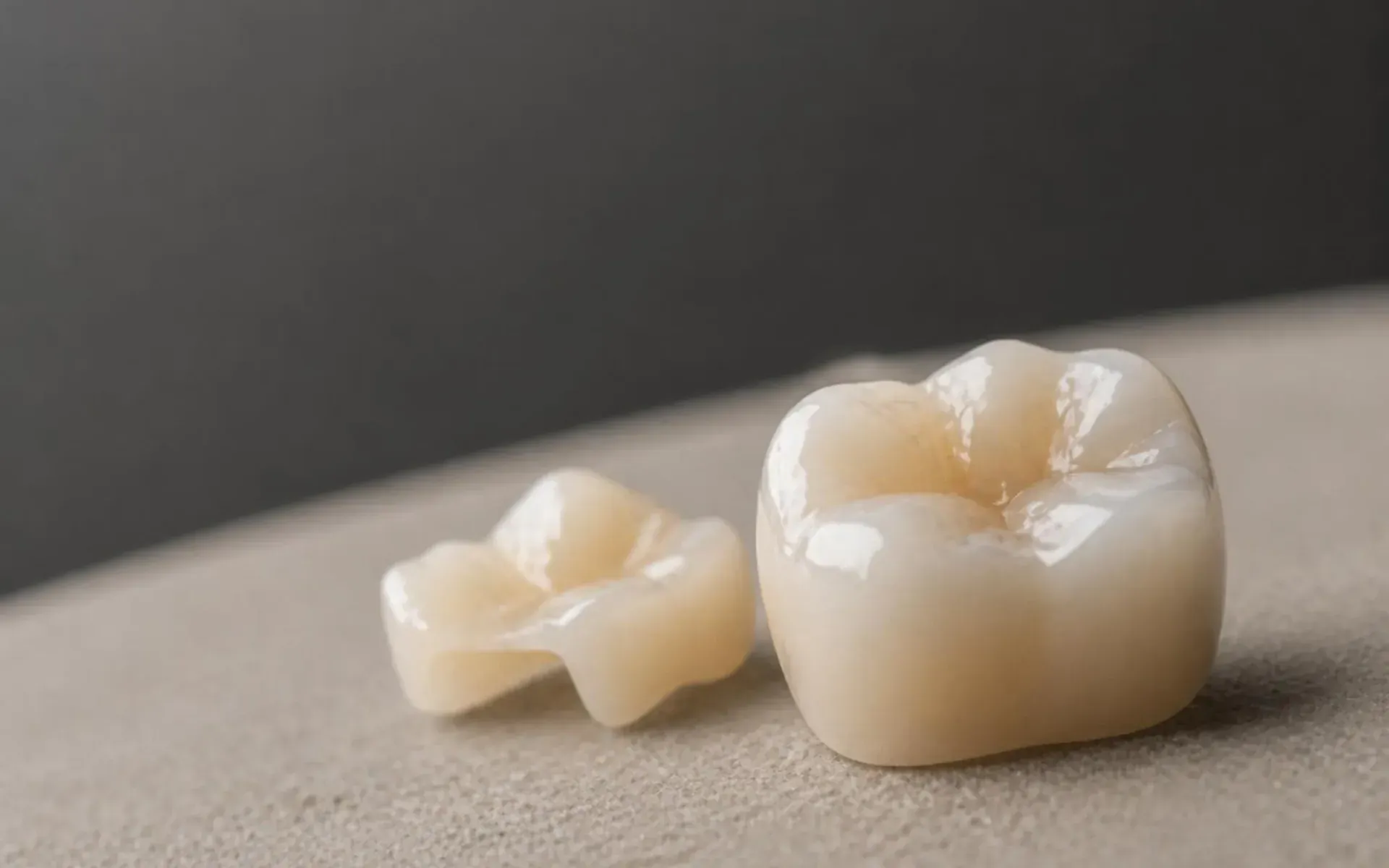
Restorative Dentistry
Custom porcelain crowns, bridges, tooth-colored fillings, and full-mouth restorations crafted to match the natural look, feel, and function of your teeth.
Explore
Sedation Dentistry
Relaxing dental care tailored to your comfort level. We offer nitrous oxide (laughing gas) for any routine clinic visit, as well as oral and IV sedation planned ahead with our periodontist.
Explore
Emergency Dentistry
Toothaches, broken teeth, knocked-out teeth and lost crowns — seen the same day, Saturdays included.
Explore